Finance Minister Amir Khosru Mahmud Chowdhury has unveiled the FY2026‑27 national budget in the parliament on Thursday, outlining a Tk938,000 crore financial plan.
[live_update time=”5:00 PM” title=”Budget piles taxes on honey, cashew nuts, sweet corn”]
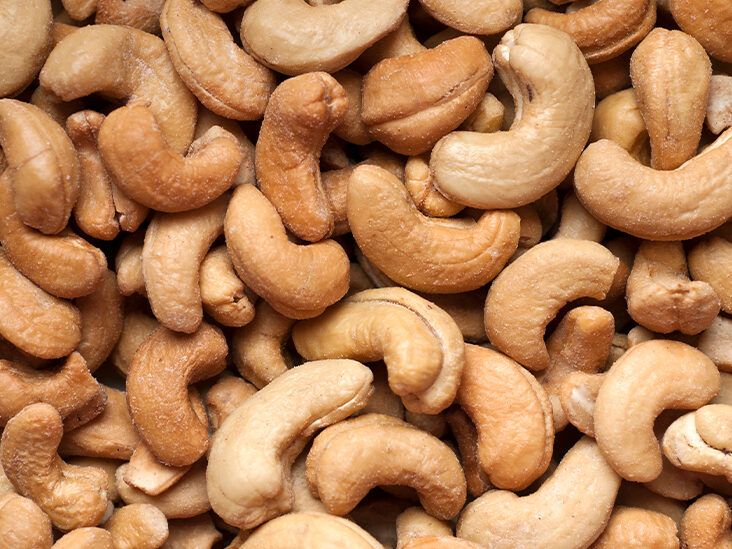
The proposed budget for the 2026-27 fiscal year has imposed significant duties and taxes on nutritious foods such as natural honey, cashew nuts, and sweet corn, making these health-conscious choices increasingly unaffordable for middle-class consumers.
While global health experts emphasise balanced and natural food intake to ensure public health and nutrition, the budget guidelines paint a contrasting picture.
[/live_update]
[live_update time=”4:45 PM” title=”No excise duty on bank deposits”]

The government has proposed to exempt bank deposits of up to Tk4 lakh from excise duty starting from the next fiscal year.
Currently, the government collects excise duty on the maximum balance of a bank account if the amount exceeds Tk3 lakh at any point during the year. Banks typically deduct this duty from accounts once a year, usually at the end of December.
[/live_update]
[live_update time=”4:35 PM” title=”Govt slashes regulatory duties on over 20 products”]

The government has proposed a major overhaul of import policy by reducing or withdrawing long-imposed regulatory duties (RD) on more than 20 products in the 2026-27 fiscal year budget.
The 3 per cent regulatory duty has been proposed for withdrawal on a wide range of items, including all types of dates, spices, live chickens, ostriches and emus, various sea fish, shellfish, carbon electrodes, photographic paper, cinematographic film, drones, yachts, musical instruments, artwork, coffins, and components of electric lamps.
[/live_update]
[live_update time=”4:34 PM” title=”Over 70 duty, tax benefits to boost tech, health, green energy”]

The proposed budget for the 2026-27 fiscal year has taken initiatives to reduce or withdraw at least 70 tariffs, taxes, and regulatory barriers, with the information technology, electric vehicle manufacturing, healthcare equipment, and renewable energy sectors receiving the maximum incentives.
According to budget analysis, customs duties have been reduced or withdrawn in more than 34 cases. Regulatory duties have been abolished or reduced for over 20 products, while supplementary duties have been cut in at least six instances.

[/live_update]
[live_update time=”4:33 PM” title=”Dhaka-Cumilla cord line announced”]

The proposed budget for FY2026-27 includes the construction of a cord line on the Dhaka–Cumilla section of the Dhaka-Chattogram railway corridor, a move expected to shorten the route by 80 kilometres.
The finance minister said that the government is implementing a range of development initiatives to build a safe, modern, and efficient railway system by increasing network capacity and expanding regional connectivity.
[/live_update]
[live_update time=”4:32 PM” title=”Tk43,335cr allocated for agriculture, food, fisheries”]

The government has proposed a total allocation of Tk43,335 crore for the agriculture, food security, fisheries and livestock sectors in the 2026-27 fiscal year, reflecting a modest increase in the sector’s overall budgetary priority.
The allocation represents 0.63 per cent of GDP, slightly higher than the 0.61 per cent recorded in the revised FY26 budget.
[/live_update]
[live_update time=”4:31 PM” title=”Bangladesh to become regional aviation hub”]

Finance Minister Amir Khosru Mahmud Chowdhury has announced plans to develop Cox’s Bazar, Jashore, Rajshahi, and Saidpur airports as international gateways.
The initiative forms part of a broader strategy to transform Bangladesh into a regional aviation hub and boost international trade and connectivity through integrated development of the civil aviation sector.



In his budget speech, Khosru outlined an ambitious plan to position Bangladesh as a leading aviation hub in South and South-East Asia by 2034. Central to this vision is the establishment of a National Air Connectivity Grid.
[/live_update]
[live_update time=”4:30 PM” title=”Govt eyes 35,000MW power capacity”]

The government has set a target to raise the country’s installed electricity generation capacity to 35,000 megawatts by 2030, aiming to ensure uninterrupted and sustainable supply.
Currently, Bangladesh’s installed capacity stands at 28,919MW, including renewables, but uninterrupted and quality supply remains a challenge.
[/live_update]
[live_update time=”4:20 PM” title=”Govt raises revenue target, adjusts expenditure”]

The original budget had projected expenditure at Tk7.90 lakh crore, but the revised plan lowers it by Tk2,000 crore to Tk7.88 lakh crore.
The budget deficit has also been adjusted. Initially projected at Tk2.26 lakh crore, the deficit is now set at Tk2 lakh crore, equivalent to 3.3 percent of GDP, reflecting the updated balance between revenue and expenditure.
[/live_update]
[live_update time=”4:00 PM” title=”Affordable, expanded healthcare ahead”]

The BNP government, in its first budget after 20 years in opposition, has unveiled an ambitious plan to expand healthcare coverage, introduce universal e-Health Cards, and reform the medical sector, alongside a sharp rise in development expenditure for the 2026–27 fiscal year (FY27).
Of the Tk41,908 crore current health budget, the Annual Development Programme (ADP) accounted for Tk18,148 crore. For the upcoming fiscal year, the finance minister is set to propose to boost the ADP allocation alone to Tk35,027 crore, bringing the total health allocation to Tk69,409 crore.
[/live_update]
[live_update time=”3:30 PM” title=”Khosru presents 10-point 2034 economic roadmap”]

Finance Minister Amir Khosru Mahmud Chowdhury on Thursday presented a long-term economic roadmap aimed at reshaping Bangladesh into a sustainable, inclusive, and investment-driven economy by 2034, while unveiling the proposed national budget in Parliament.
Speaking during his budget presentation, the finance minister said the government’s strategy prioritises macroeconomic stability, investment expansion, productivity growth, employment generation, and equitable development across all regions and sectors.
Outlining the framework, he presented a 10-point priority agenda guiding fiscal and development policy. The priorities include ensuring inclusive development for all citizens, expanding access to quality education and healthcare, and establishing a universal, life-cycle-based social protection system.
The roadmap also emphasises building an investment-led and productive economy through industrial expansion, export diversification, technological advancement, and strengthened agricultural production.
[/live_update]
[live_update time=”2:00 PM” title=”TIN must for bank accounts, land transactions”]
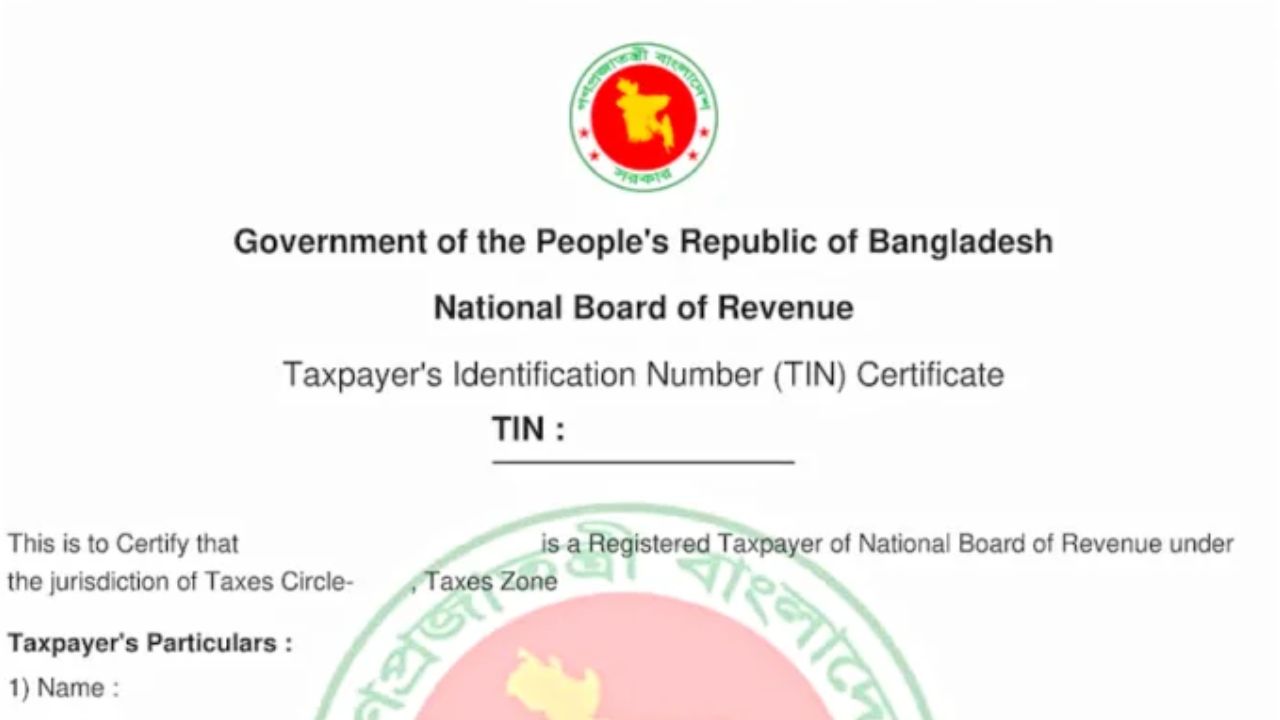
The government is going to make Tax Identification Number (TIN) mandatory for opening bank accounts, with exemptions for students and holders of general savings (no‑frills) accounts.
Bangladesh Bank introduced the general savings account as a simple, low‑cost option that can be opened with deposits of Tk10, Tk50, or Tk100.
[/live_update]
[live_update time=”1:00 PM” title=”New pay scale on 1 July”]

The government is set to implement a revised pay scale for its officers and employees starting 1 July, marking first major adjustment in 11 years. The rollout of the new scale, however, will be gradual.
According to official outlines, the revised pay structure will be implemented over three years. In first year, 50 per cent of the recommended basic salary increase will take effect, with the remainder phased in following year. House rent and other allowances are expected to be disbursed in two phases during third year.
To support new pay scale, the government plans to allocate Tk1,41,434 crore for public services, nearly 96 per cent higher than original Tk72,024 crore budget for current fiscal year. The figure was later revised to Tk86,862 crore, making the net increase about Tk55,000 crore.
[/live_update]
[live_update time=”12:00 PM” title=”Cabinet approves Tk9.38 lakh crore budget”]
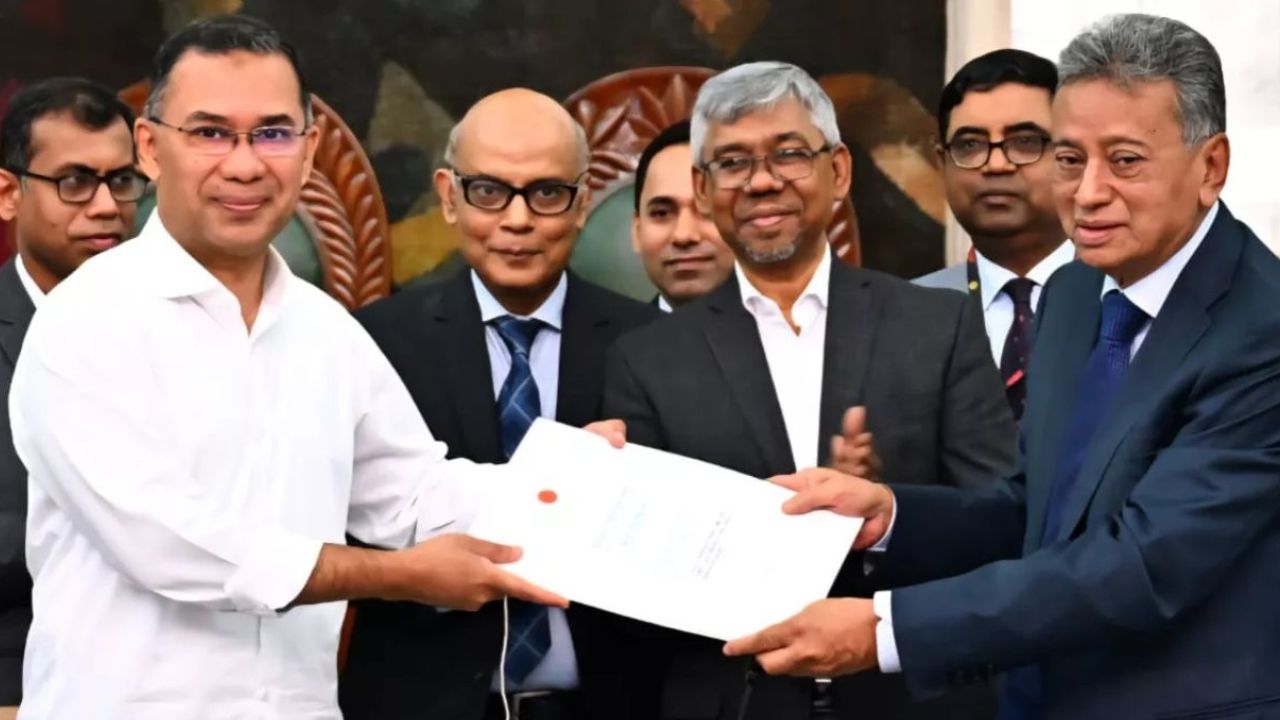
The Cabinet has approved the proposed national budget for 2026–27 fiscal year in a special meeting in Parliament.
The meeting took place on Thursday morning at Jatiya Sangshad Bhaban, chaired by Prime Minister Tarique Rahman. Finance Minister Amir Khosru Mahmud Chowdhury and other Cabinet members attended the session.
After the approval, the finance minister is scheduled to place the budget in Parliament at 3pm, with the prime minister expected to join the session.
The proposed budget, the first under current government, is worth Tk9.38 lakh crore, the largest in the country’s history.
According to proposal, National Board of Revenue and other sources are expected to collect Tk6.95 lakh crore in revenue.
The budget shows a gap of Tk2.43 lakh crore between income and expenditure. To finance this deficit, the government plans to raise funds from both domestic and external sources.
[/live_update]
[live_update time=”11:00 AM” title=”BNP govt to present budget after 19yrs”]

For the first time in 19 years, BNP government is set to present a national budget in Parliament, following its majority win in 13th parliamentary election.
Finance and Planning Minister Amir Khosru Mahmud Chowdhury, under the leadership of Prime Minister and BNP Chairperson Tarique Rahman, will place FY2026 27 budget around 3pm Thursday.
In 1972, Bangladesh’s first prime minister Tajuddin Ahmad inaugurated the country’s budget journey with a Tk786 crore plan. Following that path, Khosru will now present the nation’s 56th budget, with an outlay of Tk938,000 crore.
The proposal is scheduled for passage on 30 June, with the new fiscal year beginning 1 July.
[/live_update]
[live_update time=”10:20 AM” title=”Cabinet meeting underway”]
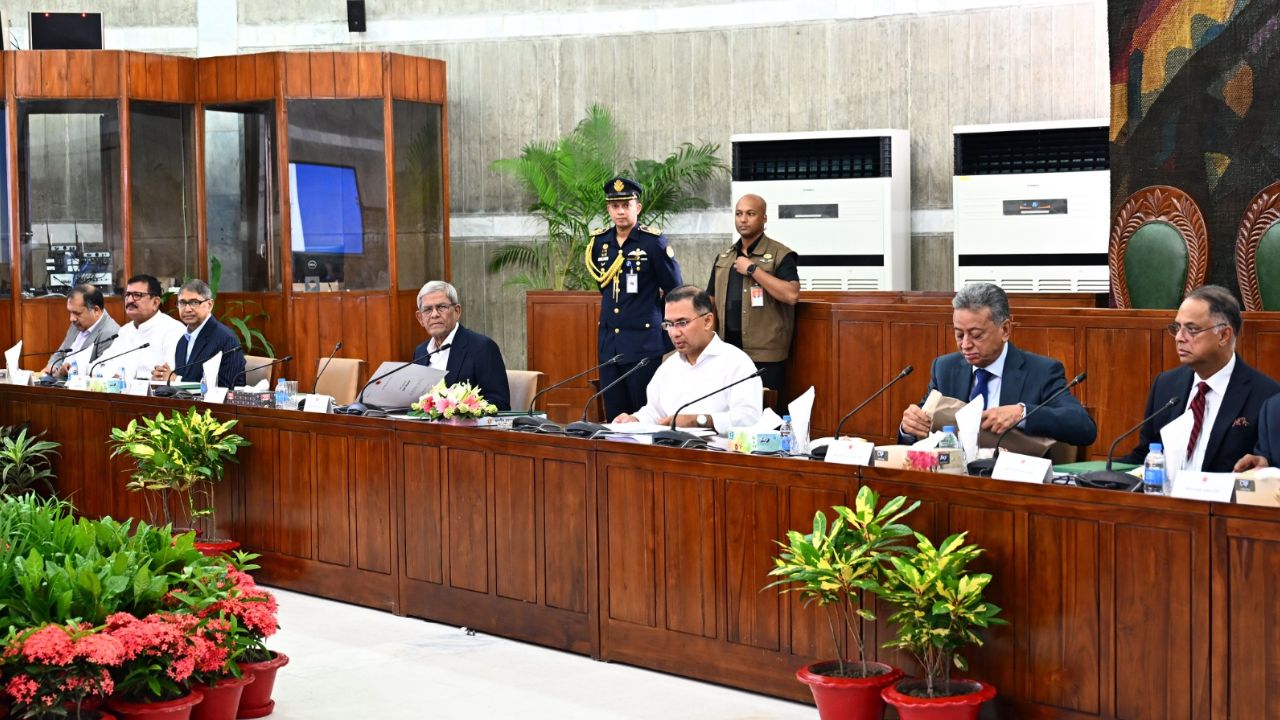
A special meeting of the Cabinet is underway to approve the proposed national budget for 2026–27 fiscal year, chaired by Prime Minister Tarique Rahman.
The meeting began at 10am on Thursday at Cabinet Room of the Parliament Secretariat.
According to established procedure, a special Cabinet meeting is held before the national budget is placed in Parliament, where the Cabinet formally approves the budget proposal.
[/live_update]
[live_update time=”10:00 AM” title=”Finance minister arrives at Parliament”]
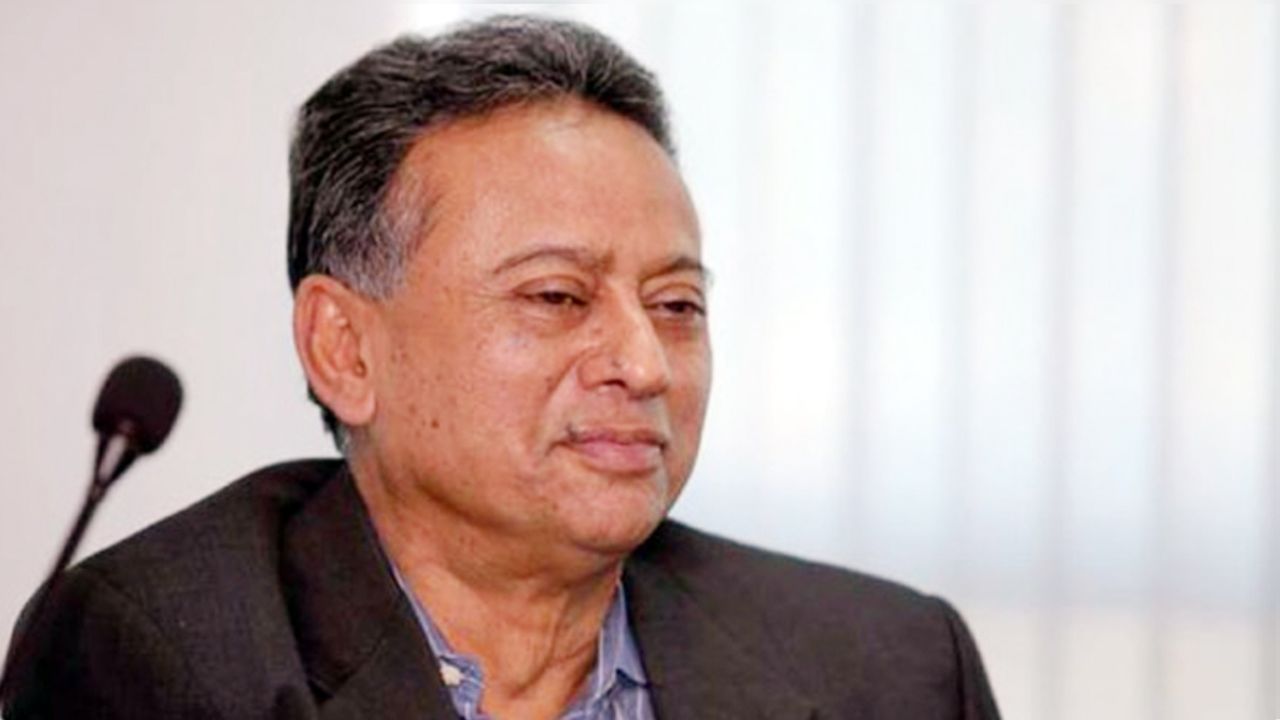
Finance Minister Amir Khosru Mahmud Chowdhury has arrived at Jatiya Sangsad to present the national budget for 2026-27 fiscal year.
The minister reached the Parliament building on Thursday to attend the budget session and outline the country’s economic roadmap for the upcoming year. A special cabinet meeting regarding the budget is scheduled to be held at 10am.
Upon his arrival at Parliament, the finance minister said the government has formulated this year’s budget with the objective of ensuring relief for all citizens, despite the constraints of limited resources.
[/live_update]