Farmers in Manikganj are facing mounting irrigation stress midway through the season as costly diesel and unreliable power supplies push up expenses and threaten crops.
A multi-crore solar irrigation initiative, designed to ease that burden, is largely failing to deliver due to weak maintenance and poor management, officials and farmers said.
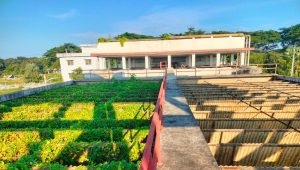
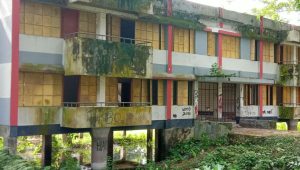
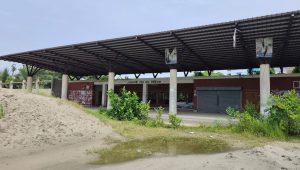
Two phases of the environmentally friendly projects, launched in 2016 and 2021, installed seven solar-powered pumps across the district. Only one remains fully operational, two run partially, and the rest are idle due to mechanical faults and lack of technical support.
The gap has forced farmers back to conventional systems. The district relies on nearly 9,000 electric pumps requiring about 35 megawatts of power, alongside 21,223 diesel pumps consuming roughly 85,000 litres of fuel daily during peak irrigation.
Farmers said proper operation of the solar projects could have significantly reduced diesel use. While privately installed solar pumps are functioning well, government-run schemes have fallen short, leaving farmers dependent on electricity and diesel.

Under a Bangladesh Agricultural Development Corporation irrigation area development project, a solar pump was installed in Char Gior of Gior Upazila in the 2021-22 fiscal year at a cost of Tk20,66,697. The system was meant to provide free irrigation to at least 70 bighas of land and benefit more than 100 farmers through a locally managed scheme.
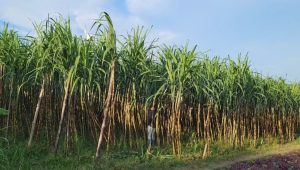
Five years on, the pump has yet to operate. A visit to the site showed plastic pipes bearing the agency’s logo laid across fields but no water supply. Farmers are instead irrigating boro paddy using electric and diesel-driven shallow machines.
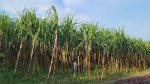



“The solar pump is of no use. I installed an electric motor and am irrigating my three bighas and another 17 bighas,” said local farmer Abdul Mannan. “Diesel is hard to find and expensive.”
Another solar pump installed in 2016 in Rasulpur of Singair Upazila, with support from a Korean organisation, is also defunct. The 5.16 kilowatt system stopped working after solar panels were stolen, farmers said.
“We got water for the first few years. Then the panels were stolen. We reported it several times, but nothing was done,” said farmer Yakub Ali. “Now the pump is abandoned.”


In contrast, privately managed systems are delivering results. In Joymontop Union, farmer Wahab Khan operates an 8.75 kilowatt solar pump using 15 panels, irrigating around 30 bighas of land.
“Costs are much lower than diesel or electricity. If there is a problem, technicians fix it quickly,” he said, adding that government support could expand solar irrigation further.
Local stakeholders echoed that view, saying technical backing and policy support would encourage wider adoption, reduce fuel dependence, and cut environmental damage.
Manikganj Agricultural Development Committee Coordinator Nazrul Islam said poor maintenance has kept the projects from meeting expectations despite their cost-saving potential.
Manikganj Agricultural Training Institute Principal M M A Salam said failing to shift from diesel and electric pumps to solar systems would worsen environmental impacts.
Bangladesh Agricultural Development Corporation Assistant Engineer Titas said contractors provide maintenance only for the first year after installation. After that, farmers must take initiative to fix faults. He said reports on the inactive pumps have been sent to higher authorities and steps are expected soon.
Department of Agricultural Extension Deputy Director Shahjahan Siraj said expanding solar irrigation is essential to cut fuel use and promote environmentally friendly farming, adding that efforts are underway to revive the inactive systems.