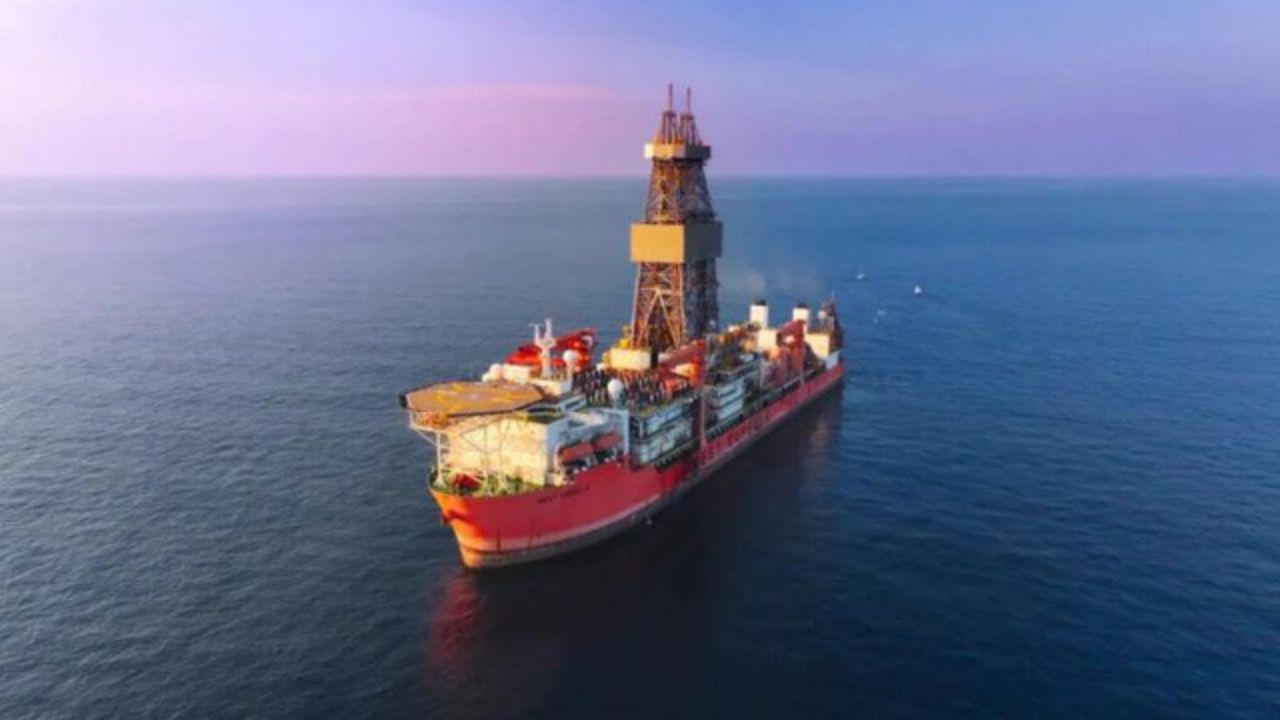

Italian energy giant Eni has announced a “major” natural gas discovery off the coast of Indonesia, a find the government says could triple the company’s production in the country by 2028.
According to a BSS news, the Southeast Asian archipelago already produces more gas than it consumes, with strong domestic demand for gas used in cooking, heating and electricity generation.
In a statement issued late Monday, Eni said preliminary estimates show the offshore site, located about 70 kilometres off East Kalimantan province, holds around 5.0 trillion cubic feet of gas and 300 million barrels of condensate, a liquid hydrocarbon.
The company said the discovery “unlocks significant new volumes for domestic and international markets”.
The Indonesian government said the find could raise Eni’s peak output to 2,000 million standard cubic feet per day (MMSCFD) by 2028, and to 3,000 MMSCFD by 2030.
The current production stands between 600 and 700 MMSCFD.

Energy and Mineral Resources Minister Bahlil Lahadalia described it as a “giant discovery”.
He said condensate output could reach around 90,000 barrels per day by 2028, rising further to 150,000 barrels in 2029–2030.
He added that higher condensate production would likely reduce Indonesia’s oil import needs.

Like many countries, Indonesia has faced pressure from rising global energy prices since the Middle East conflict escalated.
Last week, President Prabowo Subianto met Russian President Vladimir Putin at the Kremlin, where Indonesia said a long-term oil procurement agreement was reached, though details are still being finalised.
Foreign Ministry spokesman Vahd Nabyl Achmad Mulachela told AFP after the Moscow visit that there was no fixed volume, but the deal would support long-term energy security.
Prabowo later visited France, where he met President Emmanuel Macron. Both sides agreed on cooperation in energy transition and the development of new and renewable energy, according to Jakarta.
Indonesia, Southeast Asia’s largest economy, is an oil producer but remains a net importer, with fuel heavily subsidised.
Last month, the government introduced fuel rationing and required civil servants to work from home every Friday to save energy.
It has also pledged not to raise fuel prices this year, even as the subsidy budget was based on an oil price of $70 per barrel. Crude oil prices are currently near $100 due to the war.
Last week, the government increased prices of some non-subsidised fuel and gas.
Bahlil said in March that about 30 percent of Indonesia’s liquefied petroleum gas (LPG) imports come from the Middle East, and the country will look for alternative suppliers.
According to the International Energy Agency, natural gas accounted for 15.6 percent of Indonesia’s energy supply and 12.9 percent of electricity generation in 2023.
Referring to the latest Eni discovery, Bahlil said on Monday it shows Indonesia still has strong potential to optimise its oil and gas resources as a pillar of national energy security and efforts toward energy self-sufficiency.