


As Operation Epic Fury, the United States’ military campaign against Iran, entered its sixth day on 5 March, new financial analyses have laid bare the staggering cost of the engagement.
Data from the Center for Strategic and International Studies (CSIS), drawing on Congressional Budget Office (CBO) estimates and limited Department of Defence (DOD) disclosures, indicates that the first 100 hours of the operation cost $3.7 billion.
This expenditure averages approximately $891.4 million per day. Of the total, $3.5 billion is currently unbudgeted, presenting a significant fiscal challenge for the Trump administration.
According to the reports, these costs are divided into three primary categories: $3.1 billion for munitions replacement, $196 million for operational support, and $350 million for repairing infrastructure and replacing combat losses.
Because the DOD has released few specifics regarding daily strike updates, researchers at CSIS formulated these estimates by combining the limited information provided in daily DOD fact sheets with CBO operations and support costs for specific units.

The analysis also applied a 10 per cent increase to baseline costs to account for a higher operational tempo, a methodology based on previous Office of Management and Budget (OMB) practices during the wars in Iraq and Afghanistan.
Air superiority and naval engagements
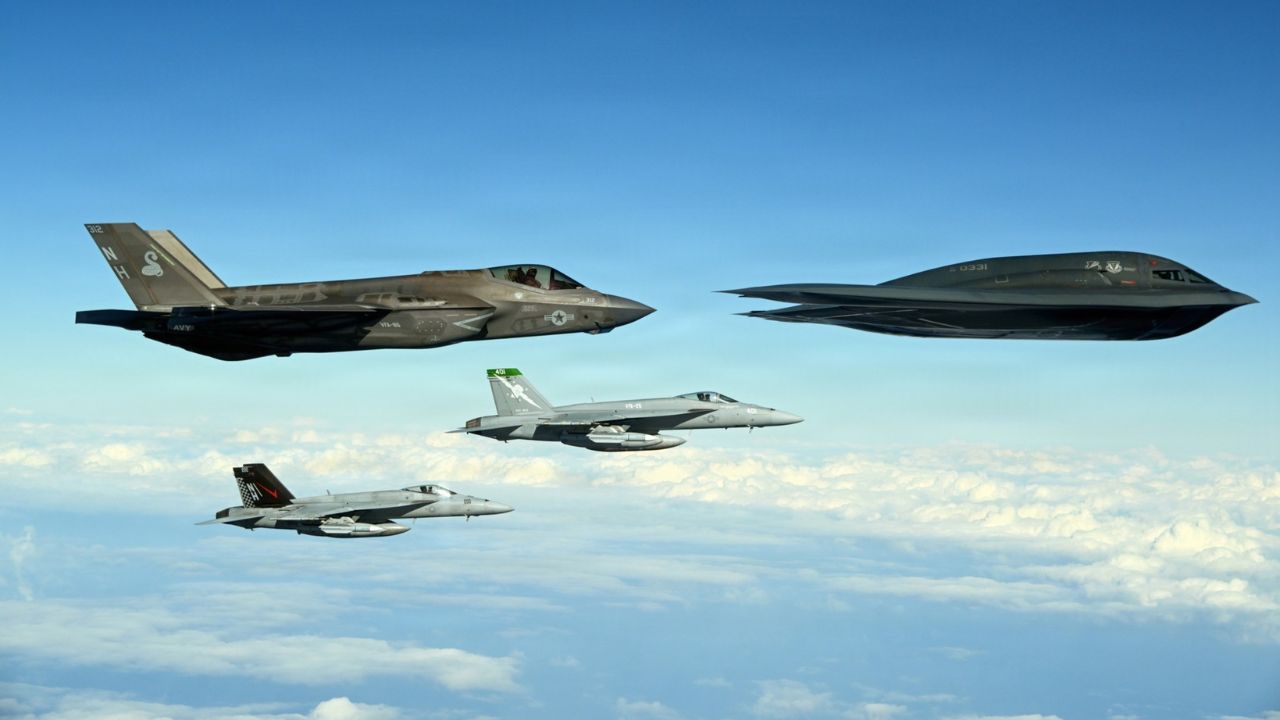
Air operations have emerged as the most expensive component, costing $125 million by the 100-hour mark, with daily costs increasing by $30 million. Admiral Brad Cooper, Commander of US Central Command (CENTCOM), confirmed that over 200 fighter aircraft are involved.
CSIS estimates of the order of battle include 50 stealth aircraft (F-35s and F-22s), 110 non-stealth aircraft, and 80 carrier-based fighters.




Naval operations reached $64 million, highlighted by the combat debut of Low-Cost Uncrewed Combat Attack System (LUCAS) drones launched from Littoral Combat Ships (LCS).
Meanwhile, ground operations cost $7 million, involving Defense Manpower Data Center (DMDC) figures showing 582 soldiers permanently stationed in the region, supplemented by rotational deployments and artillery units such as HIMARS, THAAD, and Patriot batteries.
The strategic shift
The US has expended over 2,000 munitions to strike nearly 2,000 targets. General Dan Caine, chairman of the Joint Chiefs of Staff, noted on 4 March that US forces have reached a “point of munitions transition.”
The strategy is moving from expensive “stand-off” weapons like Tomahawk cruise missiles, which cost $3.6 million each, to “stand-in” precision strikes using Joint Direct Attack Munition (JDAM) guidance kits, costing only $80,000 per unit.
This shift is possible because Iranian air defences have been substantially degraded, allowing non-stealthy B-1 and B-52 bombers to operate more freely.
Conversely, defensive costs remain high, with an estimated $1.7 billion spent on air defence interceptors to counter 500 ballistic missiles and 2,000 Iranian drones.
While expensive Patriot and THAAD systems target high-speed missiles, the US is using the laser-guided Advanced Precision Kill Weapon System (APKWS) to intercept slower drones like the Shahed-136.
Combat losses, infrastructure repairs
Equipment losses and infrastructure damage have reached $359 million. This includes the loss of three F-15EX aircraft in a friendly-fire incident over Kuwait, costing $309 million in total.
Additionally, $50 million has been allocated for repairs to facilities in Kuwait and Qatar following Iranian strikes.
President Donald Trump and Secretary of Defence Pete Hegseth have suggested the conflict could persist for several weeks. To cover the unbudgeted $3.5 billion, the DOD may require a supplemental appropriation or a new reconciliation bill.
The administration could also seek to divert portions of the $150 billion previously allocated in a prior reconciliation bill. However, analysts warn that any funding request will likely become a focal point for political opposition to the war.