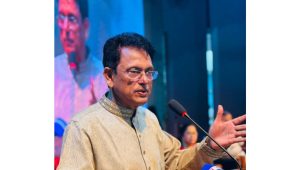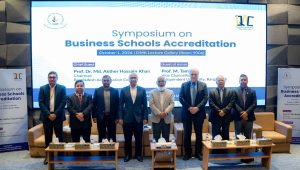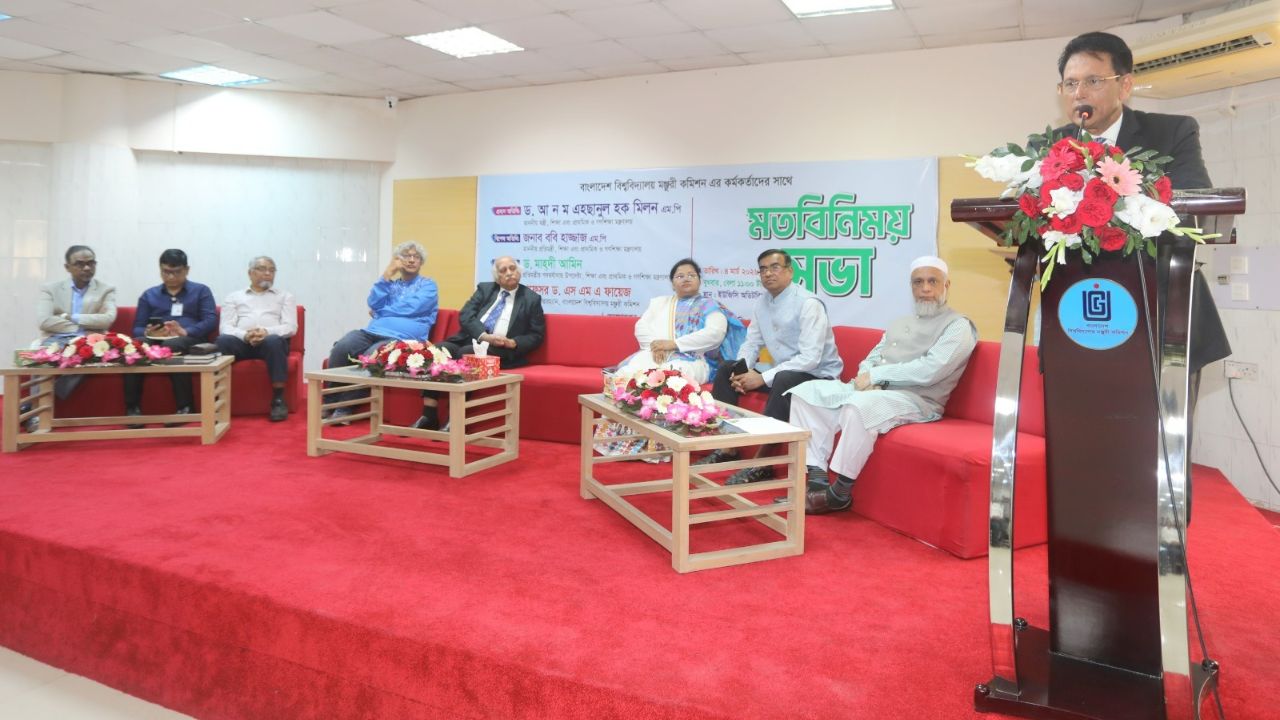



Education and Primary and Mass Education Minister ANM Ehsanul Haque Milon has advised the University Grants Commission (UGC) to not limit its activities to merely overseeing universities, but to take its own initiative to formulate integrated plans for improving the quality of higher education.
He advised introducing skill and demand-based education curricula in the country’s universities to develop human resources suitable for the needs of the global job market.
He gave this advice during an exchange of views meeting with UGC officials and employees at the UGC Building on Wednesday.
UGC Chairman Professor SMA Faiz presided over the exchange meeting. UGC Member Professor Mohammad Tanzeemuddin Khan delivered the welcome address. Professor Mashuma Habib presented UGC’s establishment, activities, achievements, and future plans at the event.

UGC Members Professor Mohammad Anwar Hossain, Professor Md Saidur Rahman, Professor Mohammad Ayub Islam, and Secretary Md Fakhrul Islam were present at the time.
Officials and employees from various levels, including departmental heads of UGC, directors of the HED and ICSEITEP projects, and senior officials from the Ministry of Education attended the event. Md Mohibul Ahsan, additional director of the Public University Management Division and general secretary of the UGC Officers’ Association, moderated the meeting.



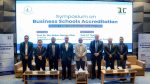
Describing UGC as the focal point of the country’s higher education, the Education and Primary and Mass Education minister said the success and failure of higher education depend on UGC. The higher education sector in the country is gradually expanding. He directed UGC to properly oversee and advance the activities of the country’s universities. He requested that UGC inform the Ministry of Education in writing about its achievements since 2024 and future work plans.
Regarding Dhaka Central University, the education minister said a temporary solution has been reached concerning the seven affiliated colleges. He stated that discussions with stakeholders will be held soon for a permanent solution to the crisis.
Regarding university rankings, he commented that the quality of education and research in the country’s universities is gradually declining, which is a major problem. He remarked that there is not a single university up to international standards in the country. He emphasised building at least one quality post-graduate university.
Professor Faiz said the current government is placing the highest importance on the education sector. He believes the country will benefit from this.
Highlighting Pakistan’s progress in the higher education sector, he said although Pakistan lags behind Bangladesh in various development indicators, they have made commendable progress in the higher education sector. Remarkable research activities are being conducted there. This has been made possible in Pakistan through adequate allocation of funds for education and research. He expressed hope that Bangladesh can also reach a similar position within five to 10 years if appropriate steps are taken for the development of education and research.
At this time, he called upon the government to increase residential facilities and scholarship opportunities for female university students.
At the meeting, demands were raised on behalf of UGC for swift approval of the Higher Education Commission Act, amendment of UGC’s service rules, resolution of the housing crisis for officials and employees, and the reintroduction of the SAARC Fellowship.