
As Bangladesh moves closer to its 13th national parliamentary election, a long-standing but increasingly urgent question has resurfaced: why are citizens with valid national identity cards still unable to cast their votes from polling centres other than those tied to their registered addresses?
This frustration is not abstract. It is voiced by working-class voters, elderly citizens, election officials and even those responsible for administering the voting process. Their experiences expose a structural contradiction at the heart of Bangladesh’s electoral system-one that formally recognises voting as a constitutional right, yet limits its exercise through rigid, address-based procedures that no longer reflect how people live, work, and move.
Consider Rakhal, a cleaner working at a private institution in Dhaka. For four years, he has tried unsuccessfully to update the temporary address on his National Identity card (NID). Administrative delays have stalled the process. On election day, his ten-hour shift will keep him in Tejgaon until polling nears its close. Travelling to his registered constituency in Tongi and returning in time is simply unrealistic. Despite holding a valid smart NID card, Rakhal is almost certain to miss voting.
His question is simple yet unsettling: if mobile banking Bkash, Nagad allows citizens to access their money from anywhere, why we cannot exercise our most basic democratic right in the same way? This is not emotional rhetoric. It is a rational challenge that highlights how Bangladesh’s electoral framework has failed to keep pace with technological advancement and social mobility.

Similarly, a 75-year-old vegetable seller in Dhaka remains registered as a voter in Sunamganj, where he last lived over a decade ago. Age, cost, and physical limitations prevent him from travelling back. His wife faces the same barrier. Legally, their voting rights exist. Practically, those rights are restricted by geography.
The problem extends even to election workers themselves. Many polling officials, some with decades of service, have never voted. Assigned to centres outside their constituencies and unable to leave their posts on election day, they facilitate democracy for others while being excluded from it personally.




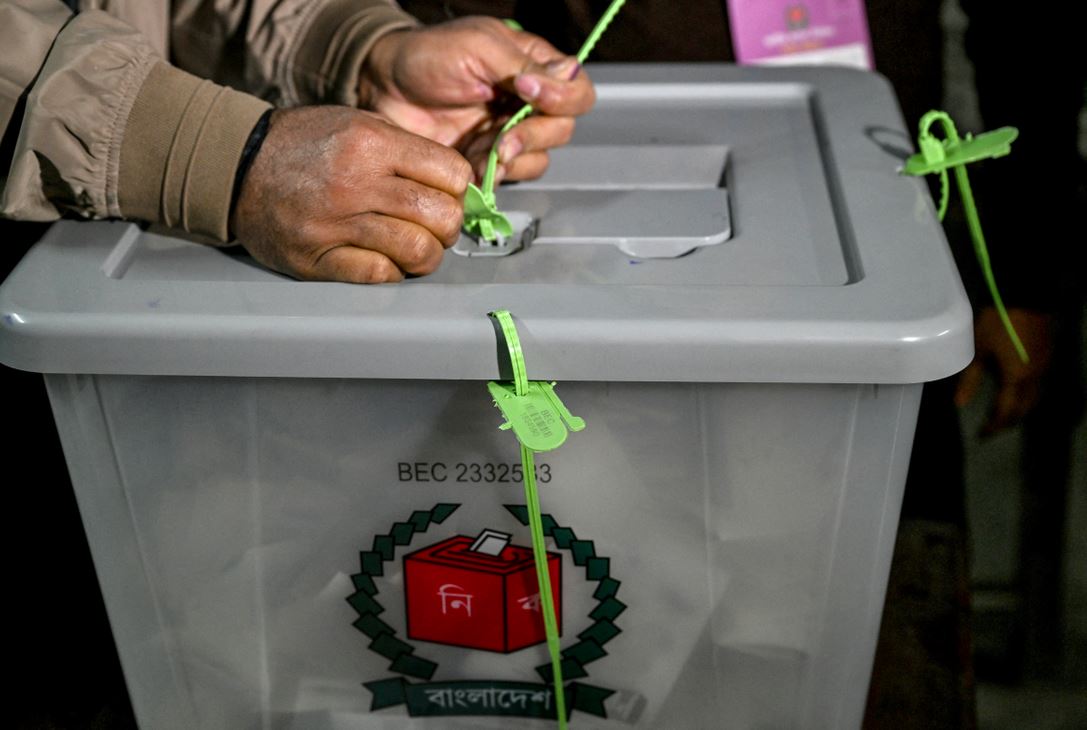
Notably, Bangladesh’s laws do not explicitly prohibit voting outside one’s registered centre. Exclusion is embedded in the system’s structure instead. Voter lists are centre-specific. Ballots are allocated with numerical precision. Votes are counted by polling station. The architecture prioritises administrative convenience over voter access.
Election Commission officials acknowledge this reality. One senior official cited ‘established law’ and RPO-based rules, yet could not identify a provision that directly forbids voting elsewhere. The real concern, he admitted, is logistical – how ballots would be managed if voters could appear anywhere.
That concern reveals the core flaw. The system prioritises ballots over voters, procedures over lived experience. Citizens are expected to shape their lives around electoral mechanics, rather than the state adapting the system to citizens’ realities. This rigidity is striking given recent reforms. For the first time, Bangladesh has enabled incarcerated individuals to vote. Nearly 6,000 prisoners are registered to cast ballots inside jails, a commendable step toward inclusivity. If voting can be organised within prison walls, why is it impossible for citizens who have merely changed workplaces or cities?
Postal ballots and limited expatriate voting arrangements exist, but in practice reach very few. Complex procedures, limited awareness, narrow timelines, and digital literacy gaps exclude many, especially the poor and elderly.
Globally, democracies are moving in the opposite direction. In many countries, voting is treated as a citizenship-based right rather than an address-bound obligation. Mail-in ballots, advance voting, and flexible polling systems ensure participation despite distance, illness, or work. Bangladesh’s own digital progress makes the impasse more paradoxical. A biometric voter database exists. Smart NID cards are widespread. Yet voting remains rooted in an emergency-era, analog model.
Citizens’ lives have become mobile. The vote has not.
At its core, the question is philosophical: do Bangladeshis vote because they belong to an address, or because they are citizens? Until the system is redesigned around people rather than polling centres, millions will hold smart identity cards while their voting rights remain anchored elsewhere.
The writer is an Assistant News Editor, Channel 24