

Bangladesh has been waiting for a free, fair and participatory election for a long time. However, the reality paints a grim picture as we are approaching the election poll date.
Women have long been considered as secondary in case of politics and this nomination scrutiny process for 13th parliamentary election has showed the structural, procedural and political barriers faced by women in electoral politics again.
These barriers are compounded by deep-rooted social attitudes, religious conservatism and the perception of politics as a male-dominated field, which together discourage women from even entering the race.
Despite decades of promises on gender equality, electoral policies continue to be shaped by male dominance.
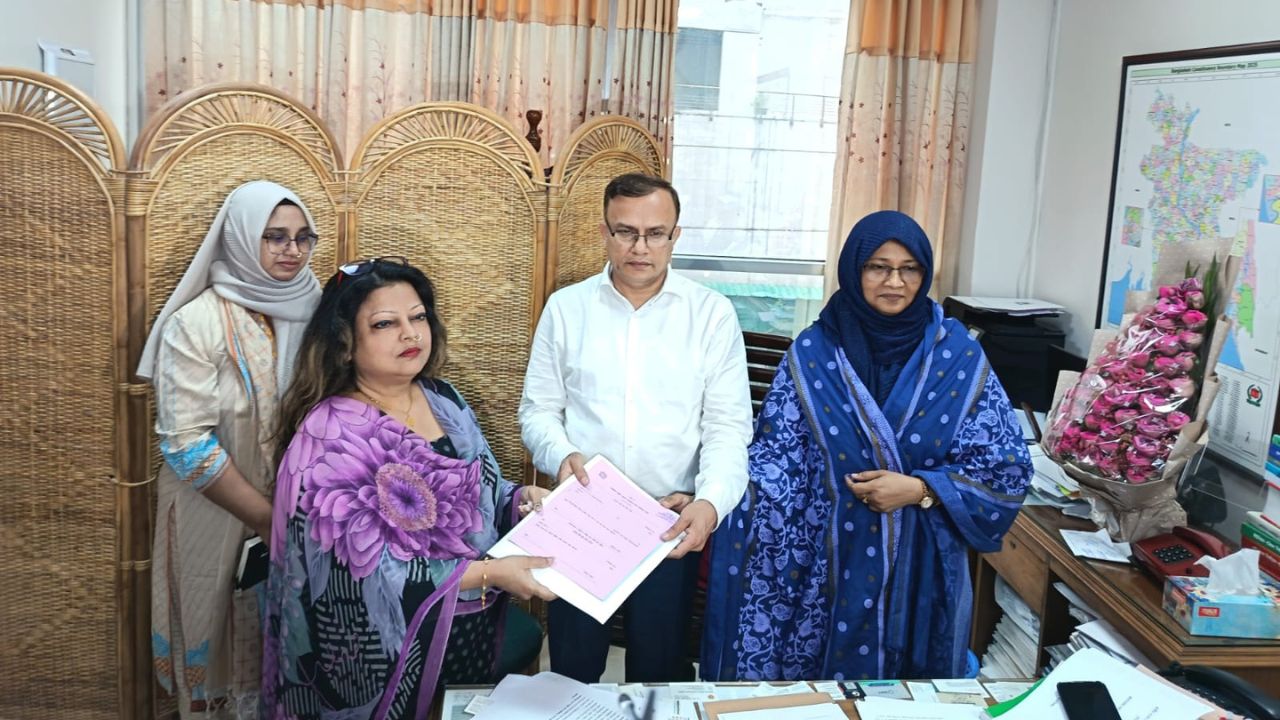
Out of 108 female candidates who submitted nomination papers this election, only 70 were ultimately declared valid, while 38 women were eliminated at different stages of scrutiny, according to Election Commission (EC) data.
Initially, after primary verification, 63 women were found eligible. Following appeals, seven additional candidates were granted validity, bringing the final number of approved female contestants to 70. This means that approximately 64.8 per cent of female applicants passed the scrutiny process, while 35.2 per cent were rejected.
By contrast, the overall candidate poll paints a broader picture. A total of 2,568 candidates submitted nomination papers nationwide, of whom 1,842 were declared valid.
Women therefore make up only 4.26 per cent of all candidates, despite comprising nearly half of Bangladesh’s population and an estimated 63 million voters. The low proportion underscores a long-standing gender gap in formal political representation.
It reflects a political culture that continues to view leadership as a male entitlement and women as secondary participants who are just welcome in rallies and movements but unwelcome in positions of power. Election
Commission officials cited several technical and legal reasons behind the rejection of female candidates’ nomination papers.

These include incorrect or incomplete party certification, failure to attach or properly sign affidavits, loan default status, non-disclosure of criminal cases, missing candidate signatures and errors in the mandatory voter support list, which requires signatures from at least one percent of voters in the constituency.
Former Additional Secretary of the Election Commission Secretariat Jasmine Tuli explained that these disqualifications stem from strict legal requirements. “Candidates must comply with the law. There are no special legal exemptions for women if their paperwork or requirements fail to meet the criteria,” she said.
However, Tuli also said that legal compliance is only part of the problem. “Beyond the law, there is a systemic lack of support from political parties, which makes it harder for women to meet these requirements in the first place,” she said.
A party-based analysis reveals striking disparities in success rates. Independent women candidates formed the largest group, with 42 applicants, yet they also suffered the highest rejection rate. Only 13 independent candidates were finally selected, while 29 were eliminated, meaning nearly two-thirds failed to pass scrutiny.
Independent women candidates face additional obstacles, as they lack party protection against harassment, intimidation and social backlash.
Many also struggle to collect voter signatures due to conservative attitudes and religious objections to women engaging in public political campaigning. This confirms long-held concerns that running without party backing leaves women especially vulnerable in navigating documentation, verification and resource constraints.


Women candidates faces harassments in multiple levels. During offline campaigns, many report verbal abuse, character assassination and intimidation. While in social media abusive comments, threats, fake allegations and coordinated trolling creates serious emotional distress and security concerns, discouraging women to continue electoral policies.
In contrast, party-backed women fared better, but their numbers remain small. BNP nominated only 10 women of whom nine of them were approved, with just one rejection.
Several left-leaning and socialist parties such as Bangladesh Samajtantrik Dal (Marxist), Insaniyat Biplob
Bangladesh, Jatiya Samajtantrik Dal, Gono Forum, NCP, Jatiya Party, National Peoples Party and Revolutionary Workers Party saw all, or nearly all their female candidates pass scrutiny though they are small in the number.
However, some smaller or newer parties struggled. AB Party had three female candidates, of whom two were rejected, while Bangladesh Labour Party’s only female candidate failed to secure validity.
The exclusion is most evident in Jamaat-e-Islami, which submitted 276 nominations without including a single woman. This absence reflects how religious conservatism is repeatedly used to justify excluding women from leadership.
Tuli pointed out that nomination numbers themselves reveal discrimination. She said that most parties continue to fail to meet their own stated goal of 33 percent female representation within party committees.
Under the “Representation of the People Order (RPO)”, political parties are required to reserve at least 33 percent of central and committee positions for women, yet in practice, no party has fully complied.
The Election Commission extended this target to 2030, yet recent reports show that among the 51 parties contesting the upcoming election, 30 have nominated zero women candidates, showing a massive imbalance.
Several women regained eligibility through the appeals process on January 10 and 11. Among those declared valid after appeal are Tasnim Jara (Independent, Dhaka-9), Kamrunnahar Sathi (Bangladesh Samajtantrik Dal, Cumilla-6), Sabina Jabed (National Peoples Party, Dhaka-18), Champa Rani Sarkar (Revolutionary Workers Party, Netrokona-4), Kazi Reha Kabir (Kishoreganj-4), Dilruba Noori (Bangladesh Samajtantrik Dal, Bogura-6), and Shamima Ara Parvin (Jatiya Party, Khulna-5).
Profession-wise data suggests that women from formal and legally recognised professions fare better. Lawyers, advocates, doctors, teachers, farmers, development workers and medical officers were almost entirely approved, likely due to stronger familiarity with legal documentation.
In contrast, businesswomen and homemakers, who formed the largest applicant groups, experienced higher rejection rates, often linked to asset disclosure or financial documentation issues. Students and candidates with informal or non-traditional occupations were also more vulnerable to rejection.
The asset data reveals significant economic disparity among female candidates. Nearly 59 per cent have assets below Tk 50 lakh, whereas only about 8 per cent possess assets exceeding Tk 5 crore.
Declared assets shows a wider gap, with Tahmina Akhtar of Insaniyat Biplob Bangladesh reporting just Tk50,000, while Afroza Khanam Rita of BNP declared assets worth Tk28.25 crore.

Geographically, Dhaka division dominated, accounting for 40 female applicants, of whom 28 were approved. Chattogram and Rajshahi showed moderate participation, while Sylhet and Barishal recorded the lowest numbers, reflecting regional disparities in political access for women.
Financial and legal records also played a role. Fourteen women candidates had outstanding loans and nine had criminal cases listed. Although neither automatically disqualifies a candidate, rejection rates were noticeably higher among those with such complications.
The low number of women candidates is particularly concerning in the current political context. Following the mass uprising of August 5, 2024, where women took on visible leadership roles, many expected a surge in female political participation.
Instead, the nomination list shows a decline. In the 2024 election, 133 women contested, compared to 108 this time. As many as 68 female candidates contested the 2018 general election.
In the 2014 and 2018 Bangladesh National Election a total of 29 and 68 female candidates respectively contested for general seats.
In 2008 election,56 women contested among the 1,552 candidates for 299 seats, representing only the 3.6 per cent of total candidates.
Political analyst Professor Dilara Chowdhury said that the pattern mirrors historical trends. “Women lead during movements but are sidelined afterward,” she said, adding that without direct election to general seats, women cannot meaningfully influence policy or parliamentary decisions.
As Jasmine Tuli said, “Women are active, capable workers in political movements and field-level activities. The real question is why political parties continue to discourage or fail to nominate these women.”
Without internal party reforms, institutional support and genuine enforcement of representation targets, analysts warn that women’s participation in Bangladesh’s electoral politics will remain symbolic rather than substantive, regardless of their contributions in social movements.