

Glaring discrepancies emerged between the First Information Reports (FIR) submitted to a Bogura court and the police defending LGRD State Minister Mir Shahe Alam in two defamation cases filed by a non-aggrieved individual against a group of journalists.
Although the High Court has previously observed that a third party does not have the standing to file a defamation case, the Bogura court accepted the lawsuit and directed the police station to take action.
Subsequently, new details were inserted into the complaint submitted to the police, and an additional name was included as an accused.
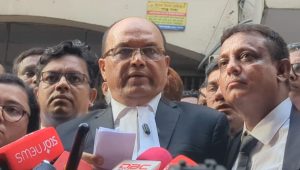
Senior Supreme Court lawyer Manzill Murshid said that it is highly unusual for the police to alter a complaint or introduce new charges when a court has explicitly ordered that the initial complaint be recorded as a FIR.
The plaintiff in this case, Md Tanvir Alam, is a journalist and a ruling BNP activist. He is the northern correspondent of Dhaka-based The New Nation and treasurer of the Bogura Press Club. Alam is also an editor of a local newspaper –Dainik Mahasthan – and was formerly a leader of the Jatiyatabadi Swechchhasebak Dal, an affiliate organisation of BNP.
The legal dispute arose amid widespread criticism over the naming of three unions in Shibganj, Bogura, after the state minister’s two children and a niece.
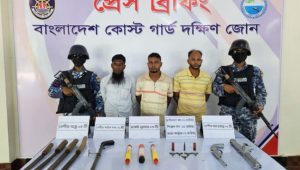
Following the public backlash over the case, the police acted swiftly, and two days later, on Thursday, the primary accused, Rezanur Islam, the acting editor of the Dainik Agrajatra Pratidin, was arrested from Gazipur.
Question over defamation case
Asked whether a third party could file a defamation case, Bogura Detective Branch officer-in-charge Inspector Iqbal Bahar said, “This is a misconception. If a petition case is filed in court, the magistrate can either direct an investigation or issue a summons. If the defendant fails to respond to the summons, an arrest warrant can be issued against them. Furthermore, if the court instructs an investigative agency to look into the matter, the accused can be arrested based on the resulting report.”
He added that if someone files a case with a police station, the OC is obliged to register it, provided it is actionable.

His claims go against an observation of the Supreme Court. In an interpretation of Section 198 of the Code of Criminal Procedure, the court stated that only the individual whose reputation has been directly damaged can file a case.
The Supreme Court of India has made several observations on this matter. In the cases of Subramanian Swamy v Union of India (2016) and G Narasimhan v TV Chokkappa (1972), the court ruled that only the aggrieved person has the standing to file a defamation case.
Lawyer Manzill Murshid commented, “According to the Code of Criminal Procedure, the aggrieved person must file the case. Even so, courts are often seen accepting cases filed by third parties. Such incidents may well be the result of political influence.”
What the court FIR says
Tanvir Alam filed a case against four journalists with Bogura court on 15 June, alleging that the accused deliberately published false and defamatory news in Agrajatra Pratidin.
According to the FIR, these provocative reports sparked public discontent and were further disseminated via the defendants’ verified social media pages to defame State Minister Mir Shahe Alam and disrupt local development initiatives.




The lawsuit highlights several specific headlines, including “State Minister Shahe Alam embroiled in corruption controversy” and “Directly involved in multiple corruption cases within just two months of taking office as State Minister”.
It also notes that on 12 June, while the plaintiff was at the Bogura Press Club, social media posts circulated titled “Corrupt State Minister’s fraud exposed with the Prime Minister in Bogura” and “Controversial State Minister Mir Shahe Alam involved in road incident: former self-proclaimed journalist now offers advice to reporters”.
The following day, Prime Minister Tarique Rahman made an official visit to Bogura, accompanied by Shahe Alam. That same day, another report emerged claiming the “Controversial State Minister Mir Shahe Alam was seen running ahead of the Prime Minister’s car in Cox’s Bazar”.
Contending that these reports caused “severe harm and reputational damage”, the lawsuit names Mehedi Hasan, Ashraf Ali Farooqui, Saleh Kaiser, and Shams Tushar as defendants.
Following the initial hearing, the judge took cognisance of the complaint, accepted it as an FIR, and ordered the relevant police station to take legal action.
The modified FIR
The complaint submitted to the Bogura Police Station on 17 June duplicated the previous allegations but added two new accused, Md Rezanur Islam and Md Sabbir Hasan, who have since been arrested. Rezanur is the editor of Agrajatra Pratidin
According to the complaint, during preparations to file the case, the prime accused, Mehedi Hasan, called the plaintiff via WhatsApp, demanding Tk 20 lakh to stop reporting against the minister and threatening to destroy both of their reputations if he refused. Mehedi is also alleged to have issued death threats.
When asked on whose advice he included this extortion claim, the plaintiff, Tanvir Alam, gave the credit to his lawyer.
Ibrahim Ali, the Officer-in-Charge (OC) of Bogura Police Station, confirmed this addition was central to registering the case: “He complained about extortion, so I accepted the case.”
What aggrieves the plaintiff?
The additions raise questions about Tanvir’s standing to sue over the State Minister’s reputation. Explaining his motivation, Tanvir told TIMES, “After 32 years, Bogura finally has a minister. No development took place here for 17 years, but now he is trying. If fabricated stories target him, he might just stop working.”
He then lectured reporters on journalism ethics, “You cannot call someone corrupt unless a court rules so. Can you really just declare it yourselves? Besides, Mir Shahe Alam was once a journalist.”
When challenged that he lacked legal grounds to sue purely over the minister’s reputation, Tanvir shifted his narrative. “If you read the complaint, the primary accused also threatened to report against me, demanded extortion, and threatened me directly,” he argued.
Even when reminded that he had already filed a separate defamation case in court, Tanvir repeatedly pivoted back to Bogura’s development interests.
Meanwhile, the state minister’s private secretary, Md Atiqur Rahman, told TIMES they had not discussed the case with Tanvir. Downplaying their connection, Atiqur said, “The minister speaks to many journalists professionally. His relationship with Tanvir is no different from any other eight or ten reporters.”
Local journalist Md Nazmul Huda Nasim said, “Mir Shahe Alam has a press secretary, party activists, and lawyers who could have filed this. Tanvir essentially hijacked the lawsuit just to get into the minister’s good books.”
Police over-activity?
Supreme Court lawyer Saiful Islam Saif told TIMES that just as the law regulates who has the standing to file a defamation case on another’s behalf, there is also no legal provision for an immediate arrest after a complaint is lodged.
He explained that the court must first receive the complaint, record the complainant’s statement and testimony, and issue a summons if necessary.
Legal action or an arrest warrant is only pursued if the accused fails to respond to the summons or disobeys a court order, he added.
When asked whether the Bogura Detective Branch (DB) had shown excessive zeal in pursuing this case against the journalists, the DB OC Iqbal Bahar said, “It cannot be described as over-activity. In fact, we tend to give greater priority to cases when they are filed by journalists.”
When reminded that the accused are also journalists, he replied, “The person who filed the case is an editor too. What are we supposed to do?”
The DB official confirmed that upper management had been consulted, saying, “Of course. In cases like this, we act strictly under the instructions of our superiors.”
When contacted for comment, Bogura Additional SP and District Police Spokesperson Ataur Rahman downplayed the urgency of the arrests, saying, “This is standard procedure; the police are working at their normal pace.”
Asked whether the department was facing external pressure, he iterated, “There is no pressure. We are simply working at a normal pace.”