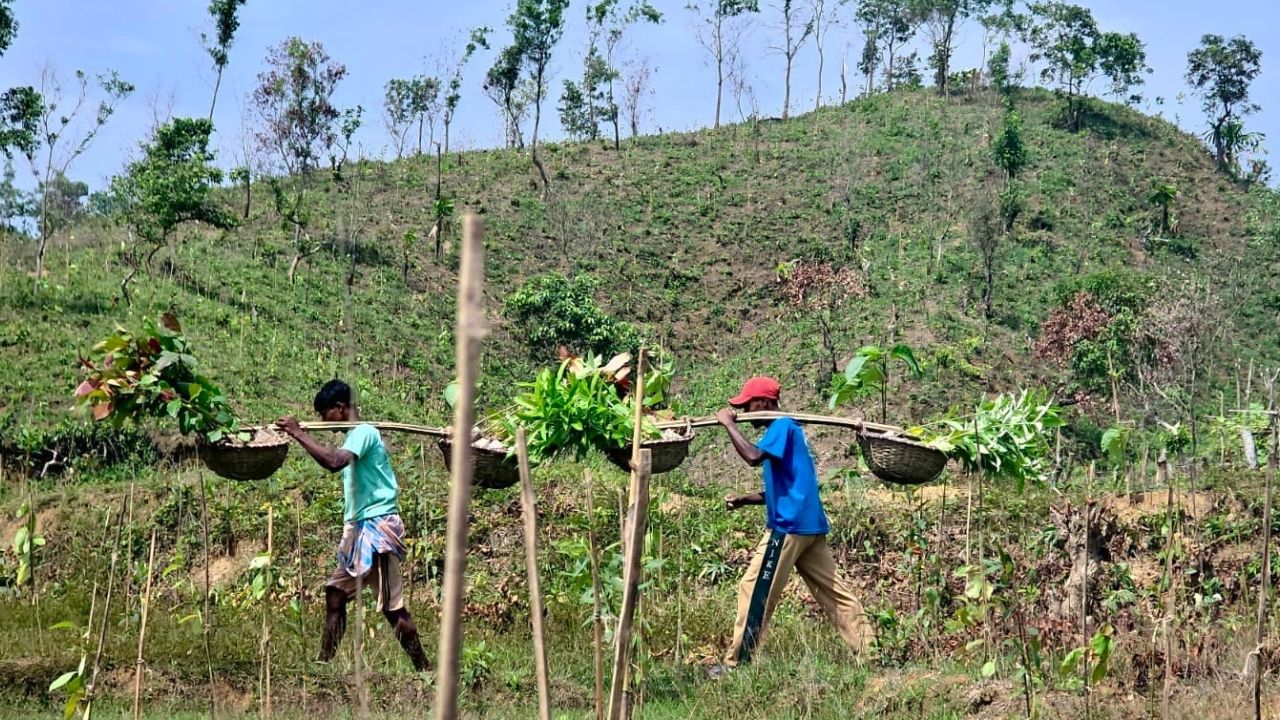



The government has launched a massive initiative to plant 4,120,950 saplings across Cox’s Bazar district over the next year, with 2,756,100 of these destined specifically for Ukhiya and Teknaf upazilas.
According to the Forest Department, the project aims to restore the forests, forest lands, and wildlife habitats that were damaged following the arrival of Rohingya population.
Extensive plantation coverage
The Forest Department has detailed a comprehensive breakdown of the planting sites. In the Teknaf range, 50,000 saplings have been planted across 20 hectares in Muchni Beat, 150,000 across 60 hectares in Hnila Beat, and 250,000 across 100 hectares in Middle Hnila Beat.
Under Shilkhali range, 100,000 saplings were planted in Shilkhali Sadar and Mathabhanga beats, covering 40 hectares each.

In Whykong range, 475,000 saplings were planted across 190 hectares in Whykong Beat, while 75,000 were planted across 30 hectares in Monkhali Beat.
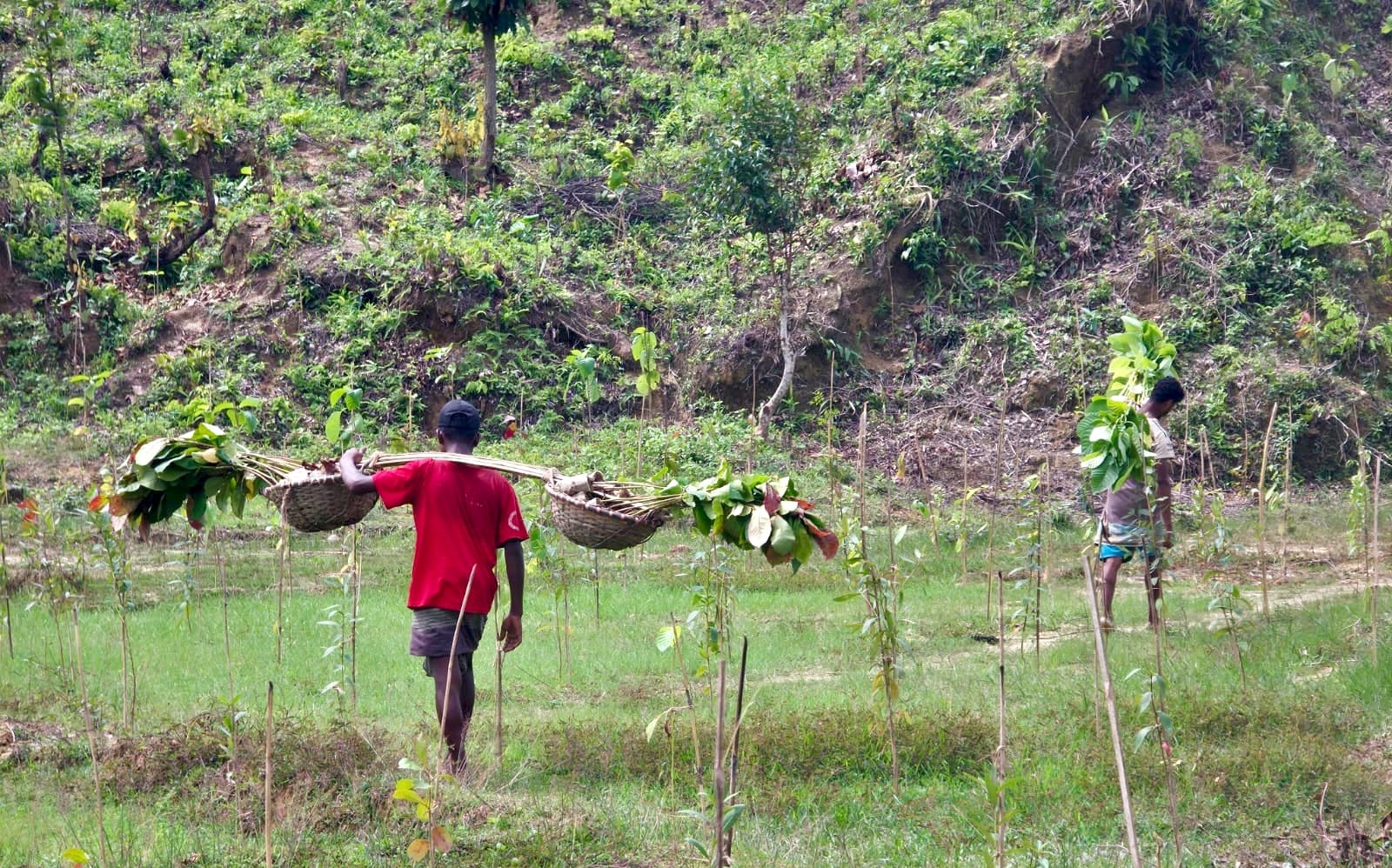
In Ukhiya upazila, Ukhiya range saw 375,000 saplings planted in Thaingkhali, 125,000 in Dochhari, and 150,000 in Ukhiya Sadar Madhurchhara Beat. Additionally, 125,000 saplings were planted across 50 hectares in Paglirbil Beat under Rajarkul range.
Inani range has seen 125,000 saplings planted each in Rajapalong, Jaliapalong, and Inani Sadar beats, alongside 225,000 saplings across 90 hectares of forest land in Choangkhali Beat.


Moreover, Chattogram Coastal Forest Division is currently planting 100,000 saplings for embankment afforestation from Jadimura to Chowdhuripara in Teknaf, and 111,100 mangrove saplings in Chowdhuripara area.
Focus on biodiversity and security
The Forest Department is prioritising fruit-bearing and medicinal trees.
The initiative includes 56 endangered native species, such as arjun, haritaki, bahera, chikrashi, jarul, kajalvadi, garjan, civit, palash, bakul, silkoroi, chakua, koroi, teak, gamari, dharmara, sonalo, krishnachura, chhatiyan, kanchan, buddha narikel, shimul, box-almond, wood-almond, amla, olive, black plum, and putijam.
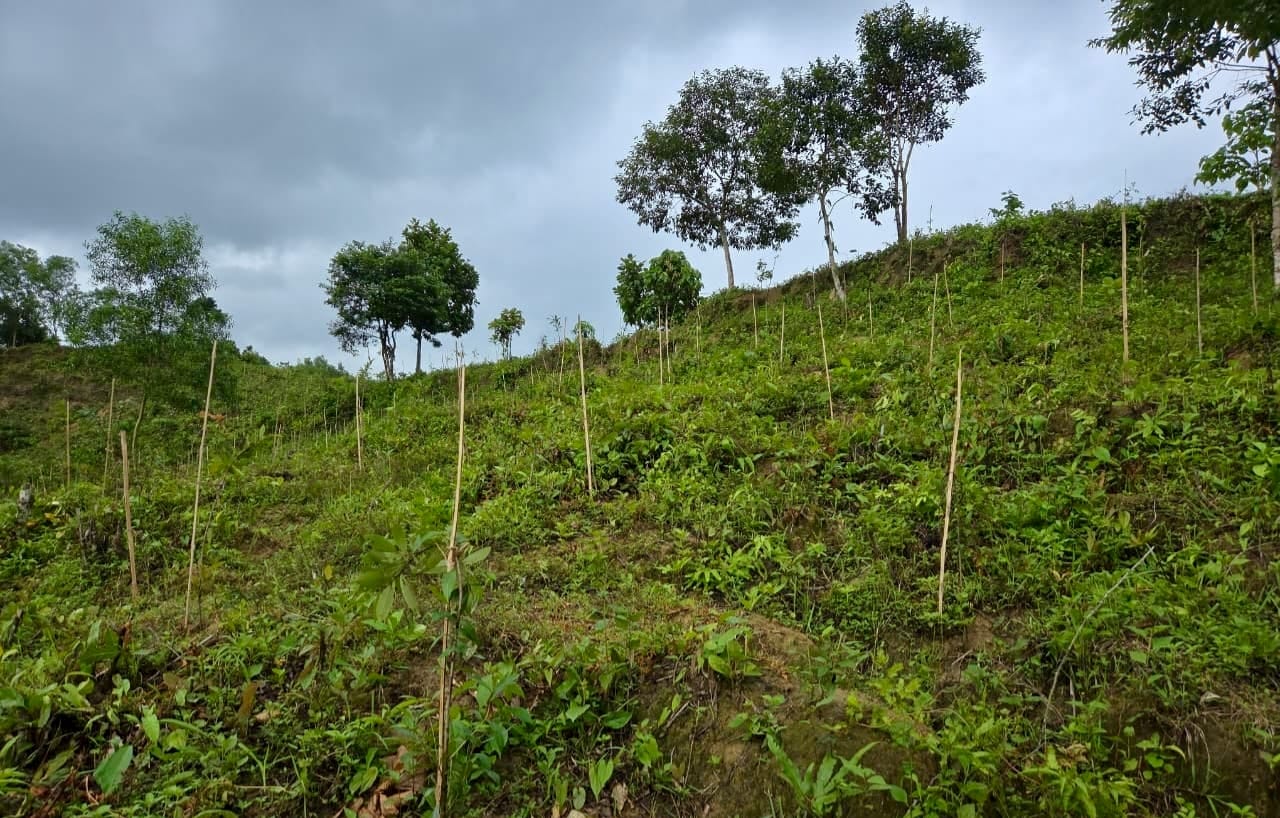
The reforestation efforts also address social concerns.
Since the 2017 Rohingya influx, these once-lush green forests had largely become hideouts for criminals, plagued by robbery, kidnapping, and ransom demands.
Official statements
SM Anik Chowdhury, Teknaf upazila nirbahi officer, said as these fruit, timber, and medicinal saplings grow, they will supply oxygen and play a vital role in maintaining environmental balance.
Abdullah Al Mamun, divisional forest officer of Cox’s Bazar South Forest Division, said the new plantations would be instrumental in recovering “irreparable damage” caused to the forests, land, and wildlife.
Experts and forest officials believe these newly created gardens will remain sustainable and long-lasting.