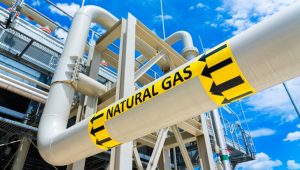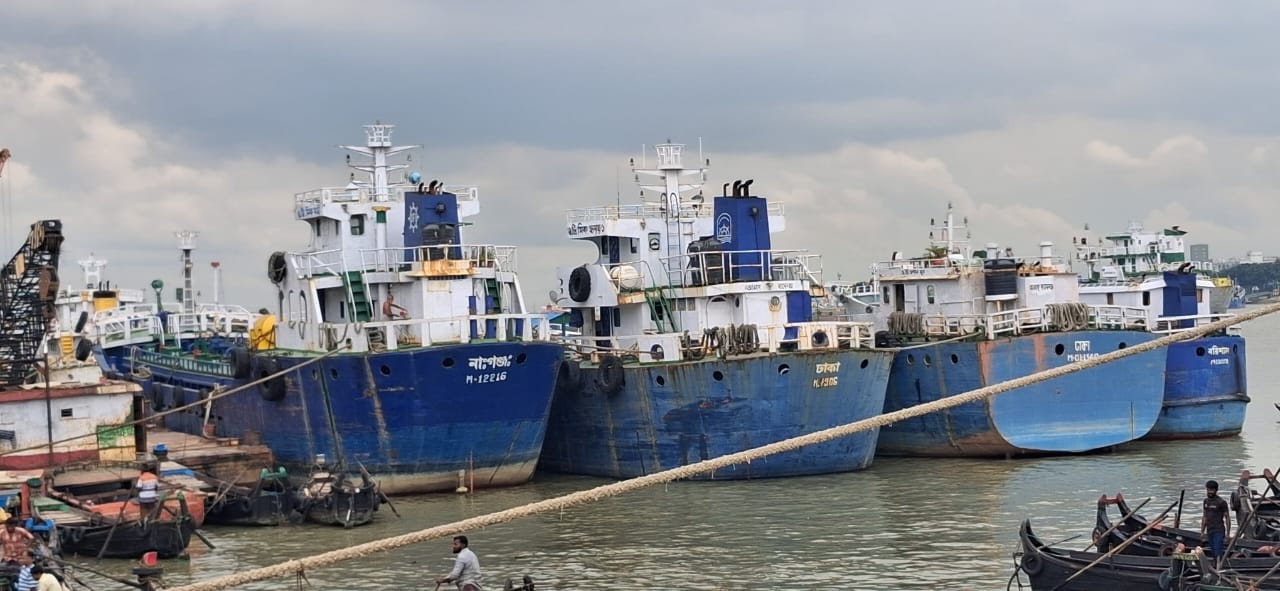

The launch of the Dhaka-Chattogram fuel oil pipeline has left 177 oil tankers operating on Bangladesh’s inland waterways struggling financially. Oil tanker owners warn that 40 percent of river-based fuel transport could be lost, putting the livelihoods of over 2,600 workers and billions of taka in investments at risk.
Before the pipeline’s launch, tankers typically made four to five trips per month. Now, with the pipeline in operation, trips have been reduced to just two per month, cutting owners’ incomes by nearly half. Many tanker owners are already under financial pressure due to bank loans and other obligations.
Owners have explained that each idle tanker costs its owner around Tk 15 lakh a month, whereas operational vessels would cover their expenses and generate an estimated monthly profit of Tk 10 lakh.

The Bangladesh Petroleum Tanker Owners Association reports that its members have 120 tankers, with an additional 57 tankers under the Bangladesh Oil Tanker Owners Association, totaling 177 affected vessels. These tankers transport fuel for the Bangladesh Petroleum Corporation (BPC), with an estimated total investment of Tk 2,655 crore.
Shamsul Alam Shamim, Secretary of the Bangladesh Petroleum Tanker Owners Association, said, “Before the pipeline, tankers made three trips per month. Now, with diesel being transported via pipeline, river-based diesel transport has stopped. Tankers are now only making one trip per month, carrying fuels like octane and kerosene, but this is insufficient to cover operating costs.”



Rising fuel prices and labor costs have compounded the challenges for tanker owners, and they have called on the government for policy support to preserve the sector and protect workers’ livelihoods.
Nabi Alam, Joint Secretary of the Bangladesh Noujan Sramik Federation, emphasized that 2,655 workers in the sector are now at risk of losing their jobs due to the reduced demand for river transport.
The Bangladesh Petroleum Corporation (BPC) officially launched the Chattogram-Dhaka pipeline on August 16, 2025. The pipeline now supplies 40 percent of the country’s fuel, significantly reducing the need for river transport.
Amin Ul Ahsan, Chairman of BPC, said, “With the pipeline in operation, we no longer depend on leased oil tankers as much. We will only hire vessels required for river routes, reducing tanker usage by about 40 percent.”
BPC supplies 6 million tonnes of fuel annually, with 4.6 million tonnes being diesel. A third of this diesel is now transported via the pipeline, which currently has a capacity of 3 million tonnes, with plans for expansion to 5 million tonnes in the future.