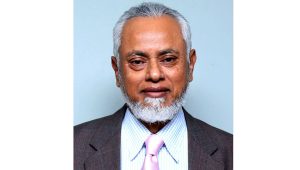
There is “zero room” for any tax increase on businesses amid prolonged macroeconomic stress, Bangladesh Association of Publicly Listed Companies President Riad Mahmud said, linking fiscal pressure, capital market inefficiencies, and liquidity constraints to a broader deterioration in the investment climate.
In an interview with Mahfuz Ullah Babu of TIMES of Bangladesh, he said businesses are now in their sixth year of successive external and domestic shocks, beginning with the pandemic, followed by the Ukraine war, political instability, and most recently the Iran-related conflict.
He noted that this prolonged cycle of disruptions has coincided with slowing demand, rising input costs, shrinking room for price adjustments, and a growing tax burden, leaving firms financially stretched.
Against this backdrop, the immediate policy priority should be stability rather than new fiscal pressure.
“We want a status quo at least. We do not want any tax increase in any form,” he said, adding that while businesses understand the government’s need for revenue, additional tax burdens at this fragile stage would intensify pressure on already struggling firms.

The stress is further amplified by high borrowing costs of 12 to 14 per cent, which have tightened working capital cycles and made day-to-day operations increasingly difficult, reinforcing the need for relief measures in the upcoming budget.
Linking financing stress to structural inefficiencies, Mahmud said the capital market remains significantly slower and less competitive than bank financing, limiting its role in corporate fundraising.
He said equity fundraising under the current process takes up to 14 months in the best-case scenario, while a bank loan takes five months in the worst-case scenario.
He argued that this delay weakens investment appetite and reduces market efficiency, especially when compared with faster bank disbursement cycles.




“The IPO process must come down to five months. If it remains 14 months, the capital market will never improve,” he said, proposing a shorter timeline without compromising due diligence.
He also pointed to governance-related constraints in capital market reforms, warning that certain proposed stringent rules could unintentionally restrict corporate flexibility.
These include restrictions on managing directorship across multiple companies within the same group and requirements for multiple sponsor directors in listed firms.
He said such provisions risk creating structural bottlenecks in ownership and management arrangements, particularly where qualified sponsor directors are not easily available.
“If I set up another company under my group, I may have to appoint my wife or family members as managing director or sponsor directors. They may not be suitable or even interested,” he said.
Shifting to support measures, Mahmud referred to the initiative to revive closed companies and stressed that priority should be given to operating firms struggling with working capital shortages.
According to him, supporting functioning firms generates significantly higher economic and employment multipliers than reviving inactive units, particularly under current liquidity stress.
“If a running company gets Tk2, it can create Tk10 worth of employment impact. But a closed company may not deliver the same multiplier effect,” he said.
He warned that ignoring liquidity stress in operating firms could neutralise employment gains, especially in a context of compressed margins and weak cash flows.
He said successive shocks—ranging from high interest rates and currency pressures to repeated external crises and subdued demand—have left businesses without sufficient recovery time, creating a cumulative strain across sectors.
“It is like a vehicle with only two litres of fuel. You have the car, but it cannot run,” he said, calling for targeted working capital support through the banking system.
The budget should address these needed supports, he added.