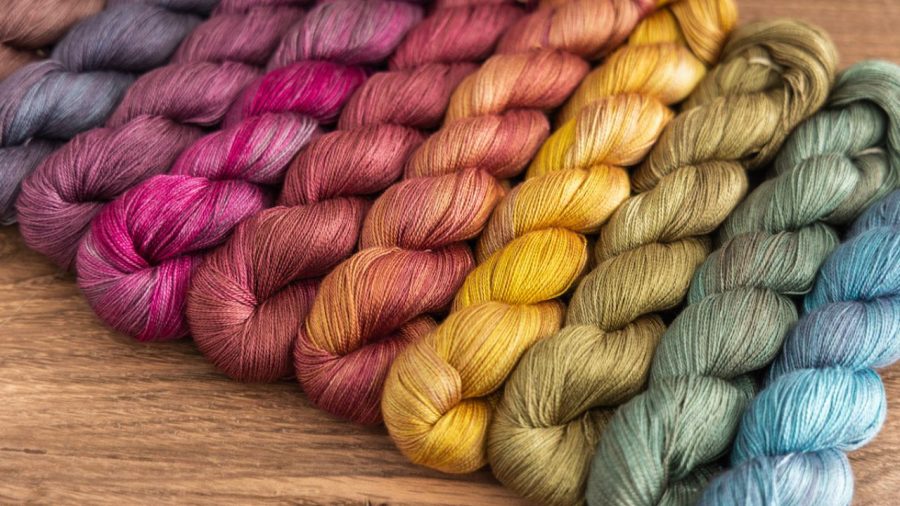

The National Board of Revenue (NBR) has withdrawn the bond facility for importing 10–30 count cotton yarn used by export-oriented garment factories, requiring exporters to provide bank guarantees equivalent to applicable duties and taxes.
The move, effective immediately, has triggered a dispute between textile millers and garment exporters. While spinning mills expect higher demand for locally produced yarn, Bangladesh Garment Manufacturers and Exporters Association (BGMEA) and Bangladesh Knitwear Manufacturers and Exporters Association (BKMEA) warn that the new requirement will raise costs for exporters already facing weak orders.
In an order issued on Monday, NBR withdrew the bond facility for 10–30 count cotton yarn under HS codes 5205, 5206 and 5207. Exporters holding warehouse licences can continue importing yarn by submitting a bank guarantee at customs.
Under the new arrangement, importers must submit certificates from BGMEA, BKMEA or BTMA to the relevant customs station and provide an unconditional, unexpired bank guarantee covering applicable duties and taxes.
The guarantee will be released after the exported products made from the imported yarn are shipped and certified by the relevant licensing authority.

The order followed a decision by an inter-ministerial committee formed to review problems in the textile sector. The committee decided on 20 August to withdraw the bond facility for the yarn categories and allow imports against bank guarantees.
BGMEA and BKMEA have opposed the move, saying the decision was included in the meeting minutes despite not being discussed at the inter-ministerial meeting.
In a joint letter to the commerce minister on Monday, BGMEA President Mahmud Hasan Khan and BKMEA President Mohammad Hatem said the decision to withdraw the bond facility and require exporters to source at least 50 per cent of yarn from local spinning mills was not discussed at the meeting.




The two associations warned that replacing the existing bond system with a bank guarantee-based mechanism would hurt the competitiveness of Bangladesh’s apparel sector and send a negative signal to international buyers.
Their concern is also linked to cost pressure.
Industry people said Bangladesh imports around Tk30,000 crore worth of yarn annually, with 10–30 count yarn accounting for about 60 per cent of the total. The cost of arranging a bank guarantee is 2 per cent or even higher.
Garment exporters argue that locally produced yarn is more expensive than imported alternatives. They fear the additional financing cost will further increase production expenses at a time when export orders remain weak, and production cost hikes are hurting profitability.
Textile millers, however, welcomed the decision. BTMA said the previous bond facility allowed duty-free yarn imports that reduced demand for locally produced yarn and affected the utilisation of domestic spinning capacity.
BTMA said the policy change could help revive closed and partially closed spinning mills, create employment and improve recovery of bank loans. It also argued that greater use of locally produced yarn would increase domestic value addition and help Bangladesh meet future market-access requirements after LDC graduation.
BTMA President Showkat Aziz Russell recently told TIMES of Bangladesh that Indian yarn exporters receive various forms of state support, allowing them to offer lower prices. He said the price gap has encouraged many apparel exporters to rely on imported yarn.
Indian yarn is 10 per cent or even cheaper, according to importers.
BTMA said the uneven competition has affected the local primary textile sector. Over the past two years, 166 BTMA member factories have shut down, while the gas crisis forced around half of the association’s 1,856 member mills to suspend operations or cut production.
The policy battle now centres on two competing concerns—protecting local spinning mills from cheaper imports and keeping Bangladesh’s garment exporters competitive in global markets.