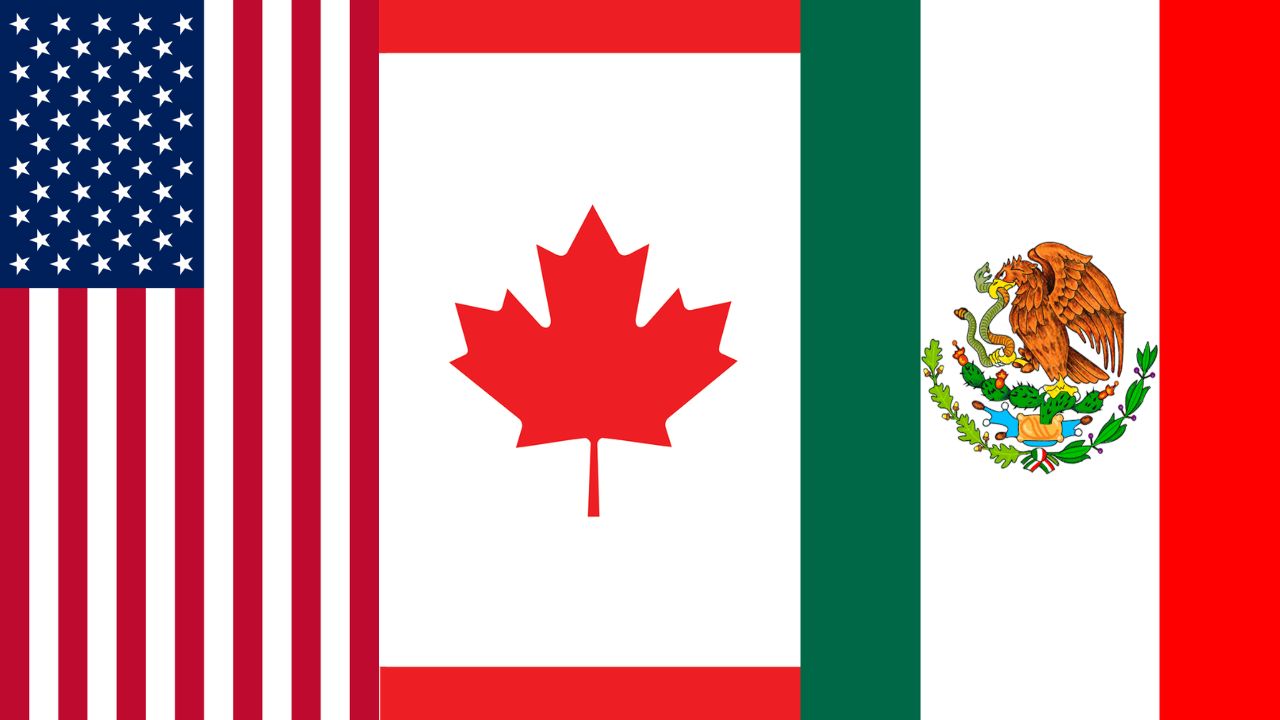

Football fans travelling to the 2026 World Cup will encounter three host nations— the United States, Canada and Mexico—whose relations have been fraught in recent years.
The 39-day tournament, spread across 16 cities on a continental scale, comes amid tensions over trade, immigration, and security, raising questions about whether the neighbours can set aside differences for the world’s biggest sporting event, says the BBC.
The tournament draw in Washington DC last December, where leaders posed for a selfie with Fifa President Gianni Infantino, masked deeper challenges.
US President Donald Trump has openly asserted American dominance on the continent, while unresolved disputes over tariffs, tourism, and investment have strained relations with both Mexico and Canada.
Canada and Mexico, among the United States’ top trading partners, were early targets of Trump-era tariffs.
Canada, offended by repeated US remarks about its status, retaliated with countermeasures, curbing US alcohol sales and reducing travel south, creating friction.

Analysts suggest these disputes have also complicated Canadian-Mexican relations, with Canada accused of undermining Mexico during US-China investment talks, said Carlo Dade, director of international policy at the University of Calgary.
“This was downright disrespectful,” Dade said, noting Canadian Prime Minister Mark Carney’s efforts to mend ties with Mexico while seeking trade diversification away from the US.
The 2026 World Cup marks the first time the men’s tournament will be co-hosted by three nations.
The logistical challenges are immense: fans crossing borders could encounter heightened US immigration enforcement, and security concerns—exacerbated by the ongoing Iran war—may escalate minor incidents.




Lindsay Sarah Krasnoff, a clinical assistant professor of global sport at New York University, warned that co-hosting large-scale sporting events does not guarantee smooth relations, citing mixed outcomes in the 2002 Japan-South Korea tournament and the 2023 women’s World Cup in New Zealand and Australia.
Yet, the tournament could offer diplomatic opportunities. Leaders of the three nations may use the World Cup to showcase unity and bolster national images, particularly amid domestic criticism.
In Mexico, President Claudia Sheinbaum has remained optimistic despite concerns over airport capacity, congested public transport, and stadium renovations.
She also faces ongoing protests from the teachers’ union over pensions and working conditions, which threaten to disrupt matches.


“It’s time to witness the best football in the world and to share who we are,” Sheinbaum said last year, emphasising cultural heritage and national pride.
Mexican football journalist Rafael Puente stressed that the challenges cannot be hidden and urged fans to exercise patience, highlighting the nation’s enduring enthusiasm for the sport.
Beyond football, the three countries are navigating a complex review of the North American free trade agreement (USMCA).
Mexico has initiated formal talks with the US, while Canada has yet to engage, and both nations pursue differing approaches to China, according to Dade. The World Cup presents a chance to advance diplomacy in parallel with sporting cooperation, he noted.
“Anytime you get leaders together, it’s generally a good thing,” Dade said, recalling the amicable interactions at the tournament draw.
Trump’s involvement, including public appearances and social media activity, could generate friction, yet his administration is keen to ensure the tournament proceeds successfully.
Fifa has expressed optimism, promoting the event as a “moment when three countries and an entire continent collectively say: ‘We are united as one to welcome the world and deliver the biggest, best and most inclusive FIFA World Cup ever.’”
Despite careful planning, observers caution that the three-way hosting experiment remains unpredictable.
“It was always going to be very complicated and very complex from the get-go,” Krasnoff said, reflecting on the tournament’s award process and the enduring tensions among the hosts.
As the World Cup approaches, the continent will watch whether the US, Canada, and Mexico can manage their differences, maintain security, and deliver a seamless tournament, or whether historic grievances will overshadow the game.