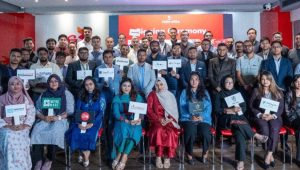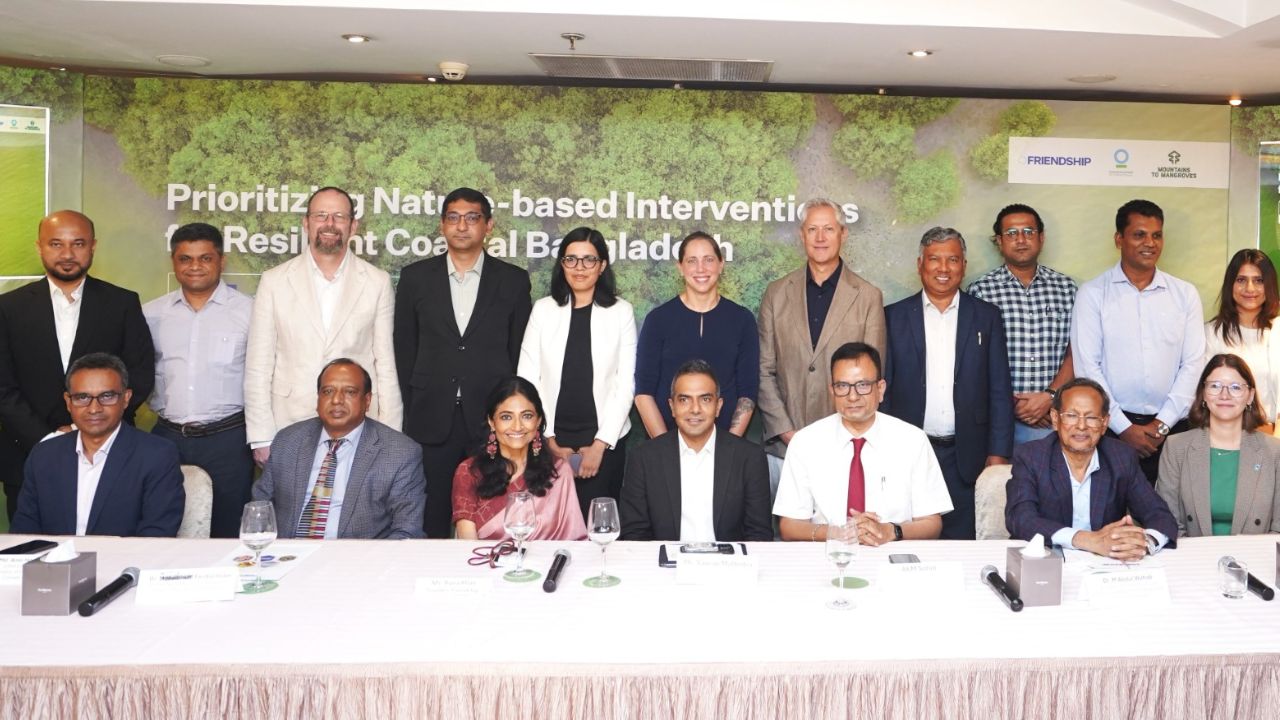

Friendship and Conservation International are jointly organising a two-day technical workshop in Dhaka to identify priority areas for mangrove restoration and protection, contributing to a national coastal resilience blueprint.
The national consultation, titled “Prioritising Nature-based Interventions for Resilient Coastal Bangladesh,” began on Sunday at Westin Hotel in Gulshan, in collaboration with the Ministry of Environment, Forest and Climate Change, said a press release.
State Minister for Environment, Forest and Climate Change Faridul Islam attended the event as chief guest.
Special guests included former secretary Md Faridul Islam and Economic Relations Division Additional Secretary AKM Sohel.
Chief Conservator of Forests Md Amir Hossain Chowdhury and Bangladesh Agricultural University academic Md Abdul Wahab.

The inauguration featured welcome remarks by Friendship Founder Runa Khan and Conservation International Managing Director for South Asia Saurav Malhotra.




Faridul Islam said coastal people had a different lifestyle, fighting with nature for their livelihoods, and stressed the need for coordination among NGOs and INGOs working in the area to ensure effectiveness.
Runa Khan called for moving beyond fragmented projects towards coordinated landscape action, urging all key ministries and agencies to align under one shared policy, planning, finance, implementation and monitoring framework with clear institutional responsibilities.
Malhotra said Bangladesh had made significant investments in helping coastal communities adapt to climate change, adding that restoring and protecting mangroves helped reduce climate risks while supporting wildlife and livelihoods.
The workshop is reviewing maps and technical data to identify priority locations offering greatest benefits for biodiversity, climate and ecosystem-based livelihoods, while assessing community readiness and institutional coordination. Participants are also exploring global best practices in coastal green-grey solutions and the role of mangroves as high-value blue carbon ecosystems, with discussions expected to inform restoration priorities, governance, monitoring, policy support and sustainable financing.