


Women’s participation in the 13th National Parliamentary Election has plummeted to 3.93 percent of total candidates, marking the lowest level in 25 years.
This decline has prompted urgent calls for a violence-free political environment and greater state investment to ensure women’s leadership in politics.
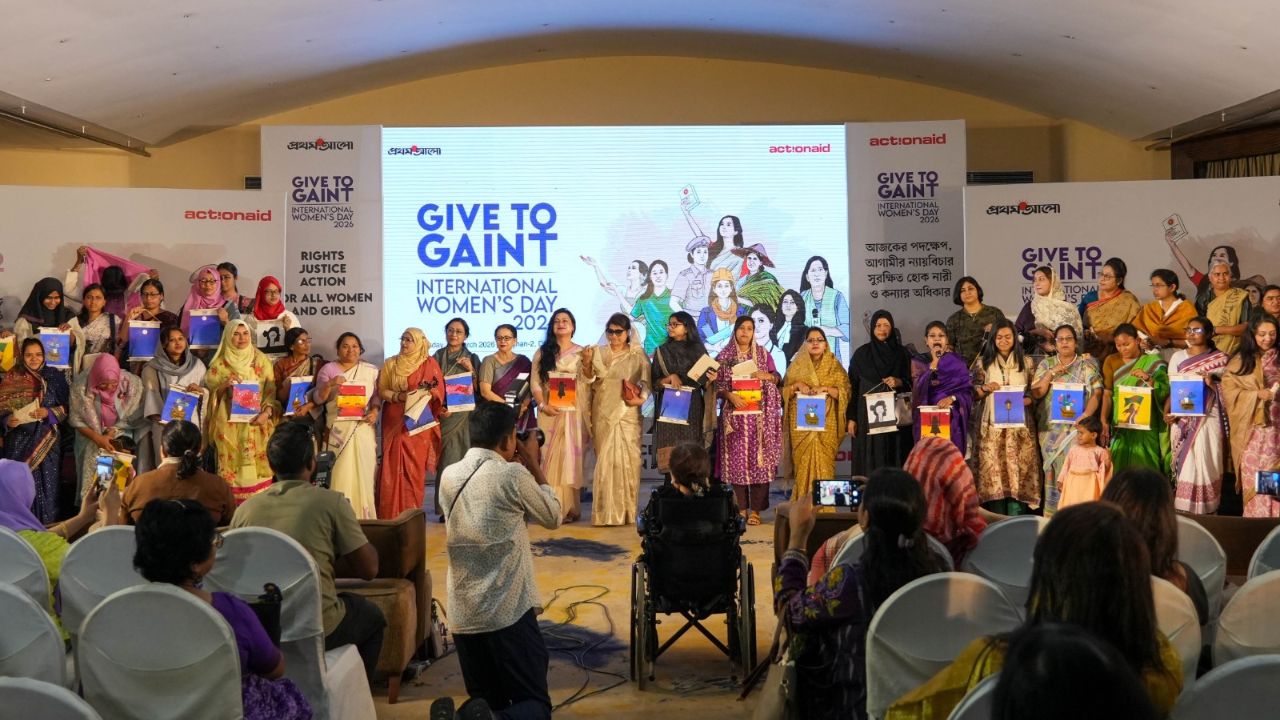
The concerns were raised by speakers at a dialogue and awards ceremony held in the capital on Thursday, ahead of International Women’s Day. The programme was jointly organised by ActionAid Bangladesh and Prothom Alo.
Participants warned that structural barriers in the electoral system, gender-based violence, and online harassment are restricting women’s political leadership.
Under Representation of the People Order, political parties are legally obligated to ensure 33 percent women’s representation at all levels – a requirement speakers described as both a legal and democratic responsibility.

Barriers to leadership
Campaign for Popular Education Executive Director Rasheda K Chowdhury questioned the disparity in how women are perceived in the political process. “If women are important as voters, why are they questioned as leaders?” she asked.
Prothom Alo Editor Matiur Rahman suggested that civil society and the media could have offered stronger support to independent women candidates in the recent election. He added that collective efforts in the future could play a more effective role in strengthening women’s leadership.
ActionAid Bangladesh Country Director Farah Kabir described women candidates as among the country’s bravest citizens for contesting elections despite hostile conditions. “We do not seek only an increase in numbers. We seek meaningful change,” she said.
Member of Parliament Rumin Farhana identified social attitudes as a primary barrier to empowerment. “We are ready to see strong women as daughters or sisters, but not as partners in change,” she remarked.


Grassroots and structural challenges
Tasnim Jara, an independent candidate for Dhaka-9, argued that many political parties treat women as symbolic figures in decision-making. She noted that women active at the grassroots level often face male-dominated structures during the nomination stage.
She pointed out that women elected through reserved seats often remain accountable to party leadership rather than voters.
Jara also stressed that online harassment discourages young women from entering politics, calling for an independent judiciary and an effective Election Commission to ensure a level playing field.
Member of Parliament Nayab Yusuf Ahmed highlighted that many marginalised women remain unaware that their basic rights are being denied, urging for collective action to address women’s problems.
Monica Alam, a Jatiya Party candidate from Jhenaidah, added that political actors have a social responsibility to prevent violence against women, regardless of whether they hold office.
Rising violence and discrimination
The dialogue also addressed broader issues of safety and equity.
Seema Dutta, a leader of the Socialist Party of Bangladesh (Marxist), noted continued discrimination in sectors such as agriculture and garments, calling for equal pay and legal recognition for women in the informal sector.
Morium Nessa, Women’s Rights and Gender Equity Lead at ActionAid Bangladesh, presented research showing that reported rape cases increased by 52.3 percent in 2025 compared with 2024.
In January 2026 alone, at least 272 women and girls experienced violence, including 70 rape cases. Additionally, 39 percent of universities in the country still lack sexual harassment prevention committees.
Election results
Only seven women were elected to Parliament in the recent election, the same number as in the 2001 general election.
The event was attended by several notable figures, including British High Commission Social Development Adviser Tahera Jabeen, UNDP Bangladesh Gender Team Leader Sharmin Islam, JAAGO Foundation founder Korvi Rakshand, and National Political Rights Forum representative Sadaf.
Women candidates including Meghla Alam (Ganodhikar Parishad), Taslima Akter (Ganosamhati Andolon), Anwara Islam Rani (independent), Barrister Nasrin Sultana Mili (AB Party), and Arifa Akter Baby (Jatiya Samajtantrik Dal) also attended the event.