Every year on 8 March, the world observes International Women’s Day, a day dedicated to recognising the achievements, struggles, and aspirations of women across societies and cultures. Far beyond a ceremonial observance, the day serves as a reminder of the long and often difficult journey toward gender equality and social justice. It acknowledges the resilience, courage, and contributions of women who have challenged discrimination and inequality throughout history. Above all, it affirms a fundamental truth: the progress of human civilisation has always been shaped by the collective efforts of both women and men.
Historically, however, the contributions of women have not always received the recognition they deserve. Social conventions, patriarchal systems, and unequal access to resources have limited women’s opportunities in education, employment, and public life. For centuries, women around the world have struggled to overcome these barriers and claim their rightful place in society. International Women’s Day therefore stands not only as a celebration of achievements but also as a call to continue the pursuit of equality and dignity for all.
The origins of International Women’s Day can be traced back to the early twentieth century, a period marked by profound social and economic transformation. Following the Industrial Revolution, large numbers of women entered the workforce, particularly in factories and industrial sectors in Europe and North America. Despite their growing participation in economic production, women often faced harsh working conditions, inadequate safety measures, long working hours, and wages significantly lower than those of men. These inequalities prompted women workers to organise themselves and demand fair wages, improved working conditions, reasonable working hours, and political rights.
One of the earliest notable demonstrations took place in New York in 1908, when approximately 15,000 women workers marched through the city demanding better wages, shorter working hours, and the right to vote. Inspired by these movements, the Socialist Party of America declared the last Sunday of February as National Women’s Day in 1909, marking one of the earliest formal recognitions of women’s rights activism.
The idea of an international observance gained momentum in 1910, when German socialist leader Clara Zetkin proposed the establishment of an International Women’s Day at the International Socialist Women’s Conference in Copenhagen. Her proposal aimed to unite women across national boundaries in the struggle for social, political, and economic equality. As a result, the first International Women’s Day was celebrated in 1911 in Austria, Denmark, Germany, and Switzerland.

A further milestone occurred in 1917, when women workers in Russia launched mass protests demanding “Bread, Peace and Land.” Their actions played a significant role in the outbreak of the February Revolution, demonstrating the transformative power of collective women’s activism.
In 1975, the United Nations officially recognised International Women’s Day, marking a significant step toward global acknowledgment of gender equality. Since then, the day has been observed worldwide as a platform to promote women’s rights, raise awareness about gender disparities, and celebrate the social, economic, cultural, and political achievements of women.
In the context of Bangladesh, the contributions of women to social transformation and national development are both profound and inspiring. During the late nineteenth and early twentieth centuries, when women’s education was largely discouraged in society, several reformers began advocating for women’s empowerment. Among them, Begum Rokeya Sakhawat Hossain stands out as one of the most influential pioneers of women’s education and emancipation in the region. She firmly believed that education was the key to women’s liberation. Despite strong social resistance, she established the Sakhawat Memorial Girls’ School in Kolkata and actively campaigned for women’s rights through her writings. Her celebrated literary work ‘Sultana’s Dream’ envisions a society governed by knowledge and rationality, where women lead with wisdom and innovation. The work remains a powerful symbol of women’s intellectual potential and visionary leadership.



Women also played important roles in the anti-colonial movements of Bengal. Pritilata Waddedar, a courageous revolutionary, led the attack on the European Club in Pahartali, Chittagong in 1932, an act that became a powerful symbol of resistance against British colonial rule. Similarly, Kalpana Dutta participated in the historic Chittagong Armoury Raid, demonstrating that women were not merely observers of political struggle but active participants in shaping history.
The role of women became even more significant during the Liberation War of Bangladesh in 1971. Women contributed in numerous ways – by participating directly in the resistance, providing medical care to wounded freedom fighters, supporting displaced populations, and enduring unspeakable atrocities at the hands of occupying forces. These courageous women are honoured as Birangona, or war heroines, whose sacrifice and resilience continue to symbolise the strength and dignity of the Bangladeshi nation.
In recent years, women have also played visible roles in contemporary social and political movements in Bangladesh. During the July–August 2024 student–people’s uprising, particularly the events surrounding 5 August, women actively participated in organising demonstrations, shaping public discourse, and mobilising public support. Young students such as Nusrat Tabassum, Samanta Sharmin, Israt Jahan, and Sadia Afrin emerged as visible voices in the movement. Yet the true strength of the movement lay in the participation of thousands of unnamed women who courageously took to the streets to demand democratic rights and social justice.
Bangladeshi women have also made significant contributions to literature and culture. Writers such as Begum Rokeya Sakhawat Hossain, Sufia Kamal, Selina Hossain, and Shaheen Akhtar have powerfully portrayed women’s lives, social inequalities, and aspirations for freedom through their literary works. Their writings have played an important role in raising social awareness and advancing progressive ideas about gender equality.
Women’s participation in sports in Bangladesh has also grown remarkably. Athletes such as Sabina Khatun and Krishna Rani Sarkar in football, Salma Khatun and Jahanara Alam in cricket, and Shirin Akter in athletics have achieved national and international recognition. Among them, Rani Hamid, a pioneering female chess player, deserves special mention. By earning the prestigious Woman International Master (WIM) title and winning multiple national championships, she has demonstrated that women’s intellectual and strategic abilities can flourish in highly competitive arenas.
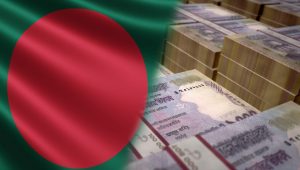
Beyond visible achievements, women also make invaluable contributions through unpaid household and caregiving work. Activities such as cooking, cleaning, caring for children, and supporting elderly or ill family members form the backbone of family and community life. According to the 2021 Household Production Satellite Account report of the Bangladesh Bureau of Statistics (BBS), the estimated value of women’s unpaid household labor amounts to approximately 6.7 trillion taka, equivalent to nearly 18.9 percent of Bangladesh’s GDP. More than 85 percent of this labour is performed by women, highlighting the immense but often invisible economic contribution they make to the nation.
Recognising this contribution, the government announced in the 2025–26 national budget that unpaid household labour may be incorporated into GDP calculations in the future. Such a measure would represent a historic step toward acknowledging the economic value of women’s work and ensuring greater recognition of their contributions.
The Constitution of Bangladesh and several legislative measures provide important safeguards for women’s rights. Article 28 guarantees equality between men and women, forming the constitutional foundation for gender justice. Laws such as the Women and Children Repression Prevention Act (2000), the Domestic Violence (Prevention and Protection) Act (2010), and the Acid Crime Control Act (2002) aim to ensure women’s protection and access to justice. Additionally, the Sexual Harassment Prevention Guidelines (2009) and the Bangladesh Labour Act (2006) provide frameworks to promote safe and equitable working environments for women. Nevertheless, the effective implementation of these laws requires sustained institutional commitment, public awareness, and a transformation in social attitudes.
Women in Bangladesh have never been passive participants in history; they have consistently acted as agents of transformation. From the educational and social reforms championed by Begum Rokeya, to the sacrifices of the Birangona during the Liberation War, and the courageous voices of young women in contemporary movements, women have continuously shaped the nation’s journey toward progress.
Ensuring women’s dignity, rights, and freedom is therefore not merely a moral obligation but a fundamental requirement for sustainable national development. The true spirit of International Women’s Day lies in recognising that the advancement of women is inseparable from the advancement of humanity itself.
Afroza Islam Shashi is an Assistant Superintendent, PTI, Shariatpur, Abu Noman Md. Zakir Hossain is the Deputy Director, Department of Immigration and Passport, and M. Shah Zaman is a Legal Consultant and Chairman Ikshan Law Associates & Consultancy Firm. Email: [email protected]