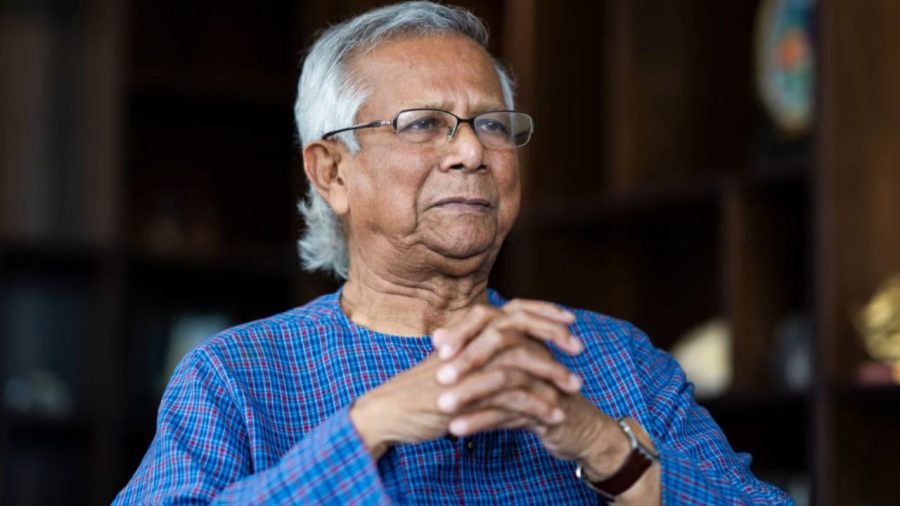



An airport is a gateway among nations, not an arena for political reprisals. But the allegation of the harassment of former Chief Adviser Professor Muhammad Yunus at the John F. Kennedy International Airport in New York highlights the troubling aspect of the highly divided political environment in Bangladesh. No matter what one’s political leanings may be, the spectacle of an acclaimed citizen from Bangladesh sitting in a wheelchair, allegedly undergoing abuse and humiliation, is disquieting.
Differing political views and the right to criticise them are acceptable in politics. However, intimidation, humiliation, and verbal abuse are not protest or political courage. These are nothing but the corruption of political dialogue through hatred.
Professor Yunus can be criticised for his conduct as leader of Bangladesh’s interim government, as well as for his government’s successes and failures. But the fact remains that no one has the right to humiliate Professor Yunus outside his own country. The difference lies in the essence of democracy itself: democracy allows protest, not intimidation.
The controversy surrounding the incident extends beyond Professor Yunus’s personal dignity. It raises questions about how Bangladesh’s political divisions are being projected internationally. There have been reports and accusations in the press linking the altercation to those who sympathise with the Awami League. Bangladesh’s foreign ministry has denounced the clash. Nevertheless, reliable evidence, not political suspicion, should identify the people involved, the organisations backing them, and the instructions they received.
If the participants in the clash were Awami League supporters, they made an immense political mistake. It does not help the political movement; it only reinforces the image of intolerance and political bullying. The accusation against Sheikh Hasina must be proved. It should not depend only on political assumptions. Nonetheless, politicians have a duty to ensure their supporters do not engage in bullying tactics. A lack of response could be interpreted as indifference, even without evidence of their personal participation. Humiliating people is a hard way to earn respect.

Bangladesh’s political rivalries have long been characterised by accusations, recriminations, and attempts to delegitimise opponents. Unfortunately, these divisions frequently travel with politically active diaspora communities. It is not abnormal or unreasonable for overseas political participation. Bangladeshi citizens living outside their home country can hold demonstrations, express political dissatisfaction, question leaders, and demand change. Historically, such activism by diasporic communities has brought political attention to Bangladesh. But peaceful protest and targeted harassment are fundamentally different.
When political activists confront an individual through shouting, insults, and intimidation, their message becomes secondary to their behaviour. Instead of generating sympathy for their grievances, they risk alienating the very audiences they hope to influence.
This is exemplified by the JFK case. Airports are public places that should allow people, including travellers, family members, senior citizens, and people who need mobility assistance, to move around without feeling threatened. Making an airport a place where political activism is displayed raises concerns about safety and propriety. Political activism must show dedication, not vindictiveness. If these individuals have been acting on behalf of the Awami League, then it raises a simple political question: What’s the gain for the political party? The gain seems minimal, at best. Several issues cloud the future of Bangladesh’s former ruling party: its history, how it lost power in August 2024, and what awaits it. If it revives, it will depend on introspection and effective leadership.




Intimidating Professor Yunus has not provided any answers. He has not been responsible for creating any of the political grievances that led to the uprising against Sheikh Hasina’s government. Blaming Yunus for the Awami League’s loss of power substitutes a convenient political target for an examination of the party’s own record. Nor does humiliating him erase his contribution during Bangladesh’s difficult transition. Regardless of any shortcomings that can be attributed to his interim leadership, Professor Yunus took up office under extraordinarily difficult circumstances, undertook efforts to institute reforms, and guided the transfer of power to the elected government post-election of February 2026. Those contributions do not place him above accountability. But insults cannot dismiss them. The Awami League’s political future will depend far more on its ability to regain credibility than on its supporters’ ability to embarrass opponents.
When a figure of international prominence is subjected to public humiliation abroad, the incident inevitably attracts attention beyond the immediate political dispute. Bangladesh should not confuse respect for an individual’s dignity with unconditional endorsement of that individual’s political decisions. One can challenge Yunus’s policies, criticise his administration’s failure to control mob violence, question the effectiveness of its reforms, and demand accountability for its shortcomings without resorting to personal degradation. A mature political culture must accommodate both criticism and respect.
The right response to the Kennedy case must be principled, not emotional. An attempt to threaten or obstruct should be judged on the basis of the law, and responsibility should be fixed on the facts. Freedom of expression should always be upheld, irrespective of who the players are politically. Political leaders across Bangladesh’s ideological spectrum should unequivocally reject intimidation, even when their own supporters commit it.
The matter also calls on diaspora groups to consider their obligations in democratic activism. Bangladesh’s divisions can’t just fade away overnight. They don’t have to show them through personal antagonism. Bangladesh can’t move forward with democracy while continuing to practice vengeance politics.
Of course, there’s plenty of room for talk about Professor Yunus’ legacy. His successes deserve recognition, as do his failures. Nevertheless, neither justifies embarrassing one of the world’s most respected statesmen at an international airport. The final insult of the JFK situation is not the fact that Professor Yunus was confronted by political opponents, but that political differences turned personal.
A nation earns international respect not merely through the accomplishments of its distinguished citizens, but through the dignity with which it treats them even when it disagrees with them.
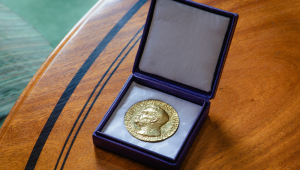
Political vengeance might offer short-term comfort to those who seek it; nevertheless, political sagacity, integrity, and respect for the dignity of humankind will forever bring glory to that country. Professor Muhammad Yunus, who is a recipient of the Nobel Peace Prize, is not just an asset for Bangladesh; he is, in fact, one of the most respected visionaries of the contemporary era whose creative thoughts on micro-credit, social business, and empowerment of humankind have had a great effect on the international community. His respect comes not from political favor; rather, it has been earned through decades of distinguished service to humanity.
As the great Martin Luther King Jr. said, “Hate cannot drive out hate; only love can do that.” People who use hatred to humiliate an honourable person end up humbling themselves and not the person whom they are trying to humiliate. In history, Professor Yunus will be remembered for the lives he transformed, the opportunities he created, and the hope he brought to others, not for the insults his political opponents threw at him. Greatness should be measured by contributions to mankind, regardless of the hate one receives in the process.
The views expressed in this article are solely those of the author
The writer is a Professor and Former Chair, Department of Journalism and Mass Communication, Savannah State University, Georgia, USA