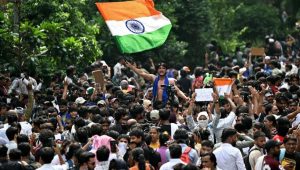
Exiled Iranian Prince Reza Pahlavi on Saturday urged citizens to continue street demonstrations for two more nights and occupy central urban areas, while appealing to workers in transport and energy sectors to launch nationwide strikes.
In a message to protesters, Pahlavi commended their “courage and resilience,” noting that millions responded to his previous calls for rallies on Thursday and Friday.
He said the mass turnout demonstrated the public’s defiance against threats from the Islamic Republic’s leadership and exposed weaknesses in the country’s security apparatus, reports Iran International.
Pahlavi emphasized that the next phase of the movement should combine persistent street protests with economic pressure, targeting the regime’s financial networks to limit its capacity to sustain crackdowns.

He urged demonstrators to carry national flags and symbols, approach city centers from multiple routes, and organize basic supplies to support extended street presence.
The exiled prince also appealed to members of security forces and armed units sympathetic to opposition demands, urging them to slow or disrupt the state’s repression mechanisms.
Pahlavi stated he was preparing to return to Iran, pledging to stand with citizens in what he called the “triumph of a national revolution,” adding that such a moment was approaching rapidly.



The Islamic Republic is facing mounting pressure as nationwide protests coincide with internet and communication blackouts.
Demonstrations have spread across Tehran, Mashhad, Zahedan, and other major cities, despite the government’s restrictions. Human rights groups report at least 42 fatalities and over 2,000 arrests since unrest began.
Supreme Leader Ali Khamenei accused foreign powers of instigating the protests and warned demonstrators of severe consequences, while security forces deployed live ammunition in several regions.
British MP and former security minister Tom Tugendhat described the situation as a potential “endgame for the regime,” highlighting the state’s increasing reliance on force to maintain control.
Earlier this week, US intelligence had assessed that the protests were unlikely to destabilize the government, but recent developments have prompted a review.
Former CIA official Norman Roule described the unrest as an extraordinary moment, suggesting the leadership faces shrinking options and diminished decision-making capacity.
US President Donald Trump cautioned Iranian authorities against violent repression, praising demonstrators’ bravery, while European officials and the UN human rights chief condemned both the crackdown and nationwide communications blackout. Analysts emphasize that the current unrest is part of a long-term erosion of the regime’s legitimacy.
Verified videos circulating on social media show citizens confronting security forces across multiple cities, even as authorities cut communications and deploy live ammunition. The demonstrations have drawn participation across Iran’s political, ethnic, and religious spectrum.
Sunni cleric Molavi Abdolhamid expressed support for the protests, citing rising poverty, while Pahlavi encouraged coordinated nightly demonstrations. International observers note that unlike earlier issue-specific protests, the current movement challenges the regime’s overall legitimacy and survival.