Model United Nations (MUN) is an academic simulation in which students assume the roles of diplomats and represent different countries in committees that mirror the structure and procedures of the real United Nations.
Within an MUN conference, participants conduct research on their assigned country’s foreign policy, deliberate on global concerns such as climate change, peace and security, or human rights, and collaborate to draft resolutions proposing realistic and implementable solutions.
The simulation adheres to formal United Nations procedures, including moderated debate, structured negotiation, and voting, thereby offering participants an experiential understanding of how multilateral diplomacy functions in practice.
Beyond formal rules and public speaking, MUN offers a deeply transformative learning experience by illustrating the complexities of consensus-building, the power of dialogue, and the value of empathy developed through representing perspectives shaped by other national realities.
Through this process, participants are equipped to think critically, communicate confidently, and engage responsibly with the increasingly complex global environment they are poised to inherit.
What is Bangladesh Model United Nations (BANMUN)?
The Bangladesh Model United Nations (BANMUN) is a premier youth diplomacy platform that has cultivated diplomatic skill, policy innovation, and global leadership for over two decades. Distinctively, BANMUN is widely regarded as the only Model United Nations initiative in Asia where serving and former diplomats actively partner with youth to guide deliberations, strengthen procedural rigor, and expose participants to the real complexities of international politics.
This unique collaboration enables delegates not only to understand global affairs more deeply, but also to develop the confidence, discipline, and ethical judgment necessary to emerge as responsible and capable citizens.
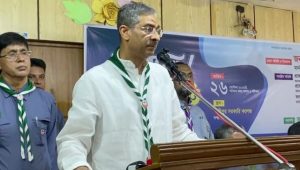
BANMUN traces its origins to 2002, when a group of senior diplomats—under the leadership of the then Director General (UN) of the Ministry of Foreign Affairs, Government of Bangladesh, Ambassador Humayun Kabir (later Foreign Secretary), together with Kazi Ali Reza (Officer-in-Charge, United Nations Information Centre)—extended institutional support to a youth initiative led by Sayed Saikh Imtiaz, Secretary of Dhaka University Debating Club (currently Professor at the University of Dhaka and Founder of- UNYSAB).
Through structured training on the United Nations system and formal debate procedures, this partnership laid the foundation for BANMUN’s enduring legacy as a nationally significant platform where diplomacy is learned through practice and leadership is shaped through experience.
About BANMUN 2025
BANMUN 2025, the 11th session of the Bangladesh Model United Nations, convenes aspiring delegates from diverse backgrounds to address one of the most urgent and multifaceted global challenges of the contemporary era: the transition toward sustainable, equitable, and resilient energy systems.

This 11th iteration is scheduled to be held over three intensive days from 26 to 28 December 2025 at the esteemed American International University–Bangladesh (AIUB)—a venue widely recognized for academic excellence and modern facilities.
With an expected participation of approximately 200+ delegates from across the nation and beyond, the conference is positioned to create a vibrant ecosystem of ideas, debate, and collaboration.
Significant value has been added to this initiative through an official media partnership with the Daily Times of Bangladesh, a leading national news platform recognized for credible journalism and active engagement with policy, development, and youth discourse.
The collaboration reflects a shared commitment to nurturing responsible leadership, promoting evidence-based dialogue, and ensuring that youth-driven policy discussions contribute meaningfully to national and global narratives.
Number of Delegates and Volunteers
The conference is expected to host 300+ delegates and volunteers from 75+ institutions, including English-medium schools, cadet colleges, Bengali-medium schools, and universities.
While delegate participation is primarily drawn from schools and colleges, university students will serve in key roles as Executive Board members and volunteers.
One of the most distinguished features of BANMUN remains the extensive involvement of current and former diplomats as resource persons, lending exceptional authenticity, mentorship, and real-world insight to the conference experience.




Participating Institutions sending delegates: 53
Aga Khan Academy Dhaka
Academia (Lalmatia)
Adamjee Cantonment College
AMS Academy
As Level Private Candidate
Augmenta Education
Australian International School
BAF Shaheen College Dhaka
Bangladesh International School
Bangladesh International School and College
Bangladesh International Tutorial
Barishal Cadet College
Bindubasini Govt. Boys’ High School Tangail
Birshreshtha Munshi Abdur Rouf Public College
Birshreshtha Noor Mohammad Public School and College
Capstone School Dhaka
Civil Aviation School & College
Cordova International School and College
Darussalam Govt. Secondary School
Dhaka Cantonment Girls’ Public School and College
Dhaka Cantonment Public School and College
Dhaka College
Dhaka Imperial College
Dhaka Residential Model College
East West International School and College
Faujdarhat Cadet College
Feni Girls Cadet College
Glenrich International School Uttara
Government Majeed Memorial City College Khulna
Government Science College Tejgaon
Government Sundarban Adarsha College Khulna
Holy Cross College
Ideal College Dhanmondi
International Hope School Bangladesh
Joypurhat Girls’ Cadet College
Manarat Dhaka International School and College
Milestone School and College
Mirpur Cantonment Public School and College
Mirzapur Cadet College
Narayanganj College
Navy Anchorage School and College Dhaka
Notre Dame College Dhaka
Oxford International School
Rajshahi Cadet College
Rajshahi Cantonment Public School and College
Rajshahi Cantonment School and College
St. Joseph Higher Secondary School
Sunnydale
Sydney International School
The Millennium Stars School and College, Rangpur
Viqarunnisa Noon School and College
Willes Little Flower School and College
South Point
Volunteers and EB Members:
University of Dhaka
Bangladesh University of Engineering and Technology
Bangladesh University of Professionals
Jahangirnagar University
Khulna University of Engineering and Technology
Military Institute of Science and Technology
Rajshahi University
Dhaka Commerce College
Khulna University
Shahjalal University of Science and Technology
Jagannath University
Bangladesh Agricultural University
Oxford International School
Excel Academy
Sunnydale School
Dhaka City College
American International University-Bangladesh
North South University
BRAC University
Theme: Justice Energy Transition (JET)
A Just Energy Transition (JET) isn’t simply about building solar panels and wind farms. It’s about transforming energy systems in ways that are socially equitable and economically inclusive, ensuring workers, communities, and vulnerable populations are supported as economies change. It acknowledges that climate solutions must also address issues like job security, poverty, and social justice.
In practice, this means phasing out carbon-intensive coal and oil, while creating new opportunities in renewable energy, retraining workers, strengthening social safety nets, and improving access to affordable clean energy, especially for those who need it most.
Looking at the climate perspective, the climate crisis is driven largely by fossil fuels, coal, oil, and gas; which account for the majority of global greenhouse gas emissions. Limiting the worst impacts of climate change requires cutting these emissions rapidly. With global energy demand set to grow as technology and populations expand, the world must shift to renewables at an unprecedented pace.
Why is the BANMUN 2025’s theme on Energy Transition?
Just Energy Transition is essential to discuss today because it directly shapes the future of the economy, environment, society, and global equity.
As the world moves away from fossil fuels, this transition must be fair, inclusive, and people centered, ensuring that no community, worker, or nation is left behind.
This conversation must begin with young minds who actively engage with global affairs, think about the betterment of the world, and understand the long-term impact of today’s decisions on future policies and negotiations.
Youth are not only future leaders but also future negotiators, policymakers, and innovators, and Model United Nations serves as the perfect platform to nurture this responsibility.
Through MUN, students engage in policy debates, understand diverse national perspectives, and practice diplomacy and negotiation that reflect real global processes.
Recognizing this importance, BANMUN 2025 has chosen Just Energy Transition as its theme to empower youth to engage critically with one of the most defining challenges of our time and to inspire sustainable, just, and inclusive solutions for the future.
What are the committees?
This year at BANMUN, we have carefully selected eight diverse committees to provide delegates with a comprehensive and engaging platform for debate and diplomacy.
Each committee has been chosen because it addresses pressing global challenges and is closely aligned with the theme of Just Energy Transition, reflecting how energy, equity, security, development, and human rights are deeply interconnected.
From UNESCO, which explores the role of education, science, and culture in building sustainable societies, to UNFPA and UNDP, which focus on inclusive development, population dynamics, and equitable growth, delegates will examine how a just transition impacts people at every level.
Committees such as UNSC and DISEC highlight the links between energy, peace, and global security, while the Moving Crisis Committee challenges participants to respond to evolving, real-time scenarios shaped by global energy and geopolitical shifts.
The UNHRC ensures that human rights remain central to all discussions, and the International Press amplifies voices, narratives, and accountability throughout the conference.
Together, these committees create a balanced and dynamic space where delegates can meaningfully debate, negotiate, and propose solutions to issues that define the present and shape the future.
Committees and Agenda
Committee-1: United Nations Security Council (UNSC)
Agenda: Threats to International Peace and Security Caused by Energy Scarcity and Geopolitical Competition
Committee-2: United Nations Development Programme (UNDP)
Agenda: Ensuring an Equitable Just Transition for Fossil Fuel–Dependent Economies
Committee-3: United Nations Human Rights Council (UNHRC)
Agenda: Establishing a Legal Framework for the Protection of Climate-Induced Migrants
Committee-4: United Nations Population Fund (UNFPA)
Agenda: Combating Gender-Based Violence and Mitigating Risks in the Global Energy Transition
Committee-5: Disarmament and International Security Committee (DISEC)
Agenda: Addressing Cyberattacks and Sabotage Against Transnational Energy Grids
Committee-6: United Nations Educational, Scientific and Cultural Organization (UNESCO)
Agenda: Safeguarding Indigenous Knowledge and Cultural Heritage in Renewable Energy Development
Committee-7: Moving Crisis Committee (MCC)
Theme: Mitigating Crises in Sustainable Development and Energy Justice
Committee-8: International Press
Theme: Correspondents’ Responsibility in Balancing Economic Development and Environmental Justice