


Senior journalists in Bangladesh have urged political leaders to safeguard democracy, ensure an independent media and confront the rise of extremism, warning that years of pressure, fear and political interference have weakened journalism and public trust.
Speaking at an interaction with BNP Chairperson Tarique Rahman in Dhaka on Saturday, editors and senior journalists said a large section of the media had faced repression over the past 16 to 17 years, while many journalists who were persecuted had been left without institutional support. Several speakers said the country’s current political uncertainty had created space for extremist forces, posing what they described as an existential threat to Bangladesh.
Responding to the concerns, Tarique acknowledged that Bangladesh faced serious political challenges but said disagreements must be resolved through dialogue and within a democratic framework.
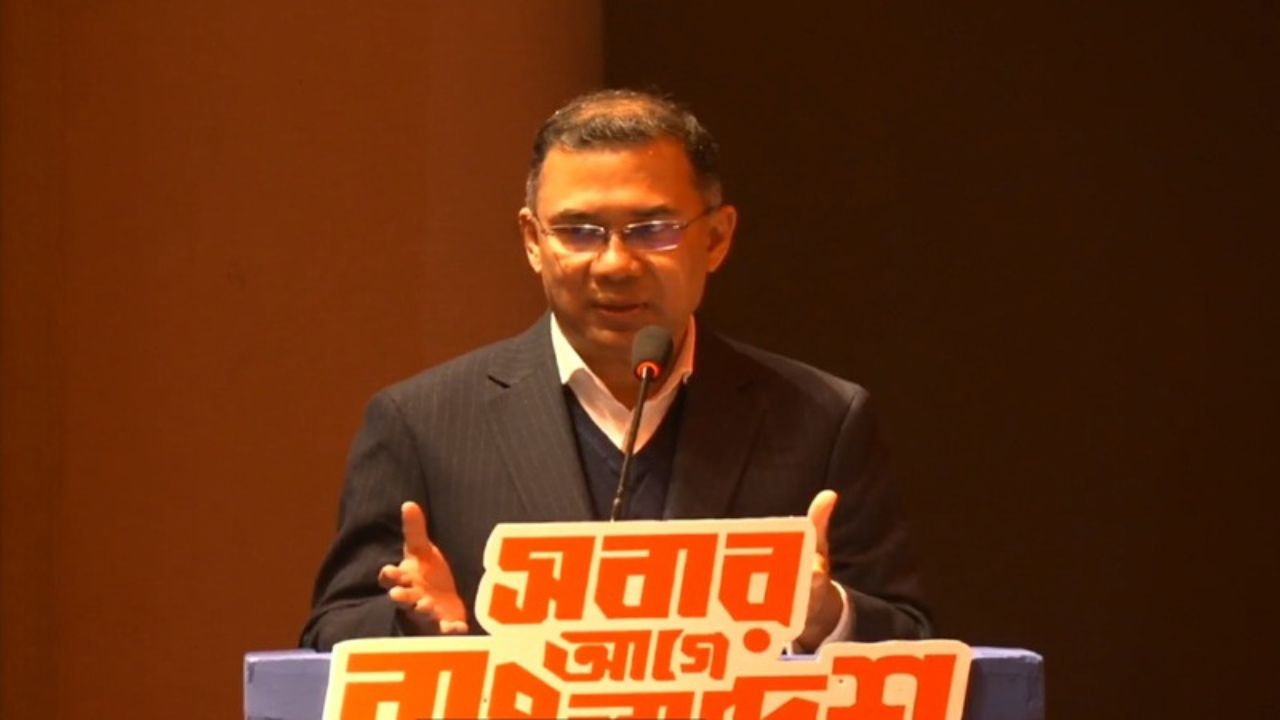
In his first interaction with senior media figures since returning to the country after a long exile in the United Kingdom, BNP Chairman Tarique Rahman urged journalists to practise what he described as constructive criticism—one that contributes to solving national problems rather than merely pointing out faults.
“Criticism is necessary. But not criticism for the sake of criticism. We want criticism that helps find solutions to the country’s challenges,” he said.
Several senior editors used the platform to call for greater press freedom, democratic reform and stronger governance, while warning that extremism and political intolerance continued to pose risks to the country’s stability.
Mahfuz Anam, editor of The Daily Star, said journalists were seeking democracy, independent media and good governance. Congratulating Tarique on assuming the party’s leadership, he said some of Bangladesh’s most pressing future challenges were not being adequately discussed in political discourse.

One of those, he said, was climate change. “We are not talking enough about climate change,” he said, noting that Bangladesh was among the most vulnerable countries in the world. He pointed to visible impacts in coastal regions and urged political leaders to treat the issue as a top priority.
Motiur Rahman Chowdhury, editor of Manabzamin, said Tarique was returning to politics at a critical juncture in the country’s history. He said public expectations of the BNP leader were high, but so were the challenges.
“These challenges must be faced collectively,” he said, cautioning against attempts to resolve them solely through party-centric thinking, which he said had led to repeated mistakes in the past. He warned that political extremism was threatening Bangladesh’s very existence and said the country needed to be freed from such forces.
Recalling his first interview with Tarique more than two decades ago, Chowdhury said the BNP leader had undergone significant changes over the years, particularly due to his exposure to how Western media systems functioned.
He said that while the media had become relatively freer since 5 August 2024, it was still constrained, citing mob violence, attacks on media offices and intimidation as major obstacles to independent reporting. “Sometimes it feels like we are in hell rather than heaven,” he said, describing the pressure journalists continued to face.




Nurul Kabir, editor of New Age, said a democratic transformation in Bangladesh would be impossible without a democratic environment for journalism. He said political parties that genuinely believed in democratic reform must also ensure the legal, political, social and cultural freedom of the media.
Referring to the recent student-led uprising that toppled what he described as an old authoritarian system, Kabir said Bangladesh was now in a transitional phase, but the aspirations that had driven people to sacrifice had not yet been fulfilled.
“There has never been a place in the world where democracy was established without the freedom of the media,” he said, adding that the struggles for democracy and press freedom had always moved forward together.
Shafik Rehman, editor of Jaijaidin, congratulated Tarique but raised concerns about the treatment of former Prime Minister Khaleda Zia, saying she had been denied the chance to meet her relatives while imprisoned. He claimed her death was premature and called for a committee to investigate the circumstances.
He also pointed to large-scale financial irregularities in Bangladesh’s banking sector and urged the formation of oversight bodies to prevent future misconduct. Speaking about the precarious conditions journalists faced, he called for the introduction of a pension system for media professionals.
Amm Bahauuddin, editor of Daily Inqilab, congratulated Tarique on returning to Bangladesh and predicted that he would become prime minister in the future. He said journalism over the past 18 years had been extremely difficult, especially for those who had remained in the country.
He urged BNP to remember the distinction between journalism before and after 5 August. Recalling the closure of Inqilab and the arrest of several of its senior staff, he said he himself had been forced into hiding, while his home and office were repeatedly searched.
He said injustices against journalists such as Mahmudur Rahman, Mainul Hosein, Shafik Rehman and Abu Asad had been reported in his newspaper, even though many of them had been imprisoned or forced into exile.
Mahmudur Rahman, editor of Amar Desh, said a large section of country’s media had failed to stand by persecuted journalists over the past 16–17 years, either out of fear, pressure or opportunism.
He cited the case of the late journalist Ruhul Amin Gazi, who, he said, was jailed in a false case while suffering from cancer and died without proper medical care. He said the mainstream media had remained largely silent at the time.
He also referred to veteran editor Asaduzzaman Asad, who he said had been handed over to police by student activists and remained in prison for years, missing even his wife’s final moments due to incarceration.
Drawing from his own experience in prison, Rahman said elderly journalist Shafik Rehman had been subjected to inhumane conditions, including sleeping on cold floors and struggling to access basic facilities.
He also mentioned journalist Kanak Sarwar, who he said was imprisoned for nearly a year for broadcasting a speech by Tarique, and said Sarwar’s sister had also been jailed in a fabricated drug case.
Addressing Tarique directly, he warned against relying solely on accounts from political allies or new media acquaintances. He argued that the past 17 years of Bangladesh’s media history had been more complex than often portrayed and said he would present a detailed account of the past 50 years of media realities if given the opportunity.
The event, titled an exchange of greetings between Tarique Rahman and senior journalists, was held at a hotel in Banani, Dhaka. It began at 11:00am and concluded around 2:00pm.
Tarique, who just officially assumed the responsibility of the party chairman, greeted journalists individually, shaking hands as he entered the venue. The programme began with a welcome speech by BNP Secretary General Mirza Fakhrul Islam Alamgir.
Editors and senior journalists from Bangla and English dailies, television channels, radio stations, online platforms and multimedia outlets attended. Representatives from international media organisations, including the BBC, Al Jazeera and AFP, were also present. Senior BNP leaders attended the event.