
Redwan Ahmed
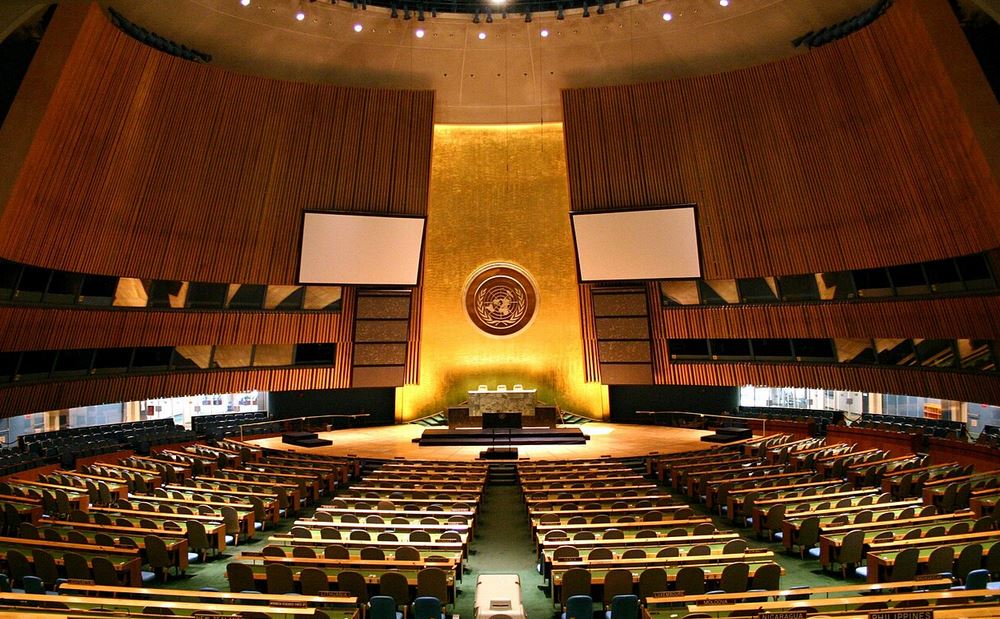
Every September, the ritual repeats itself. Motorcades clog Manhattan, annoying the hell out of New Yorkers just trying to get to work. Security barriers rise. Delegates flood midtown hotels. One by one, world leaders step onto the green-marble stage, delivering speeches heavy with moral urgency and light on consequence.
The choreography is familiar. The applause, predictable. The purpose? Performative, a theatre where national interests dress up as virtue and foreign policy becomes campaign messaging. Still, Bangladesh shows up. Not for spectacle, but for belief, in the battered promise of multilateralism.
We send peacekeepers where others won’t. We shelter the Rohingya long after headlines fade. We speak of climate justice not because it polls well, but because it’s survival.
And what do we get in return? Polite nods. Recycled promises. Budget cuts disguised as reform. A silence louder than any speech.
This year, that silence became harder to ignore. In May, a leaked memo confirmed what many already suspected: the foundation is buckling. It mapped the most sweeping overhaul in decades, not to strengthen the system, but to prevent collapse.
I’ve seen that strain up close. As a U.N. journalism fellow in 2021 and 2023, embedded within the Department of Global Communications, a program named after Reham Al-Fara, a journalist turned diplomat killed in the 2003 Baghdad bombing, I watched the quiet austerity spread. Offices shrinking. Staff stretched thin. Hope, too often, in short supply.

The question now isn’t whether the U.N. needs reform. That’s obvious. The real question — especially for countries like Bangladesh — is whether the system can still be saved.
Few countries have paid the price of international inaction as deeply—or as quietly—as Bangladesh. And we know we’re not alone. From Gaza to Sudan, the cost of selective urgency is measured in lives. We’ve hosted over a million Rohingya since 2017. No viable repatriation pathway has emerged. The political will to pressure Myanmar has evaporated. Aid is drying up. Frustration is rising.
WFP’s Joint Response Plan was only 56% funded by the end of 2024. A year later, it had barely improved to 64%. Cuts continue.
On climate, we are living the collapse. Coastlines are vanishing. Saltwater is poisoning fields. Flash floods displace villages. Millions are migrating within our borders. And what do we get? Summits. Declarations. Panels titled “Voices from the Frontlines.” We don’t need summits. We need finance — real, accessible, and timely. Loss and damage support that’s not rebranded or diluted.
But the system is built for comfort, not urgency. When genocide unfolds in Gaza, or famine tightens in Sudan, or democracy erodes in Niger, the U.N. reaches for its safest weapon: the strongly worded statement.




Even Donald Trump, in all his disdain, wasn’t entirely wrong. The U.N. has become a stage for performance, not a platform for action. And for countries like Bangladesh, trapped between responsibility and vulnerability, that performance feels increasingly like betrayal.
Bangladesh ranks among the top three contributors of U.N. peacekeepers. Our troops deploy where others won’t: Mali, South Sudan, DRC — missions too risky for many powerful states to even observe.
Yet as the U.N. “streamlines,” we’re asked to give more while receiving less. By late 2023, the U.N. faced a $1.5 billion shortfall, and Secretary-General António Guterres warned of insolvency. Key agencies — WFP, UNHCR, UNICEF, OCHA — are all in retreat.
In Cox’s Bazar, the World Food Programme cut monthly rations for Rohingya refugees from about $12 to $8 in 2023 — slashing daily support to just 27 cents per person. Partial restorations followed. For now, full rations — $12.50 a month — are holding. But deeper cuts were narrowly averted.
UNHCR is reducing global staff by roughly 30%, UNICEF is consolidating regional offices and shrinking programs, and OCHA has shed about a quarter of its workforce. These are not efficiency measures — they’re warning signs of a humanitarian system under strain.
And the cuts aren’t equal. A 2026 budget draft shows field agencies facing up to 28% in reductions, while only 3% of top-tier posts, under-secretary-general level — are touched. These six-figure, tax-free roles come with perks and political protection. The Geneva Staff Union warns the system is growing even more “top-heavy and bureaucratic.” This isn’t reform. It’s bureaucratic self-preservation.
Meanwhile, Bangladesh with a population larger than Russia, a peacekeeping record among the best, and exposure to every global crisis from forced displacement to climate, holds no real sway over decisions that affect our future.
At the heart of the problem is the Security Council, a relic of 1945. Five nations hold veto power. The rest rotate through irrelevance. Plans like “UN 2.0” and “UN80” offer tweaks, reorganizing aid, adjusting mandates, while sidestepping the core issue: power remains frozen.
No one expects Bangladesh to get a permanent seat. That’s not the point. The point is that countries like ours must stop treating multilateralism as a spectator sport. Africa demands reform. Latin America does too. It’s time we stood with them — not for privilege, but for equity. We may not break the ceiling yet. But we must stop clapping from the balcony.
For decades, Bangladesh did more than its part. We kept the faith.
But the institution we helped hold together is fraying — not from a single crisis, but from an accumulation of avoided choices. And as the United Nations turns 80, the question is no longer how to fix it at the edges. It’s whether the center still holds.
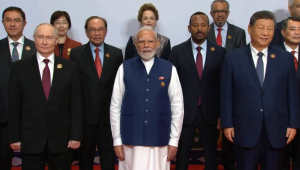
Around the world, parallel systems are taking shape. BRICS is expanding. Gulf monarchies are financing their own forums. Authoritarians are building clubs where human rights never make it onto the agenda. This isn’t multipolarity, it’s disintegration.
Even climate summits have lost the plot. Leaders fly across continents to declare emergencies, then leave with softened language and a fresh set of talking points.
If the U.N. wants to survive its ninth decade, it must stop being a stage for September speeches and start becoming a force that works year-round. Climate. Migration. Surveillance. Hunger. These aren’t sidebar issues. They are the main event.
The U.N. is not broken beyond repair. But it can no longer save itself from within. Its fate rests with the member states who built it, and with those of us who’ve held it up, even when the spotlight moved on. If we still believe in a world held together by rules, by dignity, by shared responsibility, then the fight for the U.N. must begin with truth: what’s failing, who’s benefiting, and why.
Because the alternative isn’t reform. It’s irrelevance. And history rarely forgives institutions that mistake applause for progress.
Bangladesh has earned its credibility through sacrifice — but it’s time we stop trading it for politeness. We don’t need to beg for seats or pose for donor photo ops. We need to lead: on climate finance, refugee rights, and U.N. reform. Not as a favor. But as a right. Because if we don’t shape the system that governs us, others will do it for us.
The time for politeness is over.
The writer is a journalist and free expression scholar