Today marks the historic Farakka Long March Day, commemorating the mass protest led by Maulana Abdul Hamid Khan Bhasani on 16 May, 1976.
The day serves as a reminder of the hundreds of thousands who marched from Rajshahi’s Madrasa Field to Kansat in Chapainawabganj to protest against the unilateral withdrawal of Ganges water by India through the Farakka Barrage.
Nearly five decades later, the water crisis in the Padma River and other northern rivers persists. Experts attribute the ongoing scarcity to India’s unilateral and aggressive water policies, which continue to deprive Bangladesh of its rightful share.
Shrinking rivers and environmental decline
Since the Farakka Barrage was commissioned in 1975 in West Bengal, Bangladesh has faced severe consequences. Northern rivers, including the Padma, have seen significant reductions in flow, affecting agriculture, biodiversity, and local livelihoods.
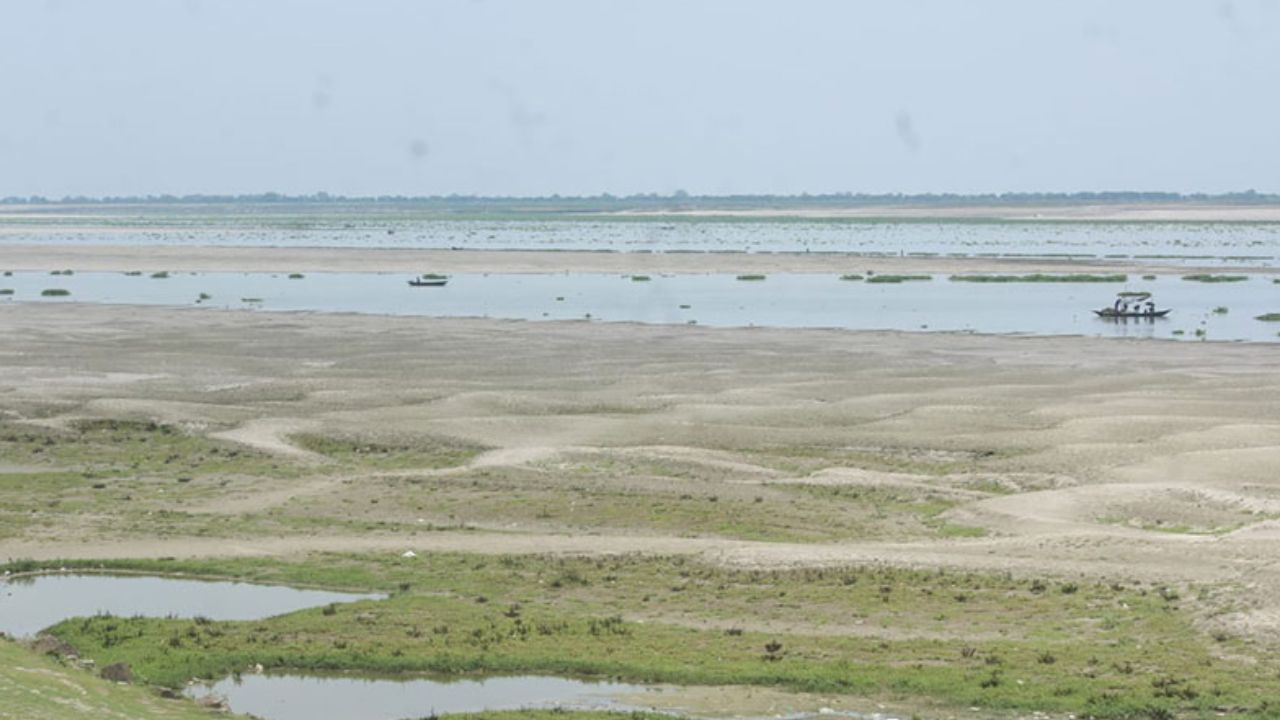
During the dry season, large sections of the Padma now resemble shallow, walkable streams, with extensive sandbars emerging near Rajshahi city. The main river channel has shifted several kilometers from the urban center, altering the riverine ecosystem.

Local residents report that the exposed riverbeds are now being used for cultivation, while motorcycles and cattle carts traverse areas that were once deep waterways. Fish production has declined sharply, forcing many in traditional fishing communities to abandon their profession, and river-centric economies have suffered devastating losses.
Experts warn that the Farakka Barrage has impacted not just the Padma but at least 27 tributaries, while groundwater levels in the Barendra region have fallen dramatically—some areas now record depths of 170–180 feet.
These changes exacerbate irrigation shortages and limit access to potable water. Northern weather patterns are also becoming harsher, raising concerns of desertification, according to environmental scientists.



Unmet promises and water-sharing challenges
Although the 1996 Ganga Water Sharing Treaty specifies allocations from January to May, Bangladesh frequently receives less than its entitled flow. Earlier agreements, including the 1977 treaty, included a guarantee clause for Bangladesh’s water share, but subsequent deals have omitted this provision, weakening the country’s water security.
River researcher Mahbub Siddiqui noted, “Bangladesh’s share is largely dependent on Indian assurances. Unilateral policies have stalled meaningful progress.”
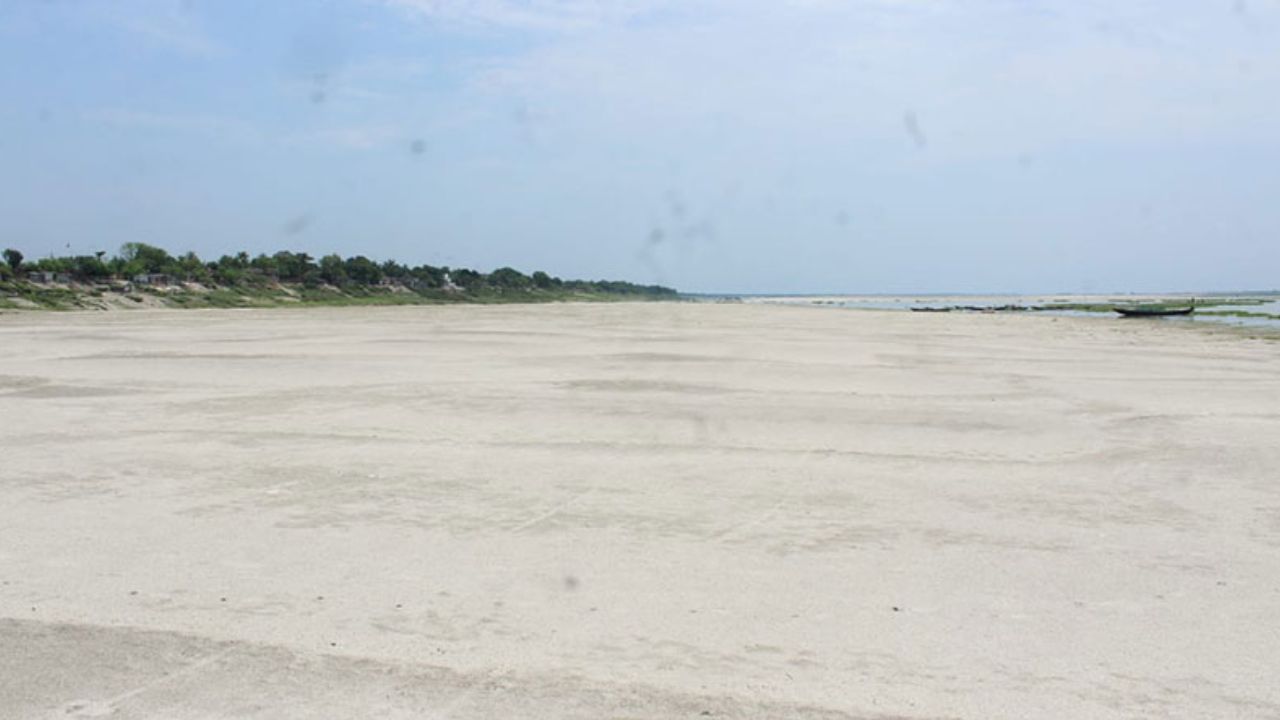
Research indicates that over the last several decades, the size and flow of the Ganga in the Rajshahi region have nearly halved, threatening aquatic life including dolphins and gharials. Hilsa fish, once abundant in the Padma, are now rarely seen.
Siddiqui further warned that the Farakka Barrage has intensified irrigation crises in northern Bangladesh. Nearly all deep tube wells in the Barendra region have become non-functional, while groundwater depletion has increased arsenic contamination. In southern regions, rising salinity threatens crop production and the biodiversity of the Sundarbans.
The 30-year Ganga Treaty of 1996 is set to expire this December, prompting calls for urgent preparation of a new agreement. Experts and activists are demanding the reinstatement of a guarantee clause and the formation of a joint river commission including Bangladesh, India, Nepal, and China to ensure equitable water management.
Broader implications
Experts also caution that India’s large-scale withdrawal of Ganga water through artificial canals and upstream barrages, along with other inter-basin water projects, further reduces river flows in Bangladesh. They warn that unless effective international measures are taken, northern Bangladesh could face severe environmental and economic crises in the near future.
The Farakka Long March of 1976 remains one of Bangladesh’s largest mass movements to protect water rights. The march, which started in Rajshahi and ended in Kansat, Chapainawabganj, mobilised thousands of people. Speaking at the border-area rally, Maulana Abdul Hamid Khan Bhasani declared, “The people of Bengal fear no one except Allah,” a message that continues to inspire generations.
To mark the occasion, various political, social, and environmental organisations in Rajshahi have organised programmes on Saturday, including rallies and discussion meetings.
Analysts emphasise that the Farakka issue is not merely a matter of water sharing but is intrinsically linked to the environment, economy, and very existence of Bangladesh.
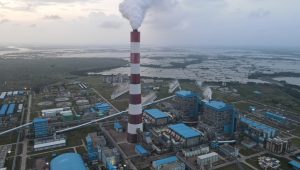
The Farakka Barrage, located in Malda and Murshidabad districts of West Bengal, India, began construction in 1961 and was completed in 1975.
The first Bangladesh-India Ganga water-sharing agreement was signed in 1977 with a guarantee clause for Bangladesh’s 80 percent share. Subsequent agreements, including the 1996 30-year treaty, excluded the clause, reducing Bangladesh’s water security.