
First came a warning. Then irregularities surfaced in the tender process. The Advisers Council Committee on Government Purchase returned the nearly Tk300 crore project and directed authorities to invite a fresh tender.
But the process did not stop.
Within a month, the same proposal returned to the purchase committee. Government documents show that then adviser Asif Mahmud Shojib Bhuyain “reviewed, approved and gave consent” for it to be placed before the committee.
The contract eventually went to e-Learning and Earning Limited, despite the company failing to meet a mandatory experience requirement.
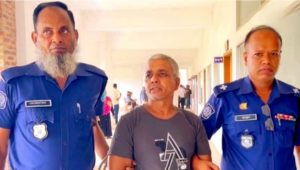
Company owner Masud Alam told TIMES, “Everything in the ministry was arranged in such a way that there was no opportunity for the project not to be given to me.”
He also alleged that a large amount of money was involved in securing the project.
A TIMES investigation revealed that the tender was not the only controversy surrounding Asif’s 488-day tenure. It also found allegations involving cost escalation in major projects, decisions being advanced despite administrative objections and questions over political influence in government decisions.
One project involved questions over additional spending of around Tk127 crore. Another saw costs increase by Tk1,206 crore.
The Anti-Corruption Commission (ACC) is now investigating allegations of corruption involving him in tenders, procurement, transfers and postings.
Asif Mahmud, who joined the advisory council as a representative of the students who led the July uprising, was responsible for the Ministry of Youth and Sports and the Ministry of Local Government, Rural Development and Co-operatives.
Following the fall of former prime minister Sheikh Hasina in the 2024 uprising, public expectations were high that the change would go beyond a change of leadership and transform the way the state operated.
However, official records from Asif’s tenure raise questions over that expectation. They show allegations that state resources continued to flow through links between powerful figures and favoured businesses.
Earlier, a TIMES investigation had also reported allegations involving another member of Muhammad Yunus’s advisory council, Sheikh Bashir Uddin.
How the tender returned
The Department of Youth Development’s project, “Employment generation through freelancing training for educated youth job seekers in 48 districts”, aimed to train 28,800 people at a cost of around Tk300 crore.
During the previous Awami League government, allegations emerged that the project had been designed to favour Masud Alam’s company, which was considered close to that government.

A warning letter to this end was sent to Asif Mahmud’s office on 11 August 2024. The process, however, continued.
According to ministry documents, the proposal to select training institutions reached the Ministry of Youth and Sports from the Department of Youth Development on 2 September 2024 and was placed before the government purchase committee on 20 October.
The committee detected irregularities and returned the proposal, directing authorities to invite a fresh tender.
Under normal procedure, the process should have ended there.
It did not.
The same proposal returned to the committee on 21 November. Two sources present at the meeting told TIMES that several members raised objections, but Asif backed approval.
A government official, speaking on condition of anonymity, told TIMES, “Several irregularities were raised before the committee, particularly that the selected institution did not meet the experience requirement. That is why a fresh tender was ordered. But due to Asif’s insistence, the flawed tender was approved.”
Government documents also record Asif’s role.
A summary signed by then youth and sports secretary Md Rezaul Maksud Zahedi before the second presentation stated, “Youth and Sports Adviser Asif Mahmud Shojib Bhuyain has seen and approved the proposal and given consent for placing it before the purchase committee.”
The committee later approved the proposal. Chief Adviser Muhammad Yunus approved it on 5 December, and the government signed an agreement with e-Learning and Earning Limited on 9 December 2024.
Company lacked required experience
The tender’s first Expression of Interest (EoI) requirement was 10 years of experience in training and five years of practical experience in freelancing training.




However, the Local Government Division’s e-trade licence server shows that e-Learning and Earning began operations on 23 October 2020. Records from the Registrar of Joint Stock Companies and Firms show that it was incorporated on 5 November that year.
Despite this, the company was shortlisted, scored highly in evaluation and secured the contract.
Masud Alam claimed his company had an advantage because of its nationwide network.
However, Department of Youth Development documents show that all four responsive bidders had nationwide networks.
The other three were New Horizons CLC of Bangladesh, Bangladesh IT Institute and SEO Expert Bangladesh Limited.
Tk30 crore allegation
The contractor alleged that Tk30 crore was spent at adviser Asif Mahmud’s office to secure the project.
Masud Alam himself admitted this to TIMES in a recorded conversation. According to his claim, Asif’s then assistant private secretary Md Moazzem Hossain acted as the intermediary.
As the alleged payment was made in cash, TIMES could not independently trace the money trail.
However, allegations involving Moazzem extend beyond this project.
He was removed from his position on 21 April 2025 following corruption allegations and later became the subject of an ACC investigation.
On 30 March, a Dhaka court imposed a travel ban on him following a CID application.
In the application, CID Sub-Inspector Md Abdul Hannan said, “There are allegations that Moazzem Hossain accumulated hundreds of crores of taka through lobbying business, tender manipulation and extortion while holding office.”
The CID later stopped its investigation over jurisdiction issues. CID Additional DIG Mohammad Bashir Uddin told TIMES that as Moazzem was a former government official, the matter falls under the ACC’s jurisdiction.
Tk127 crore question
Questions have also been raised over the project’s cost.
The Tk300 crore allocation for training 28,800 people means an expenditure of more than Tk104,000 per trainee.
Trainees were allocated Tk500 daily for food and transport. Over 75 days, this amounts to Tk37,500 per person.
After analysing similar private training programmes and field-level costs, TIMES found that training, food, transport and necessary equipment could be provided within around Tk60,000 per person.
This leaves a possible additional cost of around Tk44,000 per trainee, or nearly Tk127 crore overall.
A senior youth and sports ministry official told TIMES, “There were serious irregularities in the tender process. The work was given to e-Learning and Earning by violating government procurement rules.”
The official added, “The project was approved due to the insistence of then adviser Asif Mahmud Shojib Bhuyain.”
Cost rise in another project
During Asif’s tenure, the cost of a project to build mini stadiums at upazila level also increased significantly.
Approved in 2021 at Tk1,649 crore, the project cost rose to Tk2,856 crore after its second revision on 18 August 2025 – an increase of around Tk1,206 crore.
Several sources who attended the Ecnec meeting claimed some members raised objections but Asif pushed for approval.
“Asif’s request led then chief adviser Muhammad Yunus to withdraw his objections,” one source claimed.
Asif also faced criticism over a Tk2,400 crore special infrastructure project for Cumilla, his home district, during his tenure at the Local Government Division.
His upazila Muradnagar received the highest allocation of Tk453 crore.
However, LGED data showed that Muradnagar was not the upazila with the highest number of poor roads in the district, and Cumilla was not the top district either.
His father Billal Hossain later obtained a contractor’s licence from LGED, which was under Asif’s ministry, raising questions over a potential conflict of interest.
After the issue became public, Asif acknowledged the fault, apologised and the licence was later cancelled.
Asif also faced controversy in June 2025 when bullets and a firearm magazine were found in his hand luggage during a security check at Hazrat Shahjalal International Airport.
He said the items were mistakenly left in the bag and that his firearm licence was valid.
Later, arrested extortion accused Jane Alam Apu mentioned Asif’s name in connection with a Gulshan extortion case.
Asif denied involvement and called the allegation politically motivated.
ACC, BFIU investigations
After leaving office, Asif Mahmud became the subject of formal investigations by ACC and Bangladesh Financial Intelligence Unit (BFIU).
On 2 September this year, ACC formed a four-member team to investigate allegations involving Asif and three others over corruption in transfers, recruitment, promotions, postings, tenders and procurement at the youth and sports ministry.
ACC documents also mention allegations of corruption through a syndicate in tender and procurement activities.
At a press conference on 9 September, Asif rejected the allegations as politically motivated and said comments by ACC officials had damaged his reputation.
Earlier, on 3 February, BFIU sought information from banks on all accounts held by Asif.
The agency found transactions linked to online gambling sites through an account at a private bank. The investigation remains ongoing.
Asked whether Bangladesh’s old architecture of corruption has survived the July uprising, Transparency International Bangladesh (TIB) Executive Director Iftekharuzzaman told TIMES, “The authoritarian kleptocracy may have fallen, but there is little reason to say that authoritarian and kleptocratic practices have fallen with it.”
“Across public procurement and other areas, capture has at best changed hands. Since the afternoon of 5 August 2024, influential sections of those who emerged as the victorious forces of the July uprising have displayed an ‘it is our turn now’ mentality. As a result, the prospect of the change people expected – an end to corruption and abuse of power in the running of the state – has itself been held hostage,” he added.
TIMES made repeated attempts to obtain comments from Asif Mahmud through two phone numbers, SMS and WhatsApp.
The allegations were sent to him, but no response was received.
Later, at the 9 September press conference, the reporter informed him that TIMES was conducting an investigation and required his response before publication. Asif said he would look into the matter.
He was given until 10 September to respond. Despite repeated attempts through calls, messages and WhatsApp, Asif Mahmud did not provide any comment.