Sheikh Bashir Uddin, while serving as an adviser to the interim government, was involved in several decisions that appeared to advance his business interests while potentially undermining those of the state.
Bashir, an industrialist who oversaw three ministries, including the Ministry of Textiles and Jute, for 16 months from 10 November 2024, used his authority as an adviser to make those decisions, according to official documents and an investigation.
Official correspondence, valuation records, feasibility studies and interviews reviewed by TIMES of Bangladesh revealed links between Bashir and decisions involving three of the Bangladesh Jute Mills Corporation’s (BJMC) most valuable assets, with a combined estimated value of about Tk1,400 crore.
In one instance, a leasing process was reopened after an inter-ministerial committee had selected a winner, with Bashir-owned mills emerging as the top-ranked bidder. Bashir also backed a lease rate that valuation records show would have deprived the state of about Tk44 crore in revenue. In a separate case, he acknowledged opposing a government-backed plan to convert Karim Jute Mills into an economic zone despite projections of 25,000 jobs.
Transparency International Bangladesh (TIB) Executive Director Iftekharuzzaman described the first two cases as “clear conflicts of interest, abuses of power and, by definition, corruption”.
The case of Cooperative Jute Mills
An inter-ministerial committee recommended awarding the lease of 62 acres of land at Cooperative Jute Mills to PRAN Dairy Limited after finding the company to be the only responsive bidder.
Minutes of a working committee meeting dated 4 February 2025 show BJMC would receive around Tk112 crore in lease revenue over 30 years.

Less than five weeks later, the Ministry of Textiles and Jute moved to restart the tender process. In a letter dated 9 March 2025, the ministry acknowledged PRAN as the first responsive bidder but cited inconsistencies in its business plan.

Bilquis Jahan Rimi, then secretary of the Ministry of Textiles and Jute and now secretary of the Posts and Telecommunications Division said the tender process was reopened on the ministry’s instructions.
The decision created an opportunity for Bashir’s company to take part in the bidding.
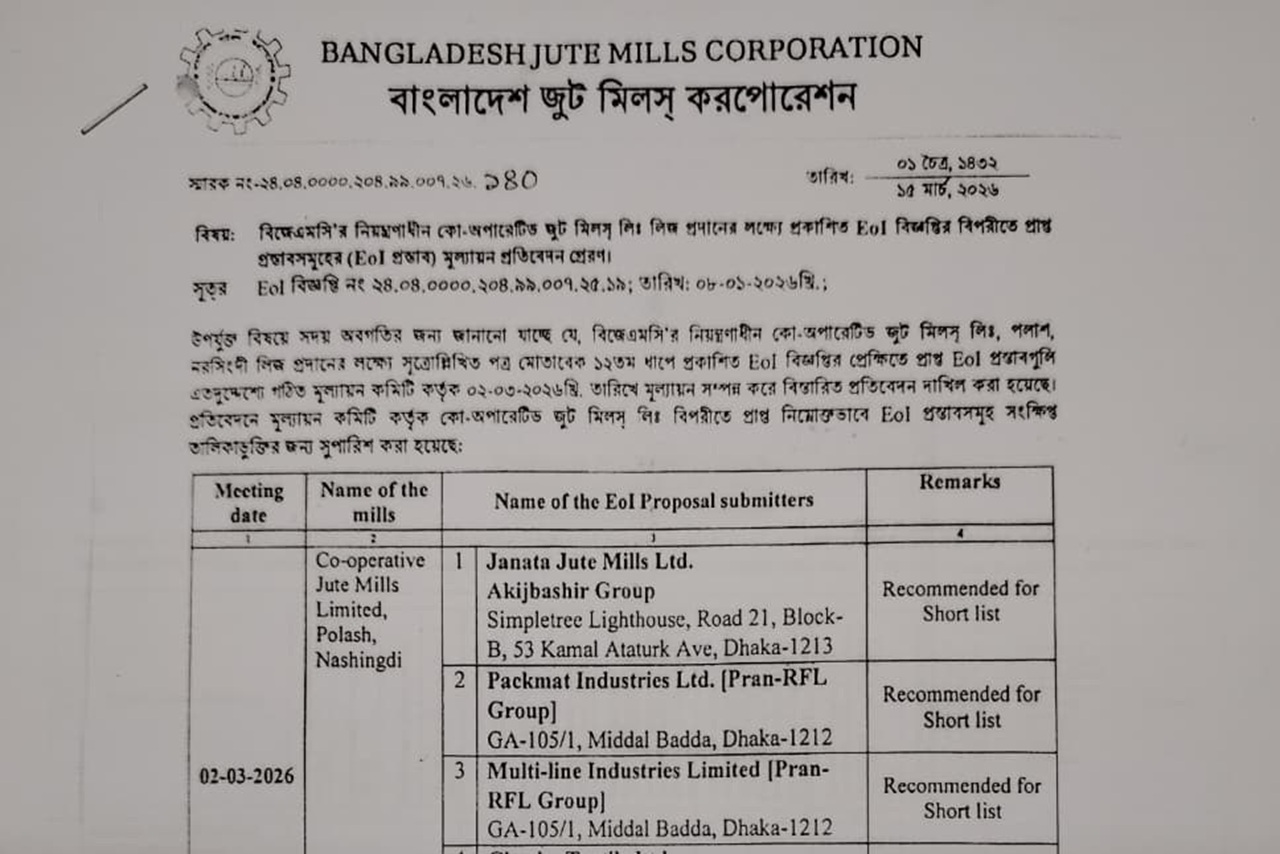
Janata Jute Mills, owned by him, applied under the fresh process and became the top-ranked shortlisted applicant, which is a conflict of interest and misuse of power.
However, Bashir defended the move claiming the earlier evaluation process placed excessive weight on business plans and that he revised the criteria to place greater emphasis on a company’s credentials, experience and financial strength. “I reviewed the criteria and changed them,” he told TIMES.
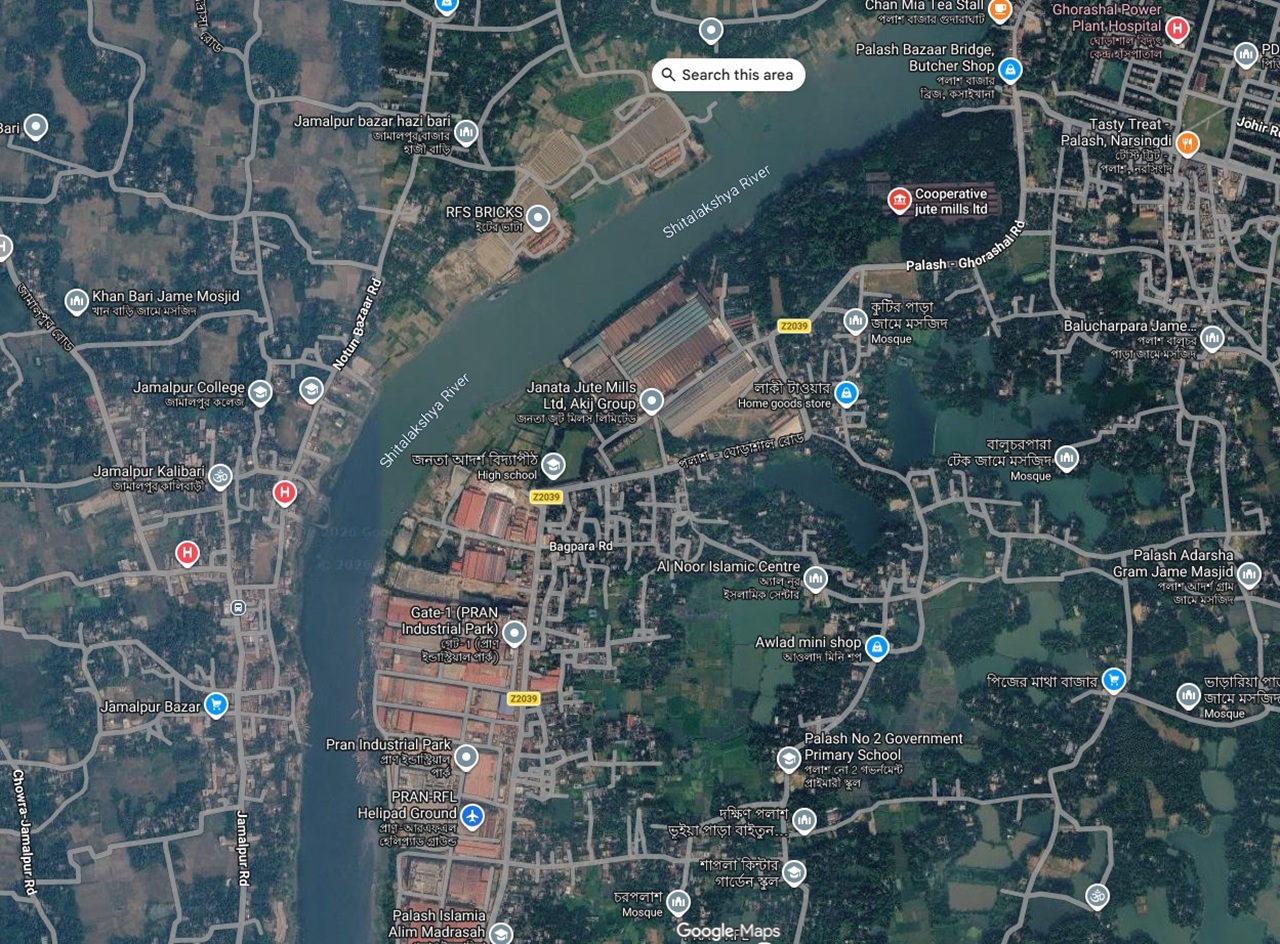
“If Janata Jute Mills participates in an open tender process, why should that be considered a conflict of interest?” he said.
Officials said Bashir’s company would secure the lease if it emerged as the most responsive bidder on technical and financial grounds.




PRAN-RFL Group confirmed it was aware of the matter but declined to comment.
The 19-acre dispute
Bashir also interfered in the leasing process for a 19-acre plot of land at Bangladesh Jute Mills Limited in Ghorashal, Narsingdi.
Jute Alliance Limited, a TK Group concern, sought a long-term lease at Tk0.63 per square foot per month, much lower than the Tk2.5 set by a BJMC committee.
The application reached Bashir directly. On the letter, he issued a handwritten instruction directing that the matter be “reasonably” disposed of within one week. The ministry forwarded the application to BJMC, seeking a detailed report and proposal within seven days.
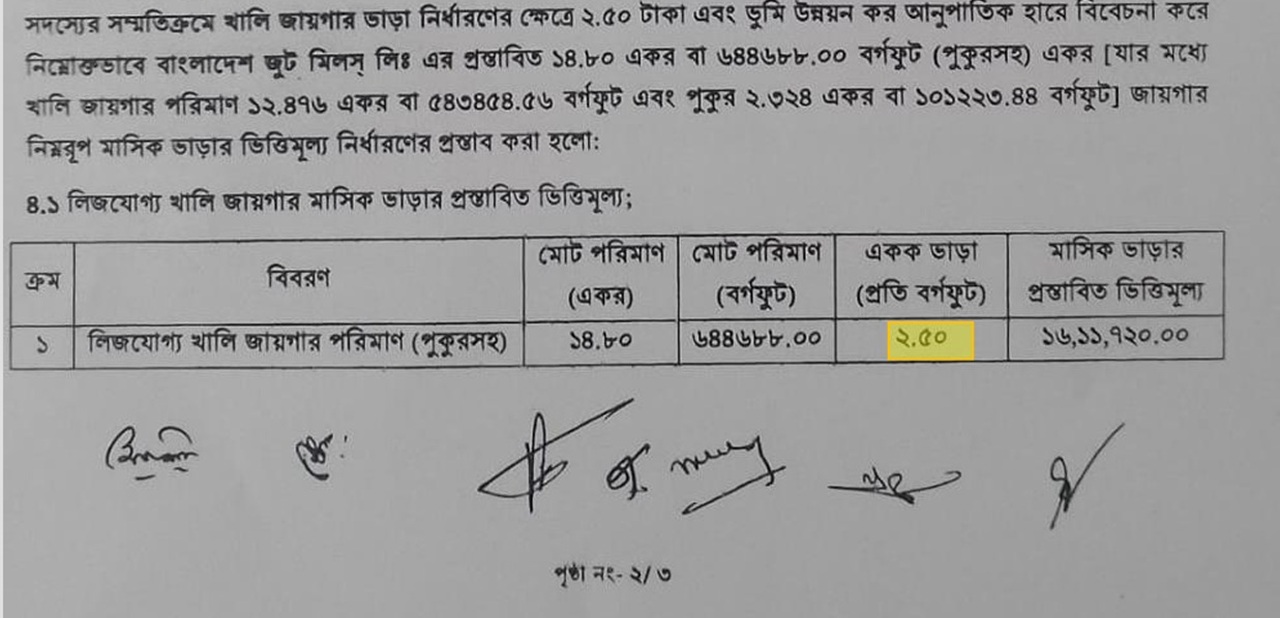
A BJMC director, speaking on condition of anonymity, told TIMES that at a Bangladesh Secretariat meeting on 12 October 2025, Bashir pressed officials to approve the lease at the rate Jute Alliance proposed. When BJMC representatives warned that the rate would cause substantial state losses, Bashir did not change his position, the director said.
Another official said the BJMC board treated the word “reasonably” as a safeguard and ordered a formal valuation. BJMC formed a seven-member committee headed by director Masum Patwary, including ministry representatives. Its report, submitted on 11 November 2025, unanimously fixed the rent at Tk2.12 per square foot per month – more than three times the rate sought by Jute Alliance.

Documents show the state would have incurred a loss of at least Tk44 crore loss if Bashir’s directive was executed. BJMC refused to endorse the reduced valuation.
Talking to TIMES, Bashir initially said he could not recall the matter. He, however, recalled the matter after being provided with the details.
He defended his instruction regarding the proposed lease to Jute Alliance, citing investment, employment and edible oil production benefits.
Bashir denied allegations that he had pressured BJMC officials to settle the matter at Tk0.63.
Karim Jute Mills question
The third case centred on Karim Jute Mills in Demra, one of BJMC’s largest and most valuable remaining assets.
Documents show BEZA identified the 50-acre riverside site as a prime candidate for conversion into an economic zone. Located along the Shitalakkhya River, the site contained factory buildings, warehouses, utility connections, gas supply, a power substation, worker housing and a river jetty.
A BEZA committee completed an asset inventory on 3 September 2025 and, two weeks later, submitted a technical and financial assessment to executive chairman Chowdhury Ashik Mahmud Bin Harun. The assessment found around 70 per cent of existing structures could be refurbished for productive use, while vacant land could be developed into industrial plots.

It valued the property at Tk1,250 crore and projected approximately 25,000 jobs – one of the government’s most significant industrial redevelopment opportunities.
The proposal never advanced during Bashir’s tenure.
A senior ministry official alleged that Bashir opposed the economic zone plan, while a BEZA official said repeated efforts to advance the project met resistance from the ministry.
Bashir acknowledged opposing the proposal. “BEZA told you correctly. I did not cooperate on this issue,” he said.
“My view was that the site should be developed as a township rather than an economic zone. Dhaka faces a severe shortage of housing for middle-class families, and I believed the property could better serve that need.”
He denied that Akij Group or any company linked to him had any interest in acquiring the property.
System without accountability
Bashir stepped down as managing director of Akij Bashir Group when he joined the interim government on 10 November 2024. He resumed the post after leaving the interim cabinet led by Muhammad Yunus.
Further talking about the issues, Iftekharuzzaman said Bashir had used his official position to influence government decisions in ways that benefited his own business interests and a company he favoured.
“Bashir also violated a pledge that he made before assuming office,” he said, arguing that the cases also exposed a broader governance failure. “While the Rules of Business contain no explicit safeguards against conflicts of interest, successive governments had failed to establish a dedicated legal framework requiring public officials to avoid or disclose such conflicts.”
He added: “We have long demanded a legal framework to prevent conflicts of interest, but no government has given the issue proper importance, including the interim government.”