Prime Minister Tarique Rahman has stressed the importance of reducing import dependency on agricultural and food items and increasing domestic production.
He urged officials of the Ministry of Agriculture to take effective initiatives to boost the yield of crops that can be produced within the country.
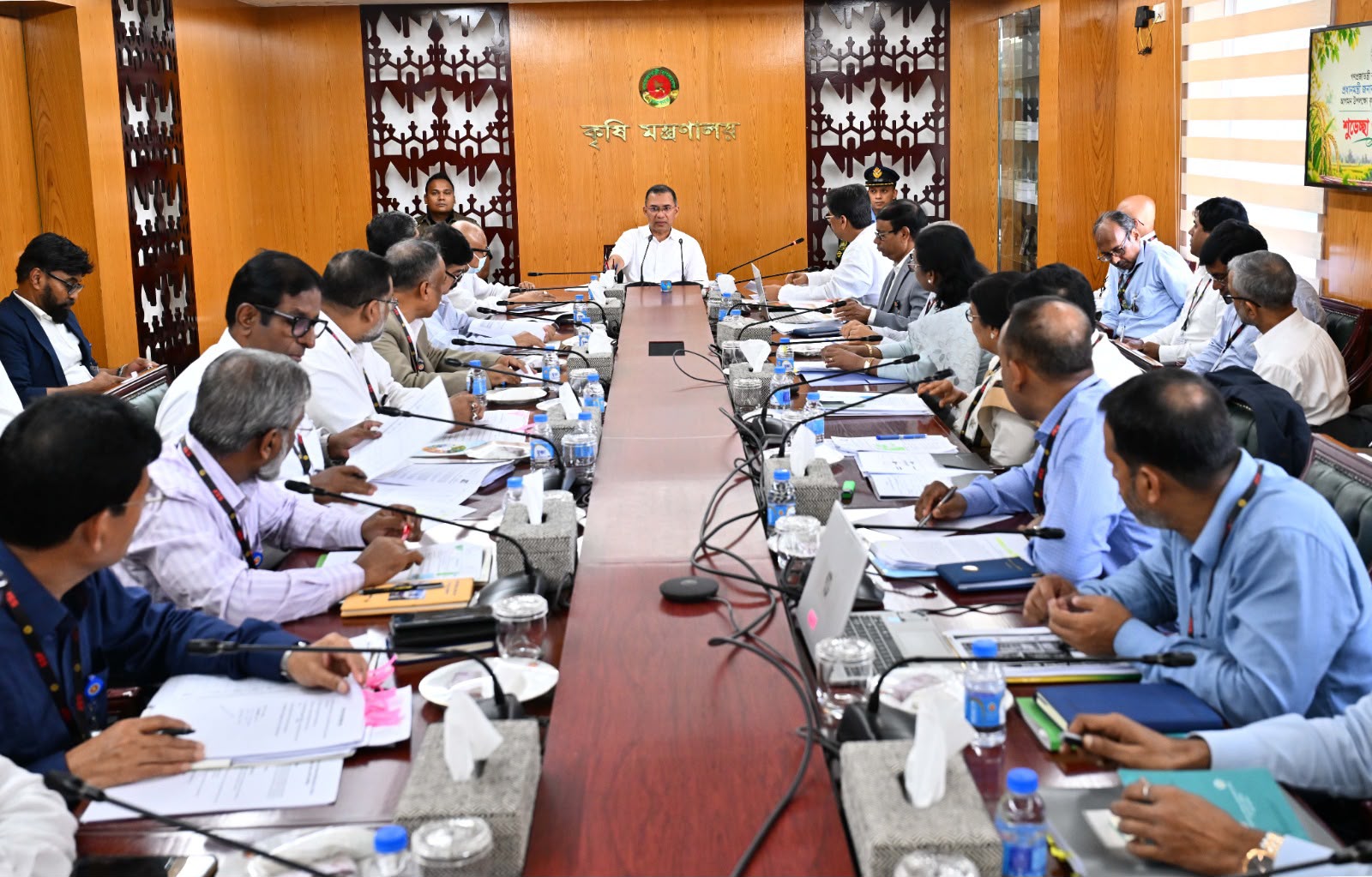
Addressing a meeting with ministry officials at the Secretariat conference room on Sunday, where the overall situation of the agriculture sector, ongoing activities, and future plans were presented, the prime minister said alongside ensuring food security for the country’s people, agriculture must be made more productive and profitable.
He emphasised that import reliance on agricultural and food products that can be grown domestically must be gradually reduced.
To achieve this, he directed that greater emphasis be placed on boosting local production by rapidly delivering research, improved varieties, modern technology, irrigation, and mechanisation facilities to farmers.

Information presented at the meeting revealed that mustard production is being increased to lower import dependency on edible oil.
National mustard output stood at 8.24 lakh metric tonnes in the 2021-22 fiscal year, rising to 15.34 lakh tonnes in 2024–25, and reaching 15.41 lakh tonnes in the 2025-26 fiscal year.
Initiatives to expand onion production and storage capacity were also highlighted, including the deployment of air-flow technology at farmer level for preservation and expansion of summer onion varieties.




Additionally, activities are underway to disseminate new crop varieties tolerant to salinity, drought, and waterlogging at the field level.
Highlighting progress in agricultural research, the ministry reported that a total of 1,090 crop varieties have been developed, including 155 rice varieties, alongside over 1,000 agricultural technologies.
The meeting placed heightened importance on farm mechanisation to raise productivity while lowering labour and production expenses.
Initiatives are in place to innovate and manufacture domestic agricultural machinery, alongside delivering equipment such as combine harvesters, reapers, and rice transplanters to farmers at affordable prices.
Efforts to expand the use of solar power in agriculture were also detailed. Discussions noted that expanding renewable energy-based irrigation across the country’s 2,617 solar irrigation systems could reduce farmers’ irrigation costs and reliance on conventional fuels.
To deliver government assistance directly to farmers, the Farmer Card programme received significant emphasis at the meeting.
The Ministry of Agriculture has set a target to bring 43 lakh farmers under the card coverage in the 2026-27 fiscal year, with preparations underway to distribute cards to approximately 1 lakh 10 thousand farmers in the first phase.
The meeting further covered discussions on agricultural mechanisation, solar irrigation, canal digging, tree plantation, and the preservation and marketing of agricultural products.
Tarique instructed officials to focus on increasing agricultural productivity, reducing farmers’ production costs, and ensuring fair prices for their produce.