
Mohammad Shaikh Salim Reza
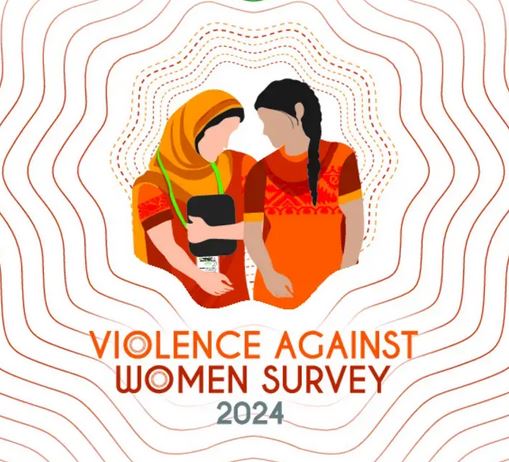
When the Bangladesh Bureau of Statistics published the Violence Against Women (VAW) Survey 2024, it was more than just a report- it was a warning. It reminds us that behind the country’s fast progress, a hidden crisis is happening in many homes. In villages and cities, in slums and neighborhoods, women still face violence that leaves deep marks not only on their bodies and minds, but also on their children and the future of the nation.
This survey, done after almost ten years, gives a clear and painful picture. It is one of the most detailed and honest studies Bangladesh has ever done. More than 27,000 women shared their stories, creating a powerful message we must hear.
One of the most haunting figures from the survey is that three out of every four married women in Bangladesh have experienced some form of violence in their lifetime. The number is behemoth, thus easy to become numb to it. If you gather four women, regardless of location, chances are that three of them have been abused, controlled, or humiliated by the person they trusted most. Half of the women surveyed experienced abuse just in the past year.

Young women, especially those between 15 and 19, stand at the beginning of this long, wearying journey. Instead of stepping into adulthood with hope and excitement, many of them step into fear. Women with disabilities, too often overlooked in national statistics, reported some of the highest levels of violence. Poverty-stricken areas such as slums, coastal belts, and disaster-prone regions becomes a breeding ground for exploitation.
There are children across Bangladesh who fall asleep listening to the sound of their mother crying. There are children who freeze in fear every time a door slams. And there are thousands of others who grow up believing that violence is a normal part of family life. These children carry invisible wounds. Teachers see it in the classroom among the children who show unexpected changes in behaviour, personality, and performance. Childhood trauma does not disappear with time. It follows them into adulthood, into marriage, into parenthood, feeding generational cycles of pain.
The survey even reveals violence during pregnancy. When a pregnant woman is hit or abused, it is not only her life that is endangered; it is the life of the child she is carrying.




Protecting women, therefore, is not separate from protecting children. It is one and the same.
Violence against women is not a uniquely Bangladeshi problem but a global one. In India, nearly one in three women experience violence from an intimate partner. In South Africa, the femicide rate is among the highest globally. Even countries with advanced legal systems (Canada, France, Australia) struggle with rising cases of domestic violence and online abuse.
What makes the 2024 survey particularly relevant globally is its spotlight on digital violence. As Bangladesh’s internet access expands, a new form of exploitation has emerged. Women are being harassed, stalked, blackmailed or shamed online. The survey found that 8.3% of women have already faced this form of violence. In South Korea, hidden camera crimes shook the nation. In Japan, online stalking became so severe that laws had to be rewritten. Bangladesh is now facing its own version of this digital threat.
The saddest part of the survey is the silence that surrounds the violence. Six out of ten women never told anyone about the violence they faced. They fear what will happen if they speak. They fear losing their children, their home, their reputation, their financial security. They fear being blamed. They fear not being believed. And often, they simply do not know where to go. Only 12% of women know about the government helpline. When silence becomes a shield for abusers, violence flourishes.
Violence against women is not just a private tragedy but a national economic burden. Women spend unnecessary money on treatment, legal fees and emergency care. Many are forced to miss work, lose their jobs, or leave school early. The World Bank estimates that domestic and intimate partner violence can cost a nation up to 3.7% of its GDP, desperately needed for Bangladesh to reduce poverty, expand infrastructure, and provide education and healthcare.
The world offers valuable lessons and warnings. Spain built a nationwide survivor-centered support system, linking police, courts and hospitals. Rwanda created One-Stop Centers where women receive medical, legal and psychological support in one place. Australia poured significant resources into national campaigns that involve men and boys. Canada made gender equality a central part of school and university life.
The VAW Survey 2024 does not just show the problem, it shows the solutions. First, Bangladesh needs better support for survivors by providing more shelters, more social workers, more trained police, and more One-Stop Crisis Centers with counselors who understand trauma. Second, the justice system must be easy to reach and fair. Fast-track courts, special gender desks at police stations, and real accountability can make a significant difference. Educating males about respect being the strength, creating programmes to challenge gender norms, adding safety and equality in schools, and improve digital literacy for online safety.
Bangladesh dreams of becoming rich, modern, and strong. But this cannot happen if women are unsafe. No country can grow when its mothers, daughters, and sisters live in fear. The VAW Survey 2024 shows both pain and hope. It proves violence is common, but also that change is possible if we act now. Protecting women is not charity. It is not optional. It is not a favour. It is the base of a strong, healthy, and successful future.
The writer is a Protection Specialist and CEO at Favor Consultancy