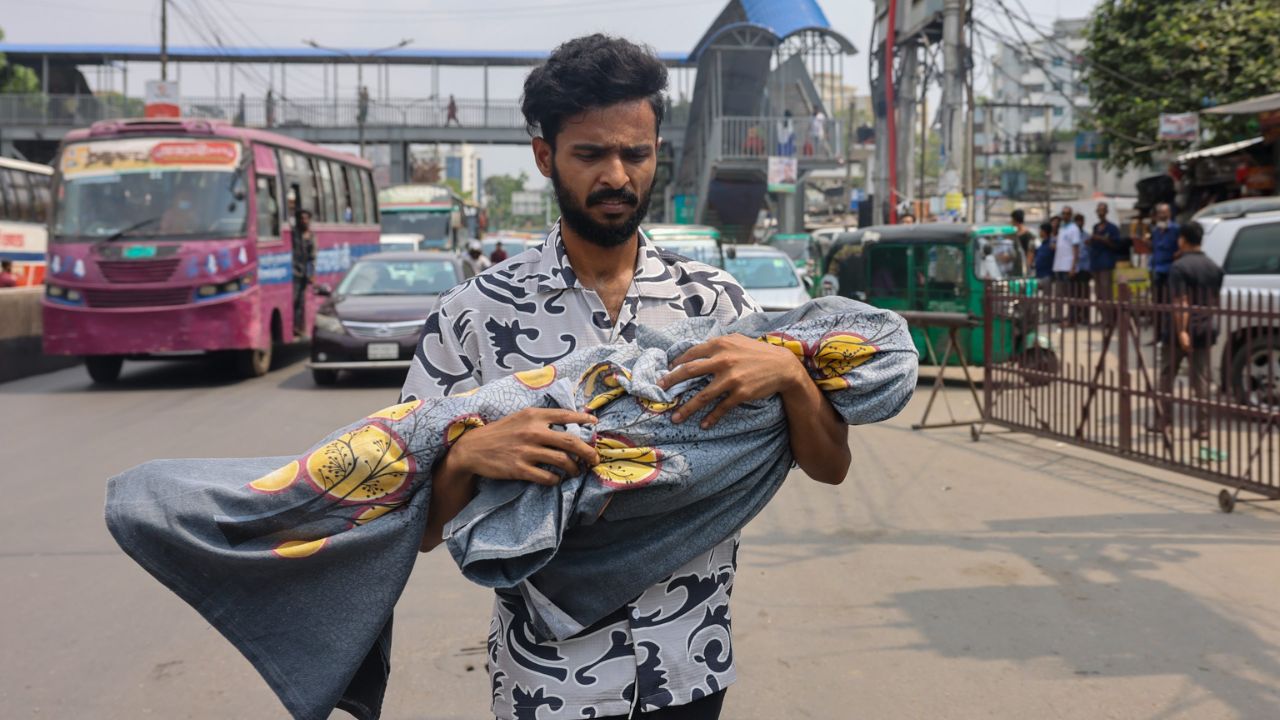
The country is grappling with a growing vaccination crisis that extends far beyond the recent surge in measles cases among children. While the rapid spread of measles—described by the health minister as arriving “like a lightning strike”—has drawn immediate attention, new information suggests that stocks of several other life-saving vaccines are also running dangerously low. Authorities, however, insist the situation will stabilise within a month.
The warning comes at a time when a nationwide measles vaccination campaign is set to begin this Sunday, aimed at containing outbreaks reported in multiple regions, including Dhaka and Rajshahi. Special medical arrangements have already been introduced in several hospitals, with additional ventilator support and trained medical staff deployed in areas such as Rajshahi and Manikganj to manage severe cases, including measles-induced pneumonia and respiratory distress.
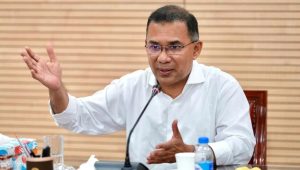
Speaking on Thursday at Dhaka Shishu Hospital in Sher-e-Bangla Nagar, where a training programme was inaugurated, Health Minister Sardar Md Sakhawat Hossain acknowledged the sudden nature of the outbreak. “Measles came like lightning. We had no preparation. But we are now fully prepared to tackle it within a short time,” he said.
Yet the crisis is not limited to measles alone.

Under Expanded Programme on Immunisation (EPI), children receive nine vaccines in stages from birth to 15 months, protecting them against ten deadly diseases. Since the programme’s launch in 1979, this is the first time such widespread concerns over vaccine supply have emerged.
According to officials, while the central vaccine warehouse still holds enough stocks of inactivated polio vaccine (IPV) and pneumococcal conjugate vaccine (PCV) to meet demand until June, supplies of several other essential vaccines are critically low. These include BCG for tuberculosis, pentavalent vaccines covering diphtheria, whooping cough, tetanus, hepatitis B and Haemophilus influenzae type B, as well as measles-rubella (MR) and tetanus-diphtheria (TD) vaccines.
Sazzad Hossain, deputy director of EPI, confirmed the shortage but clarified that an empty central warehouse does not necessarily mean all vaccination centres have run out. “Some areas still have relatively adequate supplies, but shortages are acute in others,” he said.



Meanwhile, stocks of the human papillomavirus (HPV) vaccine—used to prevent cervical cancer in girls aged 9 to 14—are expected to last until December.
Each year, the government brings more than four million children under routine immunisation coverage. These vaccines were previously procured under an operational plan (OP) overseen by the Directorate General of Health Services. However, following the interim government’s assumption of power, the plan was cancelled in August 2025. Officials say this administrative decision disrupted procurement processes, leading directly to the current shortages.
The scale of demand highlights the challenge. Annual requirements include around 42 lakh doses of BCG vaccine, which is supplied in 20-dose vials that cannot be reused once opened—resulting in higher effective demand. The pentavalent vaccine, administered in three stages at one-and-a-half, two-and-a-half and three-and-a-half months of age, requires approximately 1.26 crore doses each year.
For polio, each child needs two doses of IPV, creating an annual demand of about 84 lakh doses. Other vaccines, such as typhoid conjugate vaccine (TCV) and HPV, are administered once a year to specific age groups rather than newborns.
In response to the unfolding crisis, the government has secured emergency funding of Tk 604 crore to procure vaccines. Contracts have already been signed under this allocation, with an additional agreement worth Tk 421 crore currently in process and expected to be approved by Sunday.
Officials say the situation should begin to improve within a week for at least five vaccines, although full normalisation may take up to a month. A shipment of IPV has already arrived, sufficient to meet demand for at least one month.
To address the immediate measles outbreak, the government is also borrowing 2.19 crore vaccine doses from Gavi, the global vaccine alliance. Alongside immunisation, authorities are introducing updated treatment protocols, including the administration of Vitamin A Plus capsules with measles vaccines. There are also plans to integrate Vitamin A campaigns with future measles-rubella immunisation drives.
The stakes are high. Before the introduction of EPI, around 250,000 children in Bangladesh died each year from just six infectious diseases. The programme expanded in 2009 to include vaccines against eight diseases, later increasing to nine. Today, immunisation services cover not only infants but also adolescents and women of reproductive age, spanning from birth up to 49 years.
As the country races to contain the measles outbreak, the broader vaccine shortage has raised urgent questions about preparedness, policy decisions, and the resilience of one of the most critical public health programmes.