The United States (US) has announced that it will waive costly visa bonds for supporters attending the 2026 FIFA World Cup, easing concerns over the high expenses facing international travellers.
The decision, announced on Wednesday, came after criticism that some fans could be required to pay visa bonds ranging from $5,000 to $15,000 on top of the already expensive cost of attending the tournament, reports Al Jazeera.
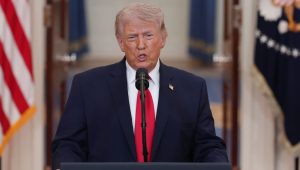
The bond system was introduced in August last year under the administration of President Donald Trump. Under the policy, citizens from 50 countries were required to deposit a bond to obtain a temporary US visa. The amount would be refunded after visitors departed the country.
In a statement to Al Jazeera, US Assistant Secretary of State for Consular Affairs Mora Namdar said the administration is “waiving visa bonds for qualified fans who bought World Cup tickets and opted in to FIFA PASS as of 15 April, 2026”.
She said the move is linked to an earlier programme designed to speed up visa processing ahead of the World Cup. Namdar also added the administration had already exempted “qualifying team members, including players, coaches, and support staff who otherwise meet all requirements for entry into the US” from the bond policy.

“We remain committed to strengthening US national security priorities while facilitating legitimate travel for the upcoming World Cup tournament,” she said.
The US Department of State added that ticket holders would still undergo the standard visa screening and vetting procedures.
At least five nations competing in the tournament — Algeria, Cabo Verde, the Ivory Coast, Senegal and Tunisia fall under the visa bond policy.




The State Department expects up to 10 million visitors to travel to the US during the tournament, which begins on June 11 across host cities in the US, Mexico and Canada.
Concerns over immigration restrictions
Critics have argued that the Trump administration’s strict immigration and deportation policies contradict FIFA President Gianni Infantino’s pledge to make the 2026 World Cup the “most inclusive” edition in history.
Alongside the visa bond issue, at least 39 countries remain under broad US travel bans, including participating nations Iran and Haiti. Two other competing countries, the Ivory Coast and Senegal, are subject to partial travel restrictions.
Human rights organisations have also expressed concern over the possible role of Immigration and Customs Enforcement (ICE) during World Cup matches in the US.
The Department of Homeland Security told US media that it could assist with security operations alongside “local and federal partners”.
In April, the American Civil Liberties Union and Amnesty International joined several other groups in issuing a travel advisory for visitors heading to the US during the World Cup.
The advisory cited a “deteriorating human rights situation in the United States” and “the absence of meaningful action and concrete guarantees from FIFA, host cities, or the US government”.
The organisations also raised concerns about “expanded restrictions and limitations on travel and entry into the United States”.
The advisory further highlighted “violent and unconstitutional immigration enforcement, including racial profiling and other discrimination by law enforcement”.
A White House spokesperson later rejected the concerns, describing the warnings as “ridiculous scare tactics driven by liberal activist groups and the left-wing media”.