


The United States is facing increasing diplomatic challenges in rallying international support for its military campaign against Iran, as several key allies have ruled out joining operations in the Middle East. The conflict, which has now entered its 17th day, continues to escalate with growing regional instability and mounting casualties.
US President Donald Trump recently called on major global powers to assist in securing the strategically vital Strait of Hormuz, a key shipping route for global energy supplies. In a post on his Truth Social platform, Trump urged countries including China, France, Japan, South Korea and the United Kingdom to send naval vessels to ensure safe passage through the strait.
“Hopefully China, France, Japan, South Korea, the UK and others affected by this artificial constraint will send ships to the area so the Hormuz Strait will no longer be a threat,” Trump wrote.
UK prime minister Keir Starmer said the UK would not be drawn into a “wider war” over Iran and he is “working with allies” on a viable plan for the Strait of Hormuz, after Iran’s effective closure of the waterway. Meanwhile Germany and Greece have ruled out involvement in any military operations in the strait,
Meanwhile, US Treasury Secretary Scott Bessent said Washington is allowing Iranian oil tankers to pass through the Strait of Hormuz in order to help maintain global energy supplies, highlighting the delicate balance between military confrontation and economic stability.

Iran remains defiant
Iran has strongly rejected claims that it is seeking negotiations or a ceasefire.
Iranian Foreign Minister Abbas Araghchi dismissed Trump’s assertion that Tehran wants to begin talks.
“No, we never asked for a ceasefire and we have never asked even for negotiations,” Araghchi said. “We are ready to defend ourselves for as long as it takes.”




He also said Iran considers the Strait of Hormuz open for normal international traffic but closed to countries involved in the attacks.
“From our perspective the strait is open, but it is closed to our enemies — those who carried out this aggression and their allies,” he said.
Iranian authorities say the war has so far killed at least 1,444 people in the country and injured more than 18,500 others.
Regional tensions rising
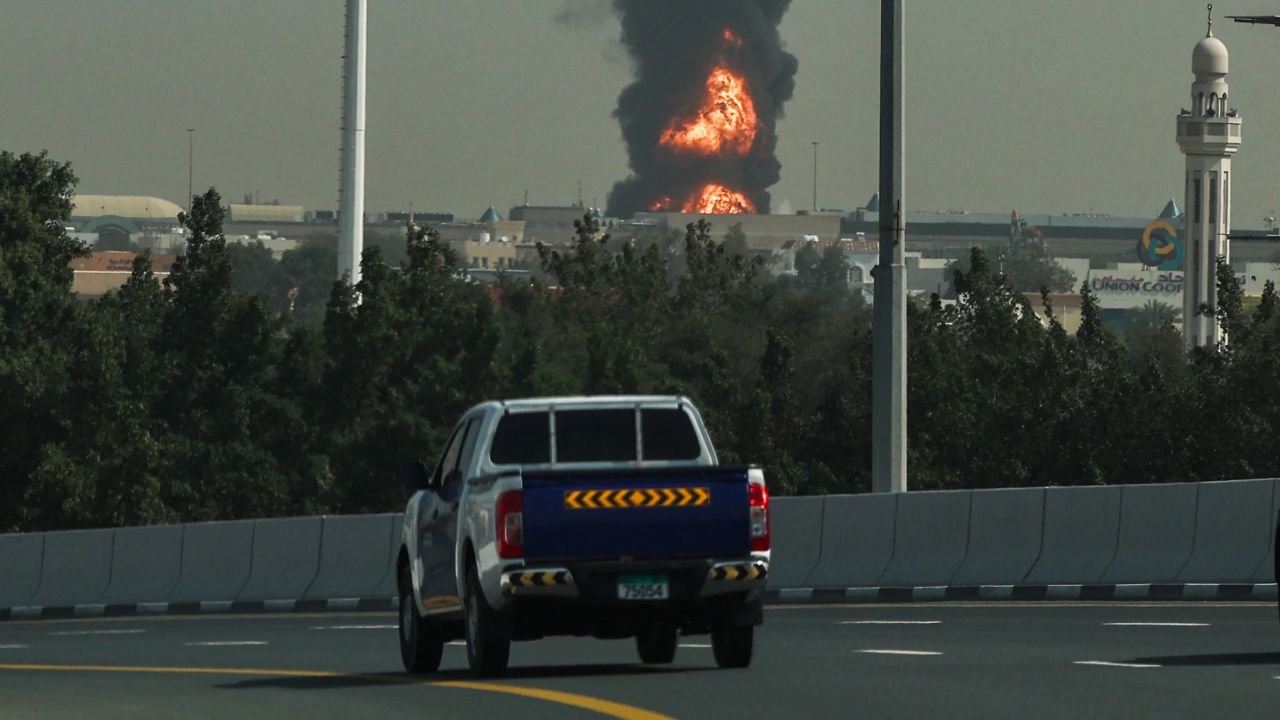
The conflict has continued to spill across the Gulf region. Authorities temporarily suspended flights at Dubai International Airport after a drone-related incident caused a fire near the airport. The situation was later brought under control and flights resumed on a limited schedule.
A separate drone strike also triggered a fire at an industrial zone in Fujairah in the United Arab Emirates. In Abu Dhabi, a missile strike reportedly hit a car, killing a Palestinian resident.
Allies distance themselves from conflict
Despite Washington’s call for support, several European governments have made it clear that they do not intend to become involved militarily.
UK Prime Minister Keir Starmer said Britain would not be drawn into a wider regional war, despite US warnings that NATO’s credibility could be at stake.
“Our priority remains protecting British citizens in the region while taking steps to safeguard our security and that of our allies,” Starmer said, adding that the UK would continue to support diplomatic efforts aimed at restoring stability.
Germany has taken a similar stance. A spokesperson for the Government of Germany said the conflict in Iran is unrelated to NATO and confirmed that Berlin would not participate in military operations in the Strait of Hormuz.
“As long as this war continues, there will be no German participation — not even in efforts to keep the strait open by military means,” the spokesperson said.
Greece has also ruled out involvement in any military operations in the strait, government spokesperson Pavlos Marinakis said.