



The recent electoral experience in the United States reminds us once again that, however powerful the influence of wealth, corporate interests, and entrenched political establishments may be, the people’s desire for change cannot always be suppressed.
When political leadership is guided by principles and remains deeply connected to the everyday struggles of ordinary citizens, it is possible to challenge the dominance of wealthy and influential elites. US Senator Bernie Sanders stands as an extraordinary example of this truth.
Bernie Sanders identifies himself not as a religiously observant Jew, but as a secular and cultural one.
Yet his courageous position on the legitimate rights, self-determination, and human dignity of the Palestinian people has been far more forceful, unequivocal, and principled than that of many supposedly liberal Western politicians and heads of government or state.
In criticizing the policies of the Israeli government, he has never allowed his religious identity to become an obstacle. For him, human rights are not the exclusive privilege of any particular religion, nationality, or state. Human dignity and justice must apply equally to everyone.
This is the defining characteristic of Bernie Sanders’ political philosophy: an unwavering commitment to principles.
Throughout his long political career, he has consistently championed social justice, economic equality, workers’ rights, affordable healthcare for all, educational opportunities, and resistance to the political domination of corporate capital.
In 2016, Sanders lost the Democratic Party’s presidential nomination contest to Hillary Clinton.
That contest generated widespread controversy over the alleged favouritism of the Democratic Party establishment and the role of its entrenched power structures.
Many believed that his defeat in the 2016 democratic party primary would mark the end of his political aspirations. In reality, however, precisely the opposite occurred.
Bernie Sanders may have lost his personal bid for the presidency, but his ideals and political movement were not defeated. On the contrary, over the past decade, his political philosophy has inspired countless young, energetic, and socially conscious political activists across the United States.
The emergence of progressive leaders such as Alexandria Ocasio-Cortez and the electoral successes of progressive candidates in various elections reflect this broader political transformation.
Many of these leaders have emphasized small contributions from ordinary citizens, volunteer organizations, and grassroots political participation instead of relying on the corporate donations that have traditionally sustained establishment politics.
They have recognized that politics is not merely about winning elections or securing a share of political power. Its fundamental purpose should be to improve the living standards of ordinary people, reduce economic inequality, and ensure the equitable distribution of national resources and opportunities.
At the age of 85, Bernie Sanders can undoubtedly take pride in the legacy of his long political struggle.
Although he never became president, he helped nurture a new political generation committed to carrying his ideals into the future.

Perhaps the greatest achievement of a politician is not to occupy the highest office, but to establish a political philosophy that transcends his own political career and continues to inspire future generations.
Bangladesh’s political reality
Let us now turn our attention to Bangladesh.
Bangladesh is currently passing through a profound political, economic, social, and moral crisis.
Decades of corruption, nepotism, abuse of power, political dynasties, money laundering, patronage-based economic practices, and the weakening of state institutions have made our democratic future increasingly uncertain.
In our political culture, personalities matter more than principles. The competition to acquire and retain power has become more important than the welfare of the people.
Internal democracy within political parties remains extremely limited, even though there is no shortage of promises to establish democracy in the governance of the state.
Most regrettably, our political culture often regards compromising principles as political pragmatism, while refusing to compromise with those in power is dismissed as political immaturity.
Under these circumstances, Bangladesh desperately needs a political figure like Bernie Sanders.
This does not mean that we need an exact replica of Sanders. Rather, we need leadership that deeply understands Bangladesh’s history, society, economy, and the everyday problems of its people.
We need a leader who places the rights of farmers, workers, small business owners, unemployed youth, students, women, and disadvantaged communities at the center of the national political agenda.
We need someone who will not use politics as a means of accumulating personal wealth, laundering money abroad, or protecting the interests of powerful elites.




Above all, we need a leader who values the future of the country more than his or her own political future.
Abuse of power and moral bankruptcy
Bangladesh’s recent political experience has taught us an important lesson: a change of government does not necessarily mean a transformation of political culture.
Serious allegations and controversies surround the possible involvement of domestic and foreign vested interests, including the so-called “deep state,” in the political upheaval of August 2024.
These allegations deserve an impartial and independent investigation.
Equally important, however, is an assessment of the conduct of those who assumed responsibility for governing the country and gained access to state power following the events of August.
Those who promised public welfare, good governance, democracy, and institutional reforms but subsequently abused their authority or sought to advance personal and factional interests deserve unequivocal condemnation.
The allegations concerning the misgovernance of this unelected administration, political vendettas, corruption, extortion, illegal occupation, looting, arson and seizure of property, the emergence of privileged interest groups, and possible damage to national interests demand proper investigation and accountability.
Political power is not the personal property of any individual. Nor is public office a license for any group to secure economic or political advantages.
Those who have turned public trust and state responsibilities into instruments of personal gain must ultimately face the judgment of history and the people.
What could constitute a greater political betrayal than assuming power in the name of the people while sacrificing the very interests of those people?
The failure of our so-called socialists
It is also necessary to examine the role of Bangladesh’s socialist and communist political movements.
For decades, many of their leaders have spoken passionately about the emancipation of the working class, socialism, an exploitation-free society, and the struggle against capitalism.
Yet there has often been a striking contradiction between their professed political ideals and their actual political conduct.
Some eventually compromised with the very power structures, privileged classes, and capitaldominated systems they had once pledged to oppose.
Questions have also arisen at various times concerning the relationships of certain leftist leaders with foreign-funded organizations, informal centers of political power, and influential vested interests.
It would, of course, be unfair to overlook the many honest, dedicated, and principled individuals who have contributed to Bangladesh’s left-wing political movements. Their sacrifices and contributions deserve recognition.
Nevertheless, several fundamental questions remain unanswered.
Why have so many politicians who claim to represent workers and farmers failed to build a strong political base among ordinary citizens?
Why do many of their candidates receive only a few thousand votes, or even fewer, in national elections?
Why have their political messages failed to establish a meaningful connection with the everyday struggles of the people?
Perhaps one important explanation is that professing political ideals and translating those ideals into one’s personal political life and actions are two very different things.

This is precisely where the fundamental difference between Bernie Sanders and many of our self-proclaimed socialists becomes evident.
Sanders did not abandon his political convictions in exchange for power or personal advantage.
He suffered electoral defeats, but he never deviated from his long-term political objectives.
Bangladesh today desperately needs that same moral courage and steadfast commitment to principles.
Can the new generation bring about change?
A single principled leader, however, cannot transform the destiny of an entire nation.
Such a transformation requires an organized citizenry, strong democratic institutions, an independent judiciary, responsible media, and a political culture in which differences of opinion are not treated as acts of hostility.
We need a political movement that unites citizens on the basis of equal rights and human dignity rather than dividing them along religious, ethnic, class, gender, or political lines.
We need leaders who can tolerate criticism, acknowledge their mistakes, and willingly submit themselves to public accountability.
Most importantly, we must restore the younger generation’s faith in principled and ethical politics.
The young people of Bangladesh must understand that politics does not necessarily mean corruption, deception, abuse of power, or the pursuit of personal interests.
Politics can also be the most powerful instrument for serving humanity, advancing social justice, and building a more compassionate and equitable state.
This is precisely the lesson Bernie Sanders has offered us.
The greatest message of his political career is that the true success of a politician should not be measured by how long he or she remains in power.
Rather, it should be measured by how many people’s perspectives that politician has been able to transform and how much progress has been made toward creating a more just political future for succeeding generations.
Bangladesh therefore needs a Bernie Sanders of its own: a leader who engages in politics not for power, but for the people; who upholds principles rather than promoting personality cults; and who places the rights of ordinary citizens above the interests of the wealthy and powerful.
But the question remains: Is there anyone in Bangladesh’s political arena who possesses these qualities?
And if there is no such person today, can our younger generation produce such leadership?
Perhaps Bangladesh’s greatest challenge is not simply to find a Bernie Sanders, but to create the democratic, truly inclusive political and system and ethical political environment in which leaders like him can emerge, develop, and ultimately succeed.
For genuine political transformation does not come merely through replacing one ruler with another.
It comes through a transformation of political ideals, the moral character of leadership, accountability within state institutions, and a sincere commitment to the welfare of the people.
Bangladesh’s future depends on how prepared we are to embrace such a transformation.
The ordinary people of Bangladesh, as well as its politicians, must put an end to their blind allegiance to immature, incompetent, and corrupt political leadership. They must also reject their own pursuit of personal interests and the corruption that has become so deeply entrenched in our political system.
Above all, the hardworking people of Bangladesh must, for their own sake and for the future of their country, find a Bernie Sanders of their own.
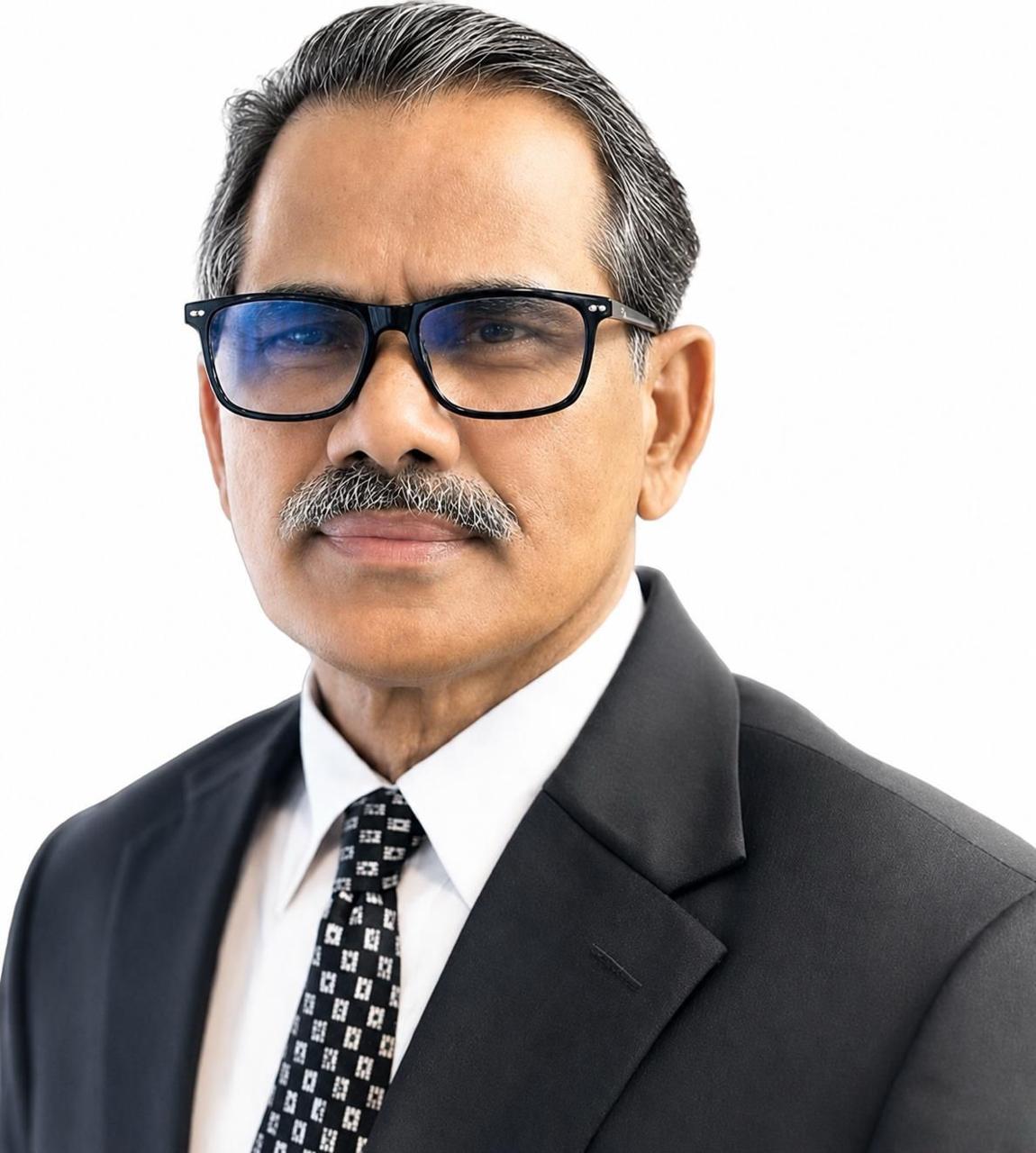
Dr Khalilur Rahman is Former Ambassador and Secretary, Ministry of Foreign Affairs