


The Sundarbans. It is many things at once; the Royal Bengal Tiger, mudflats, a vast web of tidal rivers, a dense green canopy and a deep store of folklore. It is also the shield that has protected the coast of Bengal from cyclones for generations. Who, then, is wearing that shield down? Who is polluting the riverine mother, disturbing the climate of the region and destroying the homes of its wildlife?
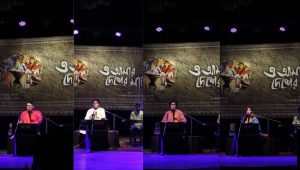
Invisible Stories, a French-Bangladeshi body puppet production, put those questions on stage at the Experimental Theatre Hall of the Bangladesh Shilpakala Academy on Friday, 6 November. The hall was full, and with the seats gone, some people stood in the upper gallery.
Presented by Alliance Française de Dhaka, Compagnie Graine de Vie and the Academy, the show was created and directed by French puppeteer Laurie Cannac, who performed alongside Swatee Bhadra. Mohammad Farhad Ahmed worked on the choreography.

Ghosts and the people behind them
According to the organisers, the premise follows two scientists who set out to investigate the influence of ghosts on daily life in Dhaka and are drawn into a journey toward the Sundarbans. The production draws on the oral tradition of Bengali folklore surrounding the forest, but its argument is plain: the crisis facing the mangroves was made by people not by ferocious tigers or supernatural beings.
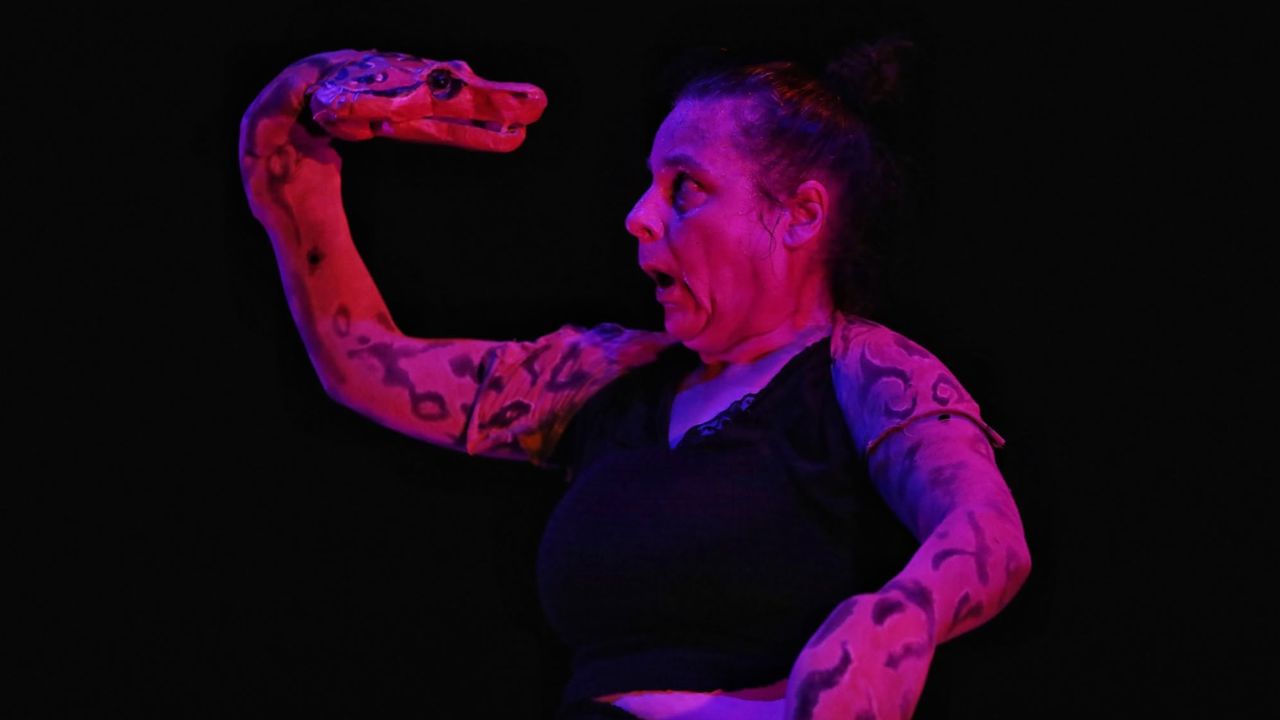
It was the performers’ bodies and acts, not elaborate costumes or equipment that carried the audience into the forest. A snake, a crocodile, a tiger- each appeared in three different scenes. Through these animals, the show traced the relationship between wildlife and humans; and what follows when people try to dominate nature: they create forces that can destroy water, flowers, homes and eventually human life itself.




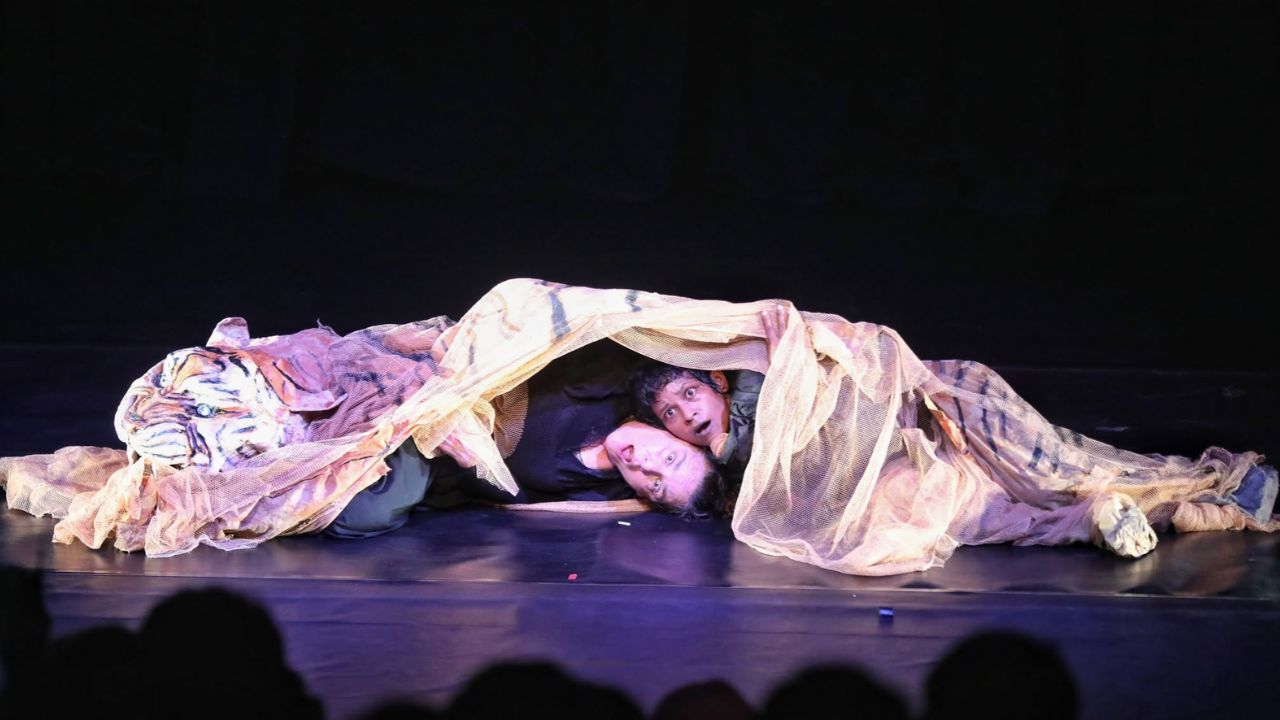
The river, too, becomes a ghostly character. In one passage she is a living being, a symbol of life, who speaks of revenge against those who pollute and ravage her. In a scene of entering the Sundarbans, the characters ask forgiveness of the forest, the trees, the birds and animals and the insects. It symbolizes that every living thing matters in Sundarbans.
From sea to forest
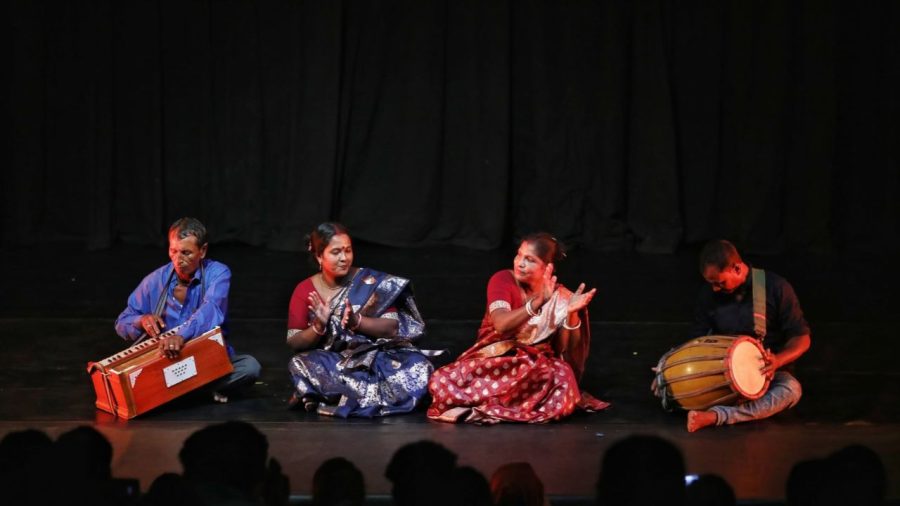
Live music from the Nonabhumi Organisation, an ensemble from the Sundarbans, ran through the evening. In one scene, Cannac and Bhadra are swept into the sea and wash up in the Sundarbans. The ensemble began a prayer song seeking the protection of Bonbibi, the guardian deity of the forest, since tigers roam its land and crocodiles its waters. The journey from sea to forest echoes the name itself. It was proposed that the name is a corruption of Samudraban (‘Sea Forest’), though the more widely accepted view traces it to the ‘sundari tree’.
A room that joined in
The audience did not stay quiet. In one scene a ghost spoke the line “Earth is my home too,” and the hall chanted it back. The refrain returned after each place name: Dhaka, Paris, Afghanistan, Israel, Gaza and Ukraine. When Israel was named, the room seemed to hesitate, but it chanted the refrain anyway. The Brazilian theatre practitioner Augusto Boal developed the Theatre of the Oppressed, in which spectators become active participants who try to explore and challenge the reality they live in.

Invisible Stories did not follow that philosophy formally, but the audience behaved in its spirit. People cheered at every scene, clapped along with the ensemble when the music called for it, and voiced their concern when the story turned to rivers being polluted and wildlife being driven out.
A song to end
The evening closed with Nonabhumi performing a song written by a retired tiger-charmer of the Sundarbans, aged 75. It sings of the forest’s greatness and pleads that, when another cyclone like Ayla strikes, she will protect us. “We depend entirely on the Sundarbans for our livelihoods, but when its resources run out, what can we do except wait for death?” the song warns.