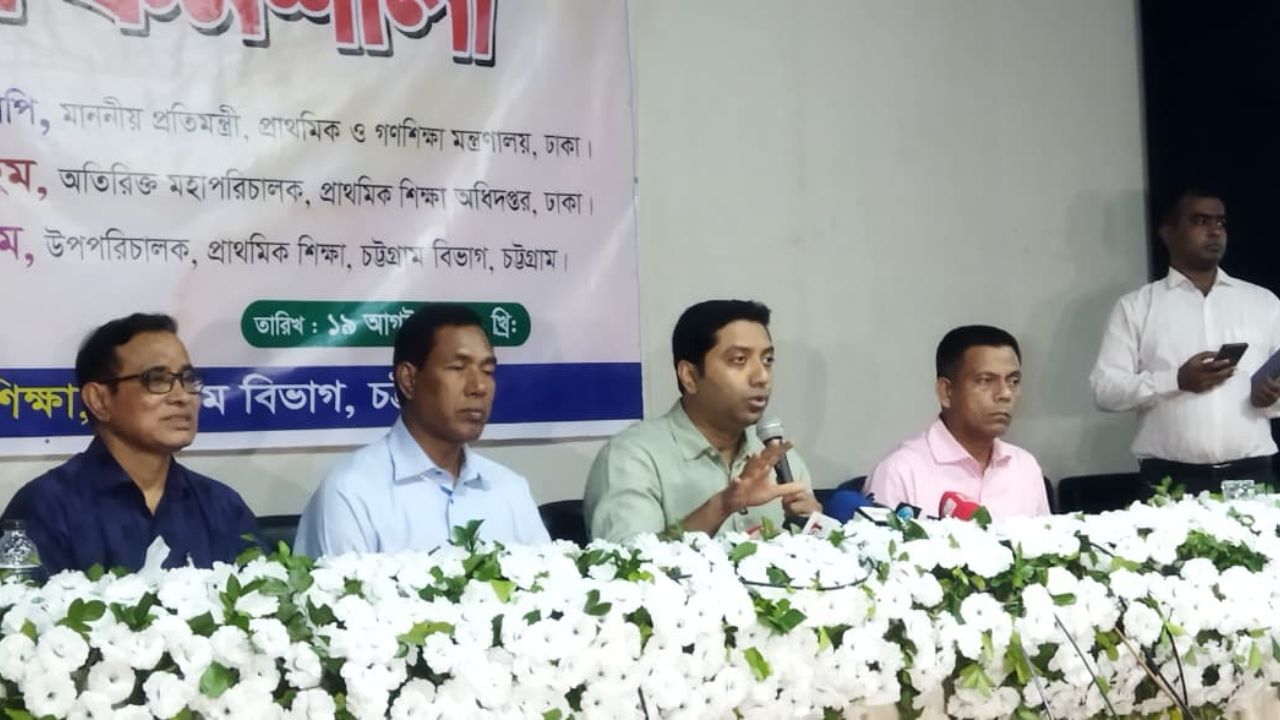



Kindergartens and private primary schools operating without official approval will be shut down if they fail to obtain registration despite the government simplifying the process, State Minister for Primary and Mass Education Bobby Hajjaj said on Wednesday.
He also announced that the government has begun the process of recruiting more than 32,000 headteachers after years of legal complications over the appointments were resolved.
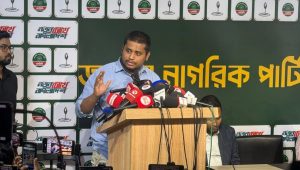
The state minister made the remarks at a press briefing after a daylong workshop on improving classroom activities, monitoring, accountability and the role of local administration in primary education.
The workshop was held at the conference room of the Primary Teachers’ Training Institute (PTI) in Chattogram.
Additional Director General of the Directorate of Primary Education Md Abdur Rahim attended the workshop as a special guest, while DPE Chattogram Divisional Deputy Director Md Nurul Islam chaired it.
Registration mandatory
Boby Hajjaj said all primary schools, including kindergartens, are supposed to operate under government supervision, but an effective monitoring system for private primary schools had not been in place.
The government is now working to strengthen oversight, he said.
“We want to facilitate those who want to open schools rather than create obstacles for them,” Boby Hajjaj said, adding that the registration process was being simplified to prevent unnecessary harassment of school operators.

However, institutions that continue operating without registration despite the easier process will face closure, he warned.
The proposed monitoring policy will also consider a school’s size and student population. Schools operating on a smaller scale will have to maintain a proportionate number of teachers and students.
The minister said vacancies in several key monitoring positions, including assistant upazila education officers, upazila education officers, UPTC instructors and PTI instructors, were weakening supervision.
Some appointments and postings have been held up by legal complications, but the government expects to fill the vacancies soon, he said.
Over 32,000 headteachers to be appointed
Recruitment of headteachers had remained stalled for years because of legal complications. Following a court ruling, those obstacles have now been removed, allowing the recruitment process for more than 32,000 headteachers to begin, Boby Hajjaj said.



The government will also recruit assistant teachers to fill the vacancies that will be created when existing assistant teachers are promoted to headteacher posts.
At the same time, recruitment of more than 14,000 assistant teachers is underway.
The appointment of more than 6,000 teachers selected through the 2025 assistant teacher recruitment examination is awaiting a court verdict. The government will take the necessary steps once the verdict is delivered, he said.
The government also plans to recruit around 14,000 to 15,000 teachers every year, according to the state minister.
Assessment to matter more than seniority
The government is preparing a new teacher policy to address longstanding demands related to pay scales, selection grades and higher grades.
But promotions and salary upgrades will not be based solely on length of service. Regular performance assessments will play a key role, Boby Hajjaj said.
The proposed policy will include provisions for such assessments.
Basic training may be cut from 10 months to two
The government is also planning major changes to teachers’ basic training.
The National Academy for Primary Education (NAPE) has begun work on a new training policy. Teachers currently undergo 10 months of in-campus training at PTIs.
The government is considering reducing residential training to two months, with the rest to be completed on the job.
Hajjaj said this would allow a larger number of teachers to receive training within a shorter period.
More emphasis on learning through play
The revised primary curriculum will focus more on active learning, with plans to teach Bangla, English, mathematics and science through games and storytelling.
The school calendar will also be revised, with separate arrangements for single- and double-shift schools.
The government is working to establish minimum and maximum daily teaching hours. The aim is to ensure that teachers do not provide less classroom instruction than required while preventing excessive academic pressure on children.
Child-friendly playgrounds planned
For children in Classes I to III and kindergarten students, smaller child-friendly playgrounds may be more useful than large conventional fields, the state minister said.
The government is considering making playgrounds mandatory based on school size and student numbers.
Curriculum experts will determine the appropriate size and facilities for the playgrounds.
Focus on sanitation, teacher transfers
The government is also seeking to improve school environments, including hygiene and sanitation facilities.
Monitoring officials at the field level have been instructed to ensure that school washrooms are clean and hygienic, Boby Hajjaj said.
The government is also working to simplify the teacher transfer process. The Directorate of Primary Education has been instructed to give the matter special attention, and the new teacher policy will include provisions on transfers.
Boby Hajjaj said the government was pursuing changes in teacher recruitment, training, assessment and transfers alongside reforms to school environments and teaching methods.
The overall objective, he said, is to bring about coordinated and comprehensive improvements in the country’s primary education system.