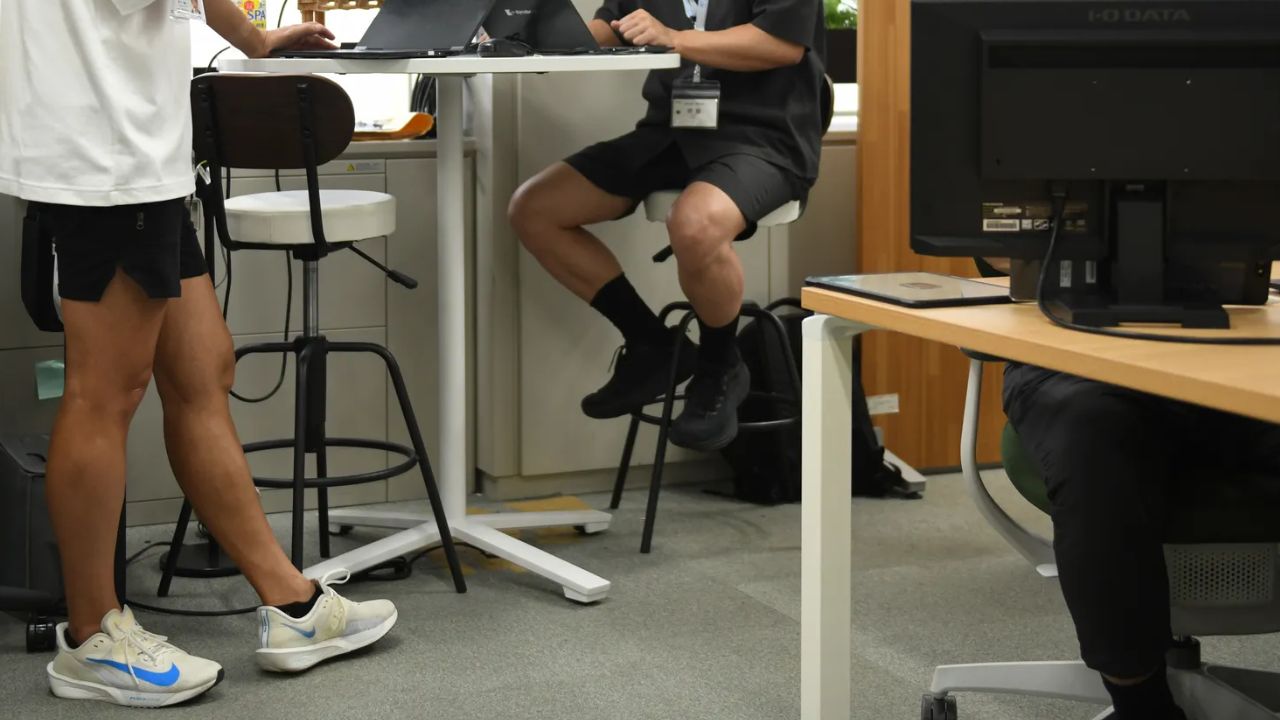

As Japan faces a summer of intense heat, the Tokyo Metropolitan Government is advocating for a significant shift in professional attire, encouraging male employees to swap traditional suits for shorts, t-shirts, and trainers.
The initiative, titled “Tokyo Cool Biz”, was launched in April by Governor Yuriko Koike as an expansion of her long-standing energy-saving traditions. However, the move to allow shorts in the workplace has met with a divided response, reports BBC.
Critics of the policy, including some female workers, have raised concerns about gender double standards, noting that women are often still expected to wear tights even in high temperatures.
Additionally, the policy has given rise to the online term “sunehara”, or “leg hair harassment”, describing the unease some employees feel when exposed to the bare legs of their male colleagues.

Noboru Watanabe, an environmental official for the Tokyo government, emphasised that the goal is to provide flexible options during extreme weather. He noted that attire should remain respectful and not cause offence to others in the professional environment.
Data from a June study by Gorilla Clinic suggests public hesitation, with 53.5% of those surveyed opposing the use of shorts at work.
The clinic found that women were notably more likely to oppose the change, with concerns regarding body hair and physical appearance being the primary reasons for objection across both genders.



Akifumi Funatsu, the director of Gorilla Clinic, observed that more men are now seeking laser hair removal as a form of “social etiquette”.
He suggested that a growing perception that men should have less visible leg hair is driving this trend, as workers seek to avoid making their peers uncomfortable while dressed casually.
The concept of summer wardrobe adjustments in Japan dates to 2005, when Koike, then the environment minister, introduced the original “Cool Biz” campaign.
That movement saw high-level support from figures such as then prime minister Junichiro Koizumi, who famously appeared without a tie or jacket to promote energy conservation.
The guidelines were further broadened into “Super Cool Biz” following the 2011 Tohoku earthquake and tsunami to manage energy shortages.
Japan is currently enduring record-breaking temperatures alongside rising energy costs. The Japan Meteorological Agency has categorised days where temperatures surpass 40C as “kokusho-bi” (brutally hot days) to heighten public caution.
Recent figures from the Fire and Disaster Management Agency reveal the severity of the situation, with seven deaths and 4,580 hospitalisations attributed to heatstroke between 6 and 12 July.
In response to the climate, many residents have adopted cooling technology, including portable fans and clothing with integrated ventilation. Experts from the Japan Academic Network for Disaster Reduction advise that the human body requires several weeks to undergo heat acclimatisation.
They recommend that preventative measures begin during the rainy season, particularly as Japan’s high humidity levels make it difficult for the body to cool itself through sweat evaporation.