Edible oil traders alleged that informal payments of Tk10,000 per truck are adding to supply costs and fuelling price increases across the commodity chain.
Gholam Mawla, president of the Bangladesh Wholesale Edible Oil Traders Association, said transporting a truckload from border areas costs about Tk30,000 in freight, alongside Tk10,000 paid under different unofficial heads.
“The money is taken in the name of workers’ welfare fund, drivers’ welfare fund and humanitarian fund under various labels,” he said.
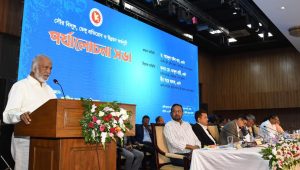
He made the remarks at a discussion titled “Law and order situation and proper market management for ease of doing business” organised by the Dhaka Chamber of Commerce and Industry at Motijheel on Saturday.

Mawla described extortion as an invisible cost with significant impact on prices.
He said a recent visit by a government official to Shyambazar wholesale market found a Tk40 to Tk50 per kilogram gap between wholesale and retail rates.
“We are saying prices are rising, but what is the reason behind this gap? Who will take responsibility?” he said.



Bangladesh Crockeries Merchants Association president Md Monir Hossain said truck rentals from Naogaon before Ramadan were about Tk14,000 but now cost Tk30,000 for the same trip.
He cited traffic congestion as a driver of higher supply costs, saying trucks remain stranded on roads for long hours.
“Ultimately, these additional expenses are passed on to consumers,” he said.
Bangladesh Sugar Merchants Association president Md Abul Hashem said retail-level drives alone would not stabilise prices.
“If the government wants to stabilise the market, it has to conduct operations at the production and import stages,” he said.
Moulvibazar Traders Association president Mohammad Ali said limited access to opening letters of credit during seasonal shortages creates monopolistic conditions.
“If the import cost is Tk40, they sell it at Tk100, and later drives question retailers but not the importer,” he said.
Traders urged authorities to address systemic inefficiencies and informal costs across the supply chain to ensure fair pricing and consumer protection.