



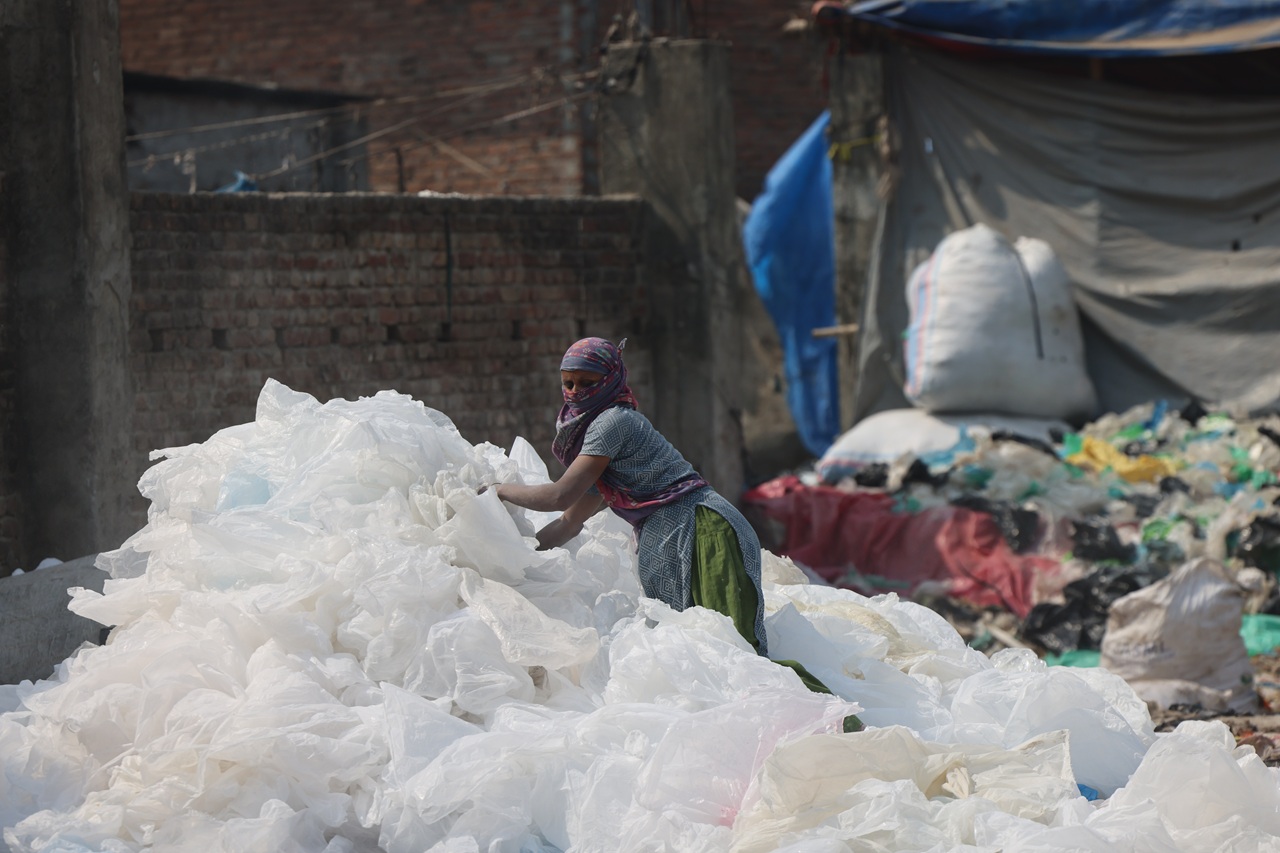
In the Loharbridge area of Kamrangirchar in Dhaka, daylight reaches the ground only after passing through layers of dust. Around the area, piles of white, yellow, and bluish polythene bags are stacked like small hills.
In the middle of these piles, several women sit and work. They wear worn-out clothes, and their faces are covered with scarves or the loose ends of their sarees. With both hands, they lift large sheets of polythene and shake them. As they do, fine white particles rise into the air and slowly spread around.
This is not ordinary dust. It is chemical powder or leftover chemical residue. The workers have no protective glasses, no gloves, and no special clothing.
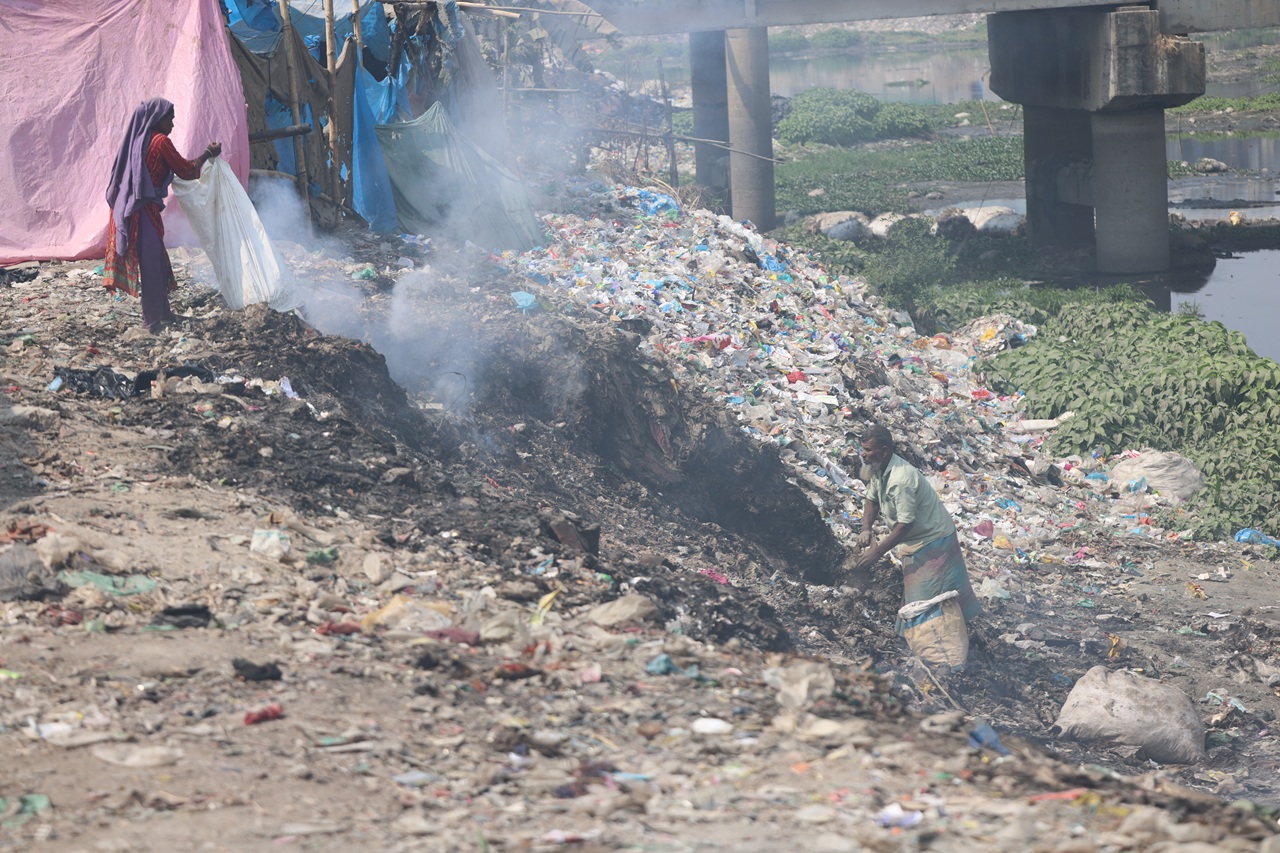
These women collect polythene from waste, wash it, shake it, wipe it, and prepare it for recycling. This may sound like an environmentally friendly activity. But behind it lies serious risk.
A 2025 study titled “Industrial Toxicants in Bangladesh: Sources, Exposure and Public Health Impacts – A Systematic Review” states that toxic chemicals have spread into nearby water, soil, road dust, and surface water through different environmental pathways.

Exposure to these substances can increase the risk of skin diseases, respiratory problems, and damage to internal organs. Because the work is done in open spaces, toxic particles spread through the air. This puts not only the workers but also nearby residents at risk.
Health experts have issued clear and serious warnings about these risks. Dr K F M Ayaz, Internal Medicine specialist at Evercare Hospital, told TIMES of Bangladesh that the risk is “multidimensional.” He said that such an environment increases asthma and respiratory allergies, weakens the immune system, and allows infections to reach the lungs, which can turn into pneumonia.
He added that inflammation can develop inside the lungs, creating the risk of long-term and complex health problems. In other words, the danger is not limited to immediate illness. It can lead to serious long-term health complications.




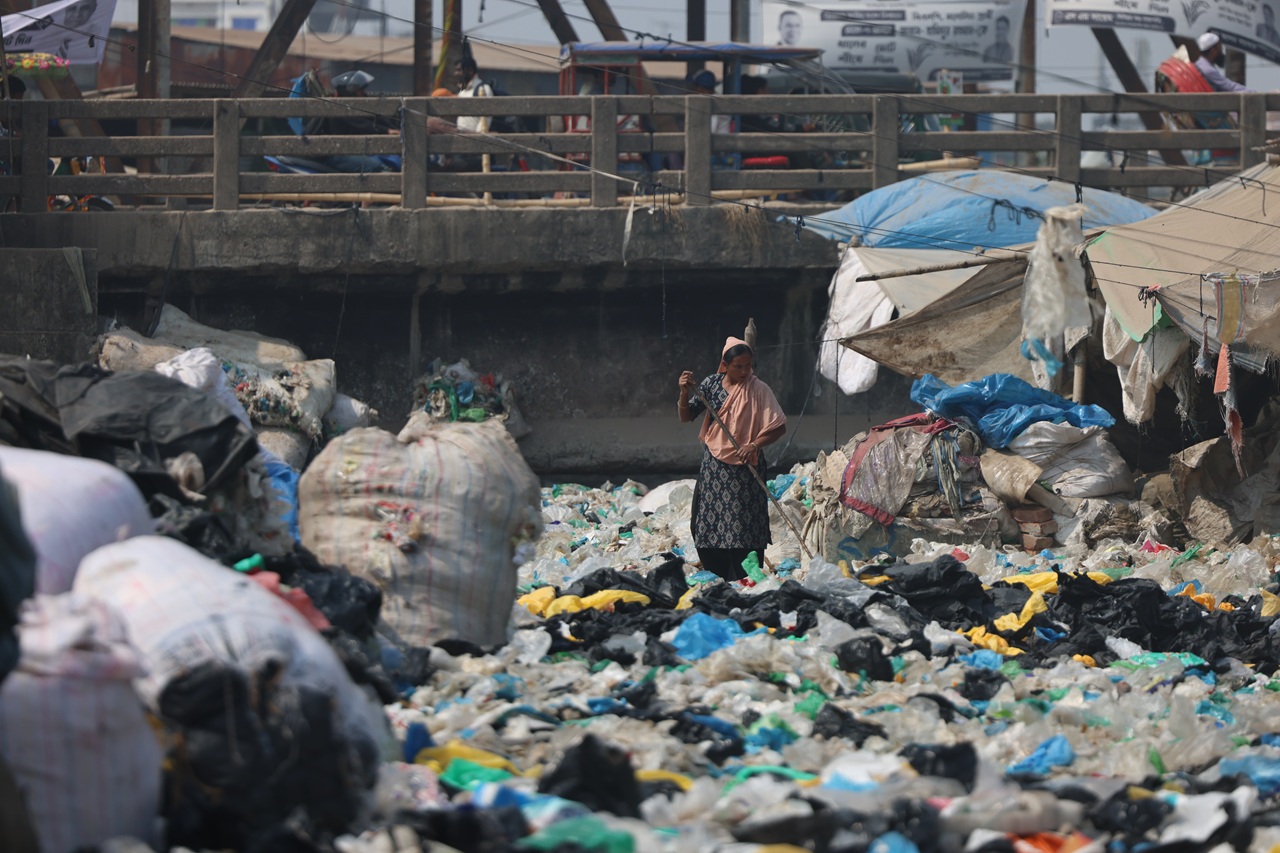
However, the issue is not only about health risks. It is also connected to a large informal economy. The women working near the Loharbridge do more than just sort and clean polythene. They are part of a multi-layered chain.
Through waste collectors, middlemen, and small factories, the polythene returns to the market. But in this system, there are no effective labour laws, no health insurance, no safety standards, and no social protection for the workers. Their labour keeps the economy moving, yet their rights are ignored. They remain invisible but essential workers.
The environmental impact of this process is also serious. Washing and drying the polythene in open spaces allows contaminated chemicals to spread into the air and nearby water sources.
Environmental expert Atiq Rahman told TIMES that cleaning polythene bags used to carry and store chemicals in open spaces is extremely risky for both the environment and people.
He said that chemicals left on used polythene bags can mix with water and enter canals, drains, or rivers. This can quickly destroy beneficial microorganisms, damaging the entire ecosystem.
He also explained that this reduces the natural ability of water to purify itself. As a result, pollution becomes long-lasting, and the risk to nearby residents increases.
When the bags are shaken, fine chemical particles spread through the air and can settle on nearby homes, markets, schools, and even on food and drinking water. Pollution therefore, does not remain limited to the workplace. It spreads throughout the area.
Long-term exposure to polluted air slowly harms the body. The damage may not be visible at first, but over time it can lead to serious health problems. According to him, this is not just an environmental issue. It is a major public health concern.
The specific reality of Kamrangirchar makes this crisis even worse. There is almost no boundary between residential areas and industrial activities. Where people live, there are small factories. Where they live, there is waste.
As a result, workers are not exposed to pollution only during work hours. They live in it all the time. Even after returning home, they do not find a clean environment. They continue to breathe the same polluted air and face the same risks.
It is clear that while these workers help keep the city clean, their own lives remain unhealthy and unsafe. They lack protective equipment, access to healthcare, factory monitoring, and formal recognition.