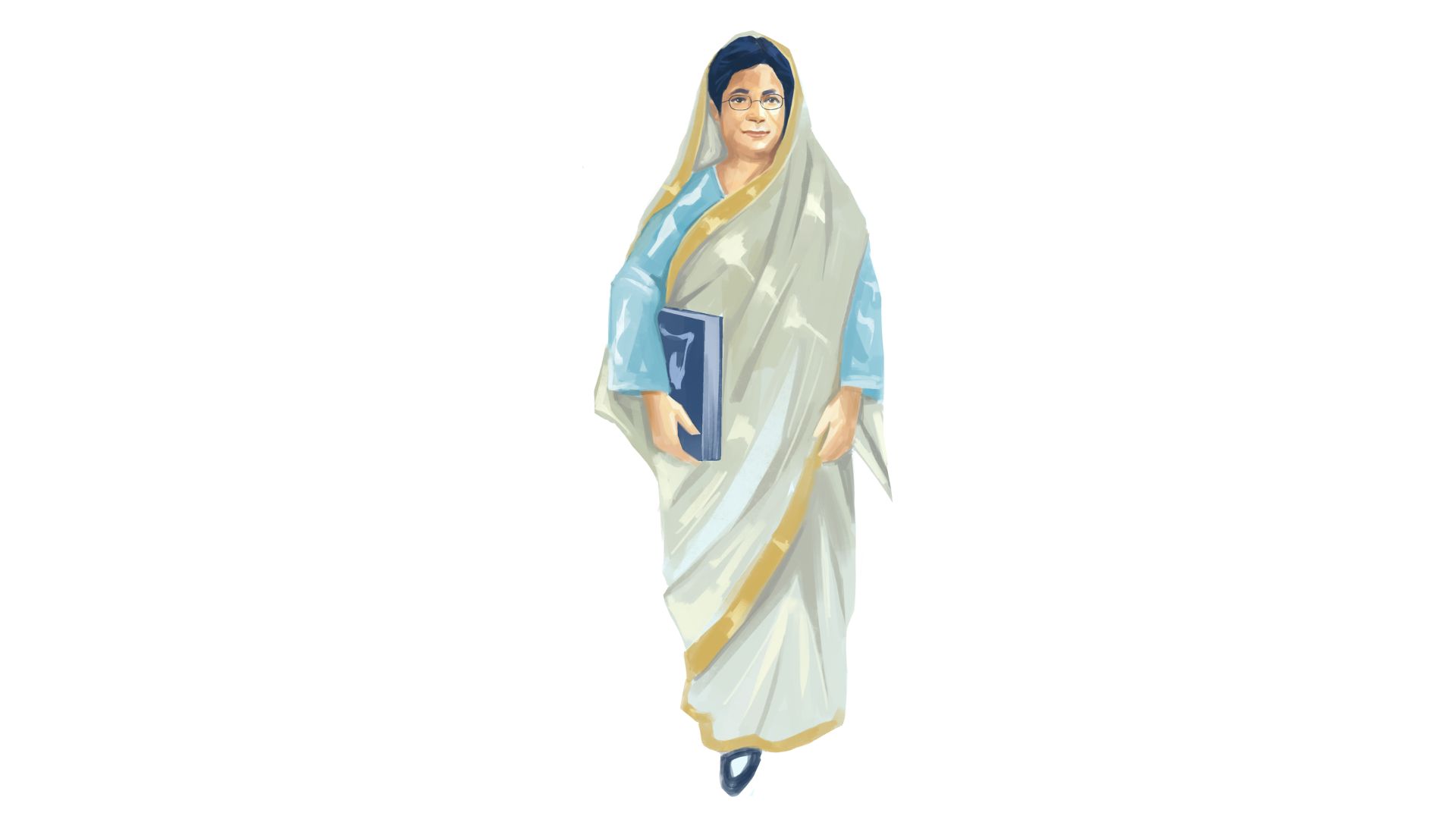



Long before the word “feminist” entered everyday conversation in South Asia, one woman from a quiet village in Rangpur was already imagining a world where women ruled.
Rokeya Sakhawat Hossain, known to the world simply as Begum Rokeya, was born on December 9, 1880, into an aristocratic family where Arabic and Persian were the languages of prestige and girls were not expected to have much use for either. Education, ambition and a public voice – these were not for women. Rokeya decided, quietly and then loudly, that they were.
Her earliest allies were her siblings. Her brother Ibrahim taught her English and Bengali in secret, and her elder sister Karimunnesa, who herself longed to learn despite family disapproval, became her earliest mirror of defiance. These stolen lessons would go on to change the course of women’s history in the subcontinent.

At sixteen, she was married, as most girls of her time were. But her husband, Sakhawat Hossain, proved to be a rare man – one who encouraged her to read, write and publish. Under his quiet support, she flourished. In 1905, she wrote Sultana’s Dream, a remarkable feminist novella imagining a society called Ladyland, where women governed through science and intellect, and men were confined to the domestic sphere. It was witty, visionary and years ahead of its time.




When her husband died in 1909, Rokeya did not retreat into widowhood. Within five months, she opened a school for Muslim girls – first in Bhagalpur with just five students, then in Calcutta after a family property dispute forced her to relocate. For 24 years, she ran that school, going door to door, persuading reluctant parents to give their daughters a chance. She faced ridicule, hostility, and relentless social pressure. She did not stop.
In 1916, she founded the Muslim Women’s Association and in 1926 presided over the Bengal Women’s Education Conference – the first major gathering dedicated to women’s right to learn. Her essays, stories and satirical writings challenged the purdah system, exposed the hypocrisy of religious justifications for female oppression and called on women to break free from the barriers built around them.
She died on December 9, 1932, shortly after presiding over a session of the Indian Women’s Conference. Even her final day was spent in service.
Bangladesh observes Rokeya Day every year on December 9. The National Public Library in Dhaka bears her name. In 2004, the BBC ranked her sixth among the greatest Bengalis of all time. She did not just dream of a better world for women. She built one.