A recent news report emerging from a residential flat in Mirpur has stirred a profound and deeply unsettling nationwide conversation over the past few days. Seventy-two-year-old Nurjahan Begum was found dead in the isolation of her private room. According to various media reports, her decomposing body was discovered several days after her actual passing, announced to the world only by the grim odour of decay. The incident is currently under active investigation by law enforcement agencies. Naturally, the true cause of death, the intricate family dynamics, and other related empirical facts will become entirely clear through this official inquiry.
However, there are certain tragic incidents that cannot be viewed merely as isolated occurrences or simple statistics in a police ledger. They carry a painful symbolic weight because they force us to confront crises that are deeply rooted, yet persistently ignored, within the foundation of our contemporary society. The tragic demise of her is not merely the passing of a single elderly woman in a crowded metropolis; it is a harrowing reflection of our collective times. It compels us to fundamentally rethink our family relationships, our eroding social values, our humanitarian responsibilities, and the isolating realities of modern lifestyle choices.
According to information, Nurjahan Begum’s children are all highly educated, socially privileged, and well-established in their respective fields. In our traditional understanding, parents of such accomplished children are often envied, and their parenting is cited as a model of success. But this tragic incident leaves us with an unavoidable, deeply philosophical question: what do we actually mean when we define success? If someone becomes a top-level bureaucrat, a respected academic, or an international professional, they are undoubtedly successful in conventional terms. But can a human life be judged solely through professional achievement and financial stability? Or should success also include humane responsibility, emotional availability, and meaningful family relationships?
Traditionally, Bangladeshi society was deeply family-oriented. The joint family system once formed the backbone of our social structure, where multiple generations lived under one roof. The elderly were not only respected but were central to decision-making and emotional stability within the family. Their presence provided psychological security and continuity. However, rapid urbanisation, migration abroad, and the rise of an individualistic lifestyle have significantly changed this structure. Joint families have broken into nuclear units. Even within these smaller families, emotional distance is increasing. People now live under the same roof but in different emotional worlds. Everyone has a private space, a personal schedule, and a digital life, while real human interaction continues to decline.

In this hyper-digital era, the most serious crisis is not technological – it is the crisis of human connection. The World Health Organisation (WHO) and multiple international studies have identified chronic loneliness among the elderly as a major public health issue. Prolonged isolation significantly increases risks of depression, anxiety, dementia, cardiovascular disease, hypertension, and even premature death. Human beings do not survive on food, medicine, and shelter alone. They survive through relationships. They survive through love. They survive through the feeling of being needed.
For an elderly mother, the most valuable thing is not money. It is a phone call. A simple question: “How are you, Ma?” It is sitting beside her, sharing tea, listening to her voice, and giving her presence. For an elderly father, the greatest need is not material comfort but respect, attention, and time. Yet we often assume that our responsibility ends once we provide financial support, medicine, and physical care. The painful truth is that emotional emptiness cannot be filled with money. A mother longs for her child’s presence. A father longs to be heard. They do not want to feel like burdens or forgotten remnants of the past. They want to feel valued, included, and loved.




Her case is a reflection of a broader social reality. Across the country, countless elderly individuals are living in silent loneliness. Many are financially secure, yet emotionally abandoned. They have homes, but no companionship. They have medical care, but no meaningful conversation. We take pride in development statistics – rising income, expanding infrastructure, digital growth – but we rarely ask whether human relationships are improving alongside them.
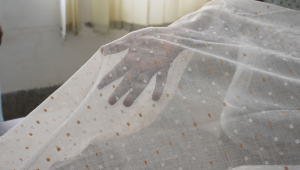
The haunting image of her body has circulated widely, showing an elderly woman lying still in absolute silence. Its deepest impact is not the image itself, but the questions it raises. Did she once hold her child’s hand on the first day of school? Did she stay awake through nights of illness when her child was sick? Did she sacrifice her own dreams for her children’s future? The answer, almost certainly, is yes. Before a child is born, a mother endures pain, fear, and sacrifice. From first steps to first achievements, her presence is embedded in every milestone. If loneliness becomes her final companion, it is not just a personal tragedy – it is a collective moral failure.
Bangladesh’s elderly population is increasing rapidly. In the coming decades, the number of senior citizens will rise significantly. Therefore, elderly welfare can no longer remain a private family issue; it is a national concern. Do we have elderly-friendly urban planning? Do our policies prioritize mental health for senior citizens? Can modern families provide emotional security for aging parents? These are urgent questions that demand attention. The true measure of any society is how it treats its most vulnerable members – children, women, the disabled, and the elderly. Those who say they have no time for their parents today must remember one truth: life moves in cycles. Today we are children; tomorrow we will be parents. The way we treat our parents today will become the lesson our children learn from us. Empathy and neglect both travel across generations. Children do not learn morality from words; they learn it from observation.
Nurjahan Begum will never return. The investigation will determine the medical cause of death. The media will report it for a few days, and then the world will move on. But the silence she left behind carries a question that will not fade easily: how should we measure true development? By buildings and growth? Or by love, dignity, and care for the elderly? The answer to that question defines who we are becoming as a society.
Her lonely death is not just a headline – it is a mirror. And in that mirror, we see not only her story, but our own future. Are we truly progressing as a society, or are we simply moving forward while leaving our parents behind in the darkness of loneliness?
The writer is a Senior journalist and President of the Bangladesh Online Journalist Association (BOJA)