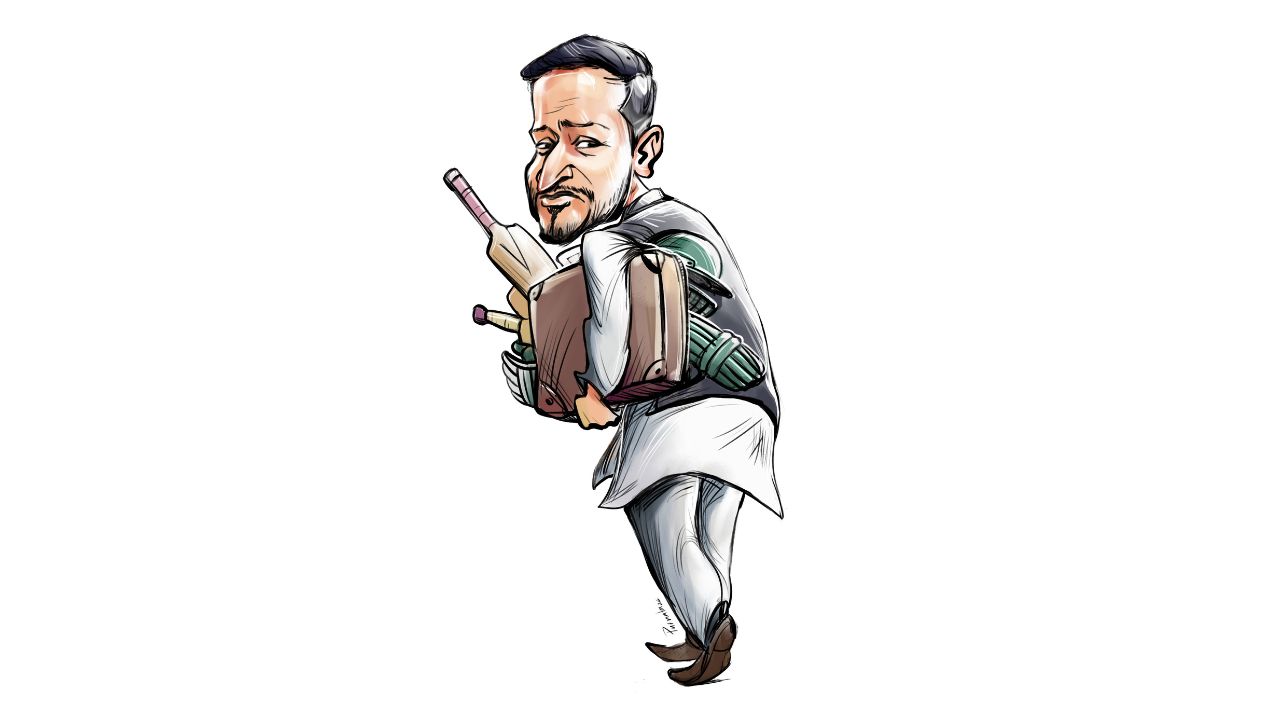



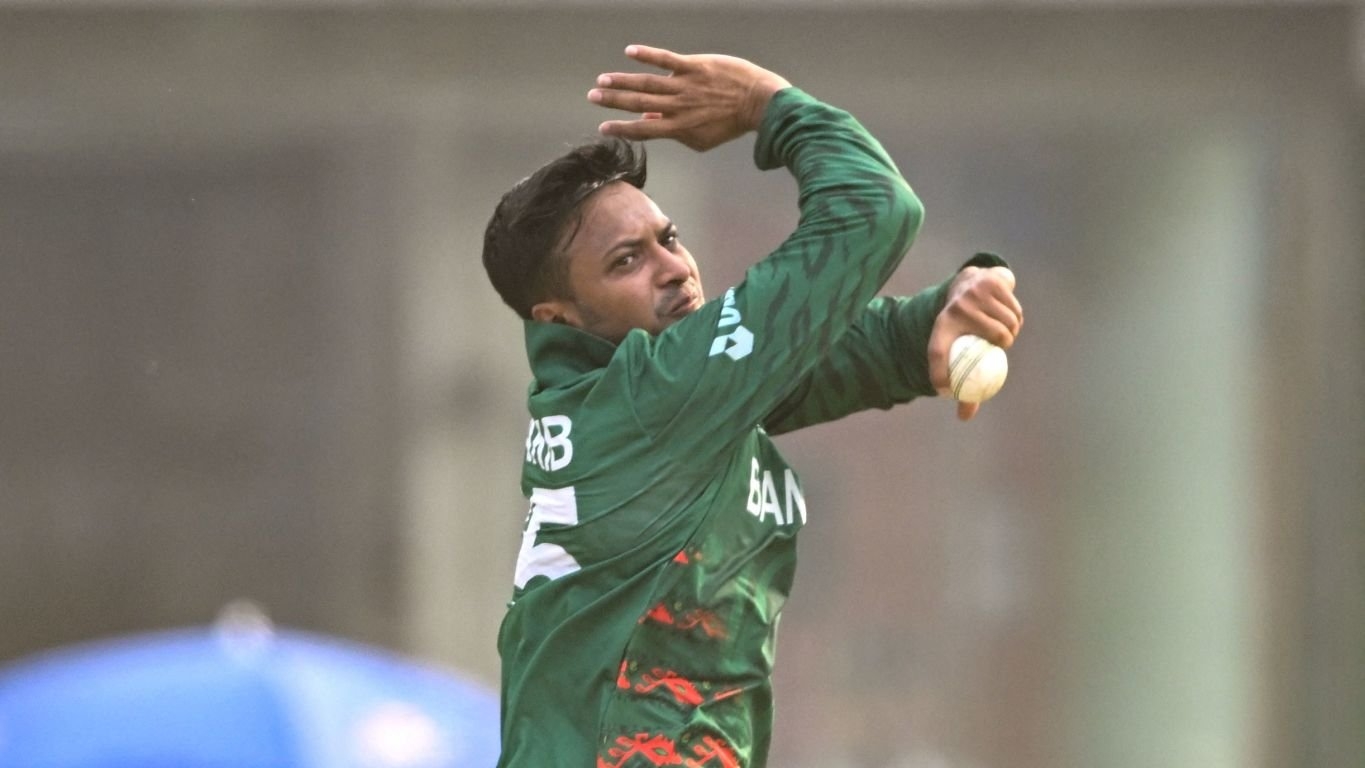
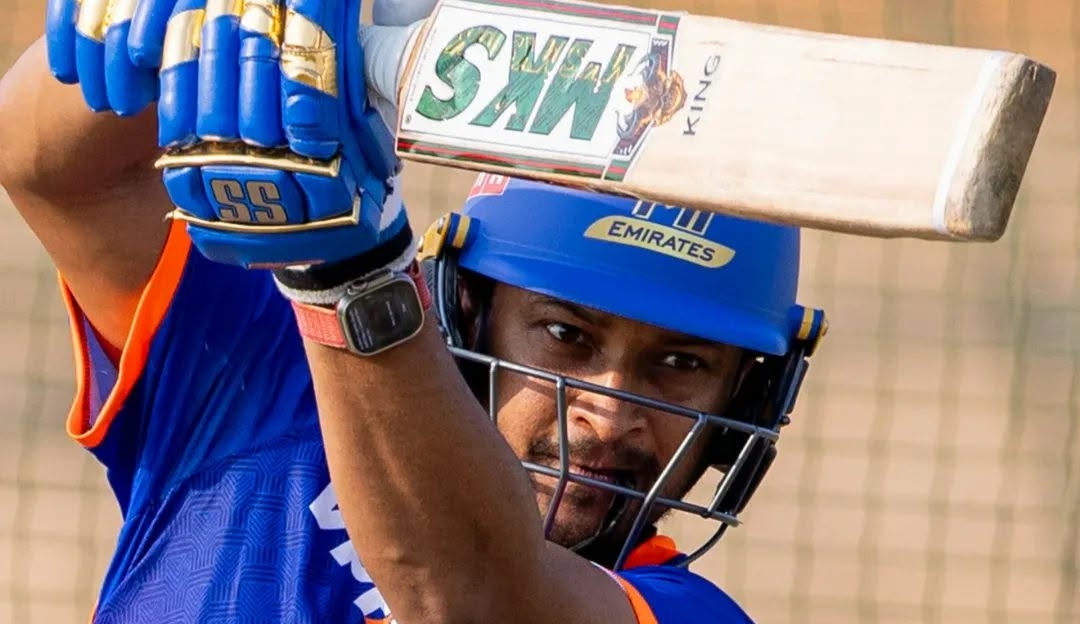
The biggest name in Bangladesh cricket’s history, Shakib Al Hasan now finds himself a stranger in his own country.
The poster boy of Tiger cricket for over 15 years, a global top all-rounder and a record-breaker who earned a place alongside legends such as Imran Khan and Kapil Dev, Shakib once seemed inseparable from the national team. Today, he cannot even return home.
For more than two years, the man who carried Bangladesh cricket on his shoulders has remained away from the country.
His political allegiance, association with the ousted Awami League government and, most recently, his appearance at a virtual event alongside deposed prime minister Sheikh Hasina in New Delhi on 5 August have left little room for optimism about his return.
The question now is no longer when Shakib will return to Bangladesh cricket. It is whether he ever will. The reason is no secret. Following the July uprising in 2024, Shakib, then an Awami League MP from Magura-1 constituency, became caught in the political fallout. After 5 August of that year, he could no longer return home.
For a while, people were willing to separate Shakib the politician from Shakib the cricketer.

Whatever slim hopes remained of seeing him represent Bangladesh again now appear to have disappeared, with politicians and people within the cricketing fraternity increasingly viewing his Bangladesh chapter as over. Dhaka also issued a strongly worded statement directed at New Delhi over the press conference.

Shakib’s participation in that meeting triggered widespread controversy in Bangladesh. State Minister for Youth and Sports Aminul Haque made it clear that Shakib would no longer have any opportunity to return to the country because of his political stance.
“We were looking at the matter with considerable flexibility and tolerance. But after this, I don’t think there is any scope to look at it in the same way,” Aminul said.
He added that Shakib would have to return through the legal process.
“The person who has taken the stage of an autocrat does not seem to have any opportunity to come back. As a player, we were considering the matter differently and we were being flexible. There is no opportunity for that anymore. If he comes, he will have to come through the legal process,” he said.
Shakib is not the only cricketer who has taken this path. Former Bangladesh captain Mashrafe Bin Mortaza has also remained in hiding since 5 August. A two-time elected MP from the Narail-2 constituency, Mashrafe entered active politics in 2018.



He went on to win a parliamentary seat while still an active cricketer and even played in the 2019 ODI World Cup as an elected lawmaker. It was an unprecedented development, not only in Bangladesh cricket but in world cricket as well.
However, Bangladesh’s first Test captain, Naimur Rahman Durjoy, was also elected MP from the Manikganj-1 constituency twice, but he entered politics only after ending his playing career.
There have been several legendary cricketers who later held important political positions in their respective countries, including Imran Khan, Navjot Singh Sidhu, Kirti Azad, Arjuna Ranatunga and Sanath Jayasuriya. But all of them entered politics after their playing careers had ended.
Former BCB director Khandakar Jamil believes Shakib should not have entered politics while still an active cricketer. Speaking to TIMES of Bangladesh, Jamil said Shakib’s experience should serve as a lesson for the wider sporting community.
He said, “Shakib’s case has sent a strong message to the sports fraternity. One should not enter politics while still having an active playing career. If a sportsperson wants to enter politics, they should wait until retirement and remain focused on their sporting career until then. Shakib’s saga has delivered that message.”
The Awami League saw in Shakib and Mashrafe more than sporting icons.

They were influential public figures whose immense popularity could be translated into political capital. Both were embraced by the party and leveraged their sporting stature to enter electoral politics, with Mashrafe winning parliamentary seats in 2018 and 2024, followed by Shakib in 2024.
But the relationship was not one-sided. Both cricketers also willingly stepped into the political arena, aligning themselves with the party leadership and embracing the opportunities that came with it.
Their celebrity gimmick gave the Awami League a powerful connection with the public, while the party offered two of Bangladesh’s biggest sporting names a direct path into political power.
Shakib himself has acknowledged that he was interested in entering politics. In a recent podcast, he revealed that he had sought advice from someone before making the decision.
He said, “After deciding that I would enter politics, I sought advice from someone. He told me, ‘If you are going to do politics, then join the Awami League.’”
His loyalty to the Awami League was also evident in a recent interview with Reuters. Referring to Sheikh Hasina as the “captain”, Shakib said, “Whatever the captain (Sheikh Hasina) says, we will follow. I think they will make the right decisions and we will follow the instructions they give us.”
And that is not where the controversy surrounding Shakib ends. His name has also surfaced in a murder case linked to the July uprising, while allegations involving his crab farming and gold bars business, and stock market manipulation have further complicated his already troubled image.
Once a goodwill ambassador for Bangladesh’s Anti-Corruption Commission, Shakib is now facing allegations of stock market manipulation and fraud involving Tk256 crore.
The ACC has reportedly found evidence linking him to the alleged irregularities, with a charge sheet expected soon. Shakib, however, maintains that he was only an investor.
There is also a long-running dispute over his crab farm in Datinakhali, Satkhira. Shakib Al Hasan Agro Farm was established in 2016, and the business reportedly collected soft-shell crabs from local traders for the farm. Around Tk1 crore in payments allegedly remain outstanding to those traders, with Shakib and his partners yet to settle the dues.
Shakib has offered his own explanation for that as well. In a recent interview, he said he would clear all outstanding payments if his frozen bank accounts were reopened.
A former Bangladesh captain who played alongside Shakib told TIMES on condition of anonymity, “It now looks increasingly unlikely that Shakib will be able to return to Bangladesh. It is sad to see his international career reaching its end this way.
After everything he has done for the country, this is certainly not how his career should have ended. But perhaps he should have thought more carefully before entering politics.”