


Watch a Bangladeshi household when a five-year-old unscrews a toy car, spreads the parts across the floor, and miraculously puts it back together. The mother calls the neighbours, the father records a video, somebody utters engineer, and everybody smiles. That instinct is real, and precious: the hands want to know how the world is held together.
But notice what happens over the next ten years. The screwdriver is quietly replaced by a coaching-centre admission form. The curiosity that lived in the fingers is redirected into memorising physics for a BUET admission test, and the only respectable destination we can imagine for a child who loves machines is a university degree in engineering. We celebrate the aptitude and then refuse the pathway. We never say to that child, you could become an extraordinary mechatronics technician, and the country would be lucky to have you. Because in our imagination, hands are what you use on the way to a desk.
Every year, the SSC results arrive with a familiar rhythm. Families gather around phones. Students refresh screens. This year, the numbers deserve a second look. The overall pass rate in the 2026 SSC and equivalent examinations fell to 62.25 percent, down from 68.45 percent last year. That drop made the headlines. But the more revealing story was buried further down the page.
Under the Bangladesh Technical Education Board, 127,964 students sat for the SSC (Vocational) and Dakhil (Vocational) examinations. Only 58.20 percent passed. Just 3,951 earned GPA-5. A year earlier, the same board had recorded a pass rate of 73.63 percent. That is not a dip. That is a fifteen-point collapse in the one stream we keep telling young people is the practical, employable, sensible choice. At first glance, these are examination statistics. But perhaps they are telling us something much bigger. Because the question worth asking is not how many students passed the SSC. It is how many of them are leaving school ready to work, earn, adapt and compete.
For decades, Bangladesh has been carried by something economists call a demographic dividend – a growing share of working-age people relative to dependents. Millions of young people entered the labour force. In principle, their work meant higher household incomes, greater productivity, faster growth. But dividends expire.

UNFPA Bangladesh notes that the country’s first demographic dividend, driven by rising working-age share, already peaked in the early 2020s. Whatever benefit remains now depends on the country’s ability to generate productive jobs and equip young people with relevant skills. The same assessment records that 41 percent of young Bangladeshis were not in education, employment or training in 2022 – including 62 percent of young women – and that the country spends less than 2 percent of GDP on education.
We no longer have the luxury of assuming that a large young population automatically becomes prosperity. The cohort entering the labour market today has to be more productive, more adaptable and more internationally competitive than any before it. And it is high time we start from the very first national certificate exam like S.S.C. To match the pace, we now can’t say that they have just gone through secondary school; there is so much time to think about their employability skills and economic status.
We taught them to chase certificates. Did we teach them to build careers? The Bangladeshi education journey remains remarkably predictable. Study hard. Get good grades. Go to college. Go to university. Get a degree. Get a job.




Vocational education sits outside that script and, unfortunately, below it. A student who struggles academically is nudged toward technical education. A family sees a vocational institute as a fallback, not a first choice. This is not simply a cultural problem, but a failure of the system to communicate what vocational education could actually offer. And it is well documented. An ILO situation analysis of the sector found that despite substantial enrolment, TVET in Bangladesh remains constrained by weak industry relevance and the need for far closer cooperation with the private sector.
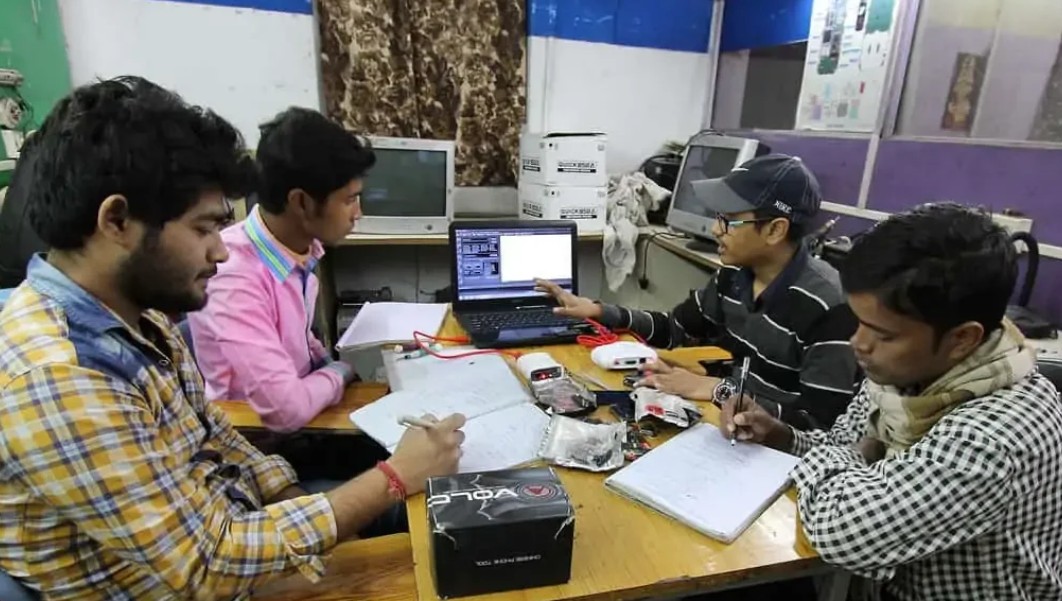
Every Bangladeshi parent wants an engineer, not a technician. Nor have we shown them what a modern technical career looks like. A vocational student today is not choosing between electrician and mechanic. The options include mechatronics technician, renewable-energy specialist, automotive diagnostician, caregiver, medical technologist, industrial machine operator, logistics coordinator, ICT professional, construction technologist. The world changed. Our definition did not.
Here is the uncomfortable part. If we tell parents that vocational education leads to a good career, the institution has to deliver. A young person should walk into a vocational institute and encounter something that resembles the workplace they are training for: functioning laboratories, current equipment, an industry-relevant curriculum, instructors who understand today’s technology, real workplace exposure, competency-based assessment, career guidance – and qualifications that mean something beyond our borders. That is where the gap sits. The problem is not only that too few young people choose vocational education. It is that when they do choose it, we must make sure they receive an education worth choosing.
This may be the shift that matters most. Our ambition should be to prepare young people with skills relevant here and recognised abroad. For a country whose overseas employment ambitions depend on the credibility of its workers’ skills, these are not luxury questions. A certificate should tell us more than where someone studied. It should tell us what they can do.
So perhaps we should read this year’s result differently.
A 58.20 percent pass rate in the technical board is a warning about the learning environment we put them in, the curricula we hand them, the teachers we did not train, the laboratories we did not equip, the employers we never brought to the table, and the parents we never convinced. And it raises the question that no curriculum reform alone can answer: do our young people believe that vocational education can take them somewhere?
The demographic clock has already turned. We cannot turn it back. But we can still decide what to do with the young people still walking into the workforce. We can keep measuring success by pass rates and GPA-5 counts. Or we can start asking: what can this young person actually do?
That single question would change how we design schools, how we train teachers, how employers engage with education, how parents imagine their children’s futures – and, eventually, the social status of technical work itself. Bangladesh will not be built by university graduates alone. It will be built by the people who install our solar systems, maintain our factories, care for our elderly, repair our machines, lay our infrastructure, run our logistics and carry our skills into labour markets abroad. The dividend gave us a window. Skills will decide whether we use it or lose it.
And it is long past time to stop asking young people to choose between academic success and vocational success. We should give them something better: the freedom to choose a pathway to a skilled, dignified and globally competitive future.
The views expressed in this article are solely those of the author
The writer is a Social Researcher, M&E Specialist, Skills Development Programme, BRAC