


A wave of public unrest driven by young people and aggrieved citizens has swept across France, Spain, Portugal, Italy, Belgium and Albania, as anger grows over poor educational conditions, soaring housing costs and the rising cost of living.
The demonstrations reflect growing frustration over teacher shortages, unaffordable rents, rising household expenses, unemployment and perceived government corruption. While protesters in France are demanding improvements in education and relief from fuel costs, those in Spain are calling for urgent action on the housing crisis. Similar grievances have fuelled protests elsewhere, with the unrest highlighting mounting social and economic pressures across Europe.
Education crisis in France
In France, high school pupils have clashed violently with police during demonstrations over extended school hours, teacher shortages, dilapidated classrooms and an opaque university admissions system. Unfilled teaching posts have repeatedly forced students to miss months of formal instruction, reports The Guardian.
The student protests have drawn wider crowds angered by rising household expenses, particularly fuel costs, following the effective closure of the Strait of Hormuz after US bombing operations.
The General Confederation of Labour (CGT), one of France’s major trade unions, has backed the movement, demanding higher pensions, increased wages and lower prices for essential goods.
In response to educational grievances, the French government announced plans to recruit 3,000 additional substitute teachers to address staff shortages and give pupils a direct role in school decision-making. It also scrapped proposed increases in university registration fees in next year’s budget.

Earlier fuel protests in mid-September prompted the Élysée to increase petrol subsidies for specific industries.
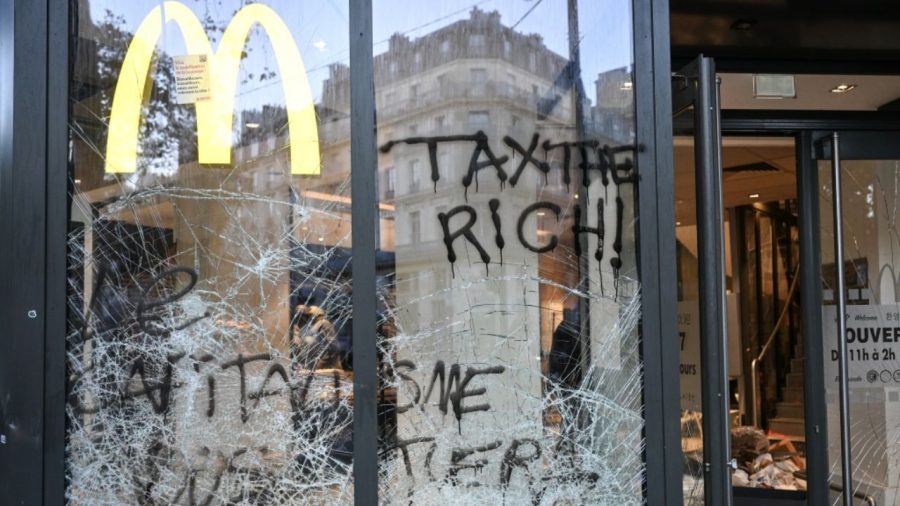
Interior Minister Laurent Nuñez signalled that the government would make no further concessions. He condemned what he described as “far left” agitators and “criminals who looted and ransacked” properties across the country.
President Emmanuel Macron, nearing the end of his second term, scheduled a televised national address for Sunday evening following an emergency meeting with key cabinet ministers. France is due to hold its next presidential election in April 2027.



Housing crisis in Spain
In Spain, activists took to the streets in September to protest soaring housing costs. The demonstrations were triggered by the forced eviction of 87-year-old Maricarmen Abascal, whose rent was increased by 230 per cent by an investment fund before she died in hospital a fortnight later.
Protesters are demanding lower rents, an immediate halt to tenant evictions and a complete ban on investment funds buying residential properties.
Socialist Prime Minister Pedro Sánchez responded by introducing emergency housing legislation aimed at protecting tenants in the rental market. After right-wing and far-right opposition parties defeated the bill in Congress, Sánchez called a snap general election for 29 November, saying he needed a “broader progressive majority” to pass essential reforms.
The protests could subside before the election if the government succeeds in passing housing decrees through Congress’s permanent council, a special parliamentary body that operates while parliament is out of session.
Both Sánchez’s Socialists and the opposition conservative People’s Party have pledged to expand homebuilding and prioritise housing if elected next month.
Cost-of-living protests spread to Portugal
In Portugal, hundreds of people gathered in central Lisbon on Saturday (17 October) to protest against mounting cost-of-living pressures.
Official data show that Portuguese housing prices rose by 124 per cent between 2015 and 2024, roughly twice the rate of the European Union average.
Saturday (17 October) also marked the first day of cost-of-living demonstrations in Italy and Belgium.
In Milan, a peaceful march over mounting pressure on household budgets turned violent when masked rioters threw stones, paving blocks and other objects at riot police. They also set fire to barricades made from bar tables.
Corruption and unemployment in Albania
Meanwhile, anti-government demonstrations against Prime Minister Edi Rama in Albania entered their sixth consecutive day on Sunday.
The protests, which have continued since the summer, were initially triggered by a luxury coastal real estate project backed by Jared Kushner, the son-in-law of US President Donald Trump.
Demonstrators have expressed deep dissatisfaction with perceived government corruption, a lack of job opportunities and poor educational standards.
The education protests in France began in late September, a week after the start of the academic year, before intensifying and reaching a peak on Saturday (17 October).