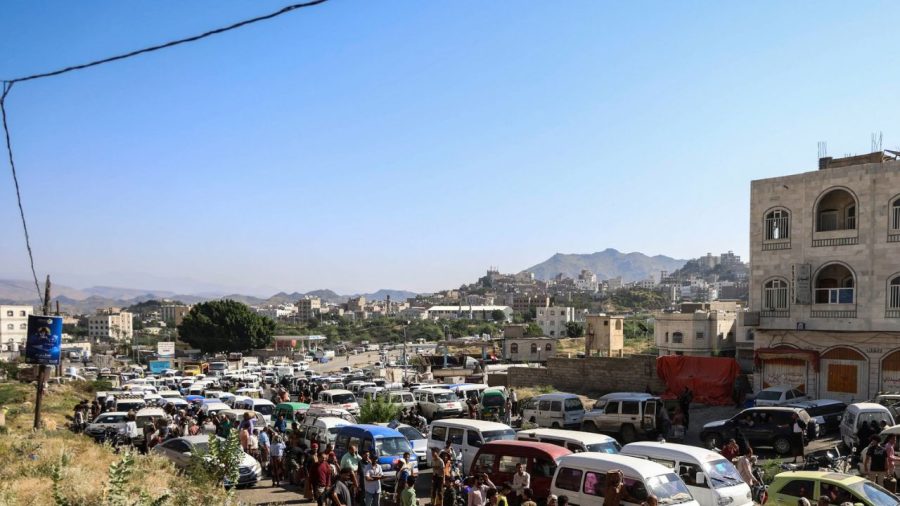



At least 53 people have been killed and more than 200 others—mostly young recruits—injured in a Houthi ballistic missile strike on a military training camp in southern Yemen.
The attack represents the largest single loss of life since the country’s civil war reignited in September.
Camp Struck During Formation
The strike targeted the al-Alam police and army training facility located in the Jardan district of Shabwa province, reports The Guardian.
Three ballistic missiles struck the camp while recruits were lined up in formation, underscoring the severe hazards of congregating large numbers of troops within range of the Houthi ballistic missile arsenal.
The UN-recognised Yemeni government described the incident as a disaster.
Emergency services transported the wounded from the Jardan district to a hospital in the provincial capital, Ataq, where urgent public appeals were issued for blood donations.

In response to the tragedy, an official inquiry has been ordered to determine how so many troops were left critically exposed to Houthi missile strikes.
Government Condemnation and UN Appeal
Rashad al-Alimi, President of Yemen’s UN-recognised government, confirmed that those killed were new recruits and vowed an immediate, firm response.
President al-Alimi stated that targeting recruits “affirmed that targeting the recruits reflects the Houthi militias’ approach of resorting to cowardly terrorist attacks whenever they face pressures or their Iranian-backed sabotage plots falter”.



Following the strike, President al-Alimi spoke by telephone with United Nations Secretary-General António Guterres, requesting that the UN formally classify the Houthis as a foreign terrorist organisation.
Meanwhile, the Shabwa provincial authority condemned the attack as a military escalation and a blatant assault on the province’s security. Shabwa Governor Awad bin Al-Wazir personally visited wounded recruits in hospital.
Houthi Claims and Tactical Moves
Conversely, a Houthi military spokesperson claimed responsibility, asserting that their armed forces targeted “Saudi enemy mobilisations” at Al-Alam camp, alleging it was managed by Saudi officers.
The spokesperson claimed the strike resulted in dozens of dead and wounded, including Saudi officers, and warned Yemeni recruits against responding to Saudi calls or taking “defiled money”.
In tandem with the strike, Houthi forces severed the main road connecting government-administered Shabwa province with the Houthi-controlled Bayda governorate.
Wider Regional Conflict and Civilian Toll
The attack comes amidst a broader push launched by Houthi forces in mid-September, moving south along the Red Sea coast in an attempt to capture the strategic Bab al-Mandab waterway—the narrow channel connecting the Red Sea to the Indian Ocean.
Southern forces backing the government have reportedly made progress in edging Houthi units back from the Bab al-Mandab area.
While precise death tolls from the past month of intensified fighting are difficult to verify, total fatalities are estimated to run into the many thousands.
Civilian casualties remain high across the region; a Saudi airstrike on Sunday killed nine people, including five children and two women.
Heavy fighting is also underway around the Yemeni city of Taiz as Houthi forces attempt to lay siege to it, prompting local citizens to call for increased air protection.
Attacks on Infrastructure and Diplomatic Moves
Uncertainty remains over whether the Houthis have intentionally reduced the frequency of their long-range strikes or are running low on ammunition.
Last weekend, a strike hit the headquarters of Saudi Aramco.
Riyadh airport formally reopened over the weekend following attacks earlier this month, though several commercial airlines have postponed resuming flights to the Saudi capital.
On the diplomatic front, United Nations Special Envoy for Yemen Hans Grundberg is scheduled to arrive in London on Tuesday to hold discussions with government ministers.