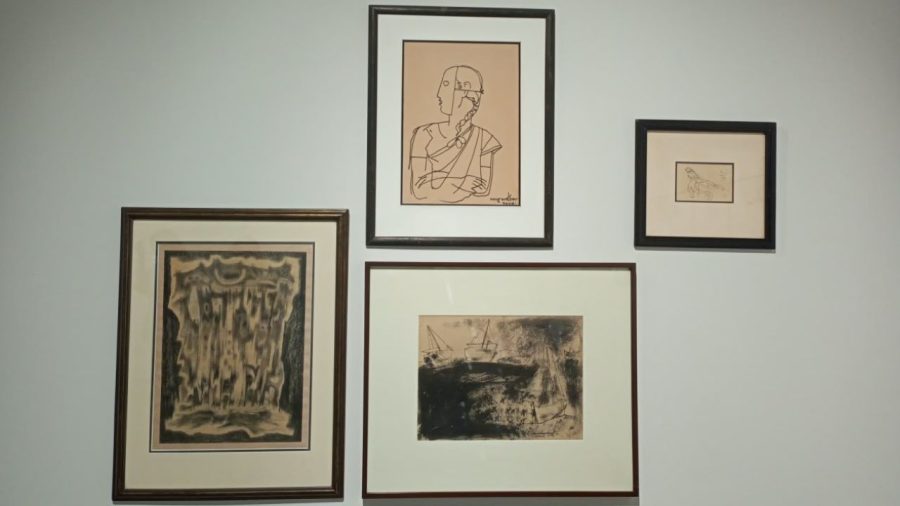



A faint, soothing scent of paper and wood lingers in the Quamrul Hassan Exhibition Hall at Bengal Shilpalay. It may drift from the wooden frames, the paper bearing the artworks or the gallery’s hushed stillness.
There is something almost surreal about the space, where each work seems to hold a meaning beyond what meets the eye. The quiet atmosphere encourages visitors to slow down, pause and look closer. Here, simply seeing is not enough; the real invitation is to learn how to see.
At Bengal Shilpalay in Dhaka’s Dhanmondi, Unbroken Line brings together 42 artists whose work spans seven decades of artistic practice. Organised by Bengal Foundation, the group exhibition opened on 9 October 2026.
It presents works by pioneers of modern art in Bangladesh alongside established, mid-career and emerging practitioners. The exhibition remains open to visitors until 30 October.

Spanning seven decades of artistic practice, Unbroken Line traces the changing language of drawing in Bangladesh across generations. The exhibition brings together pioneers of modern art alongside established, mid-career and emerging artists, showing how approaches to line, form and material have evolved over time.
Despite these shifts, drawing remains a continuing thread in the country’s artistic history, one that connects different generations while reflecting changing ideas, experiences and realities.
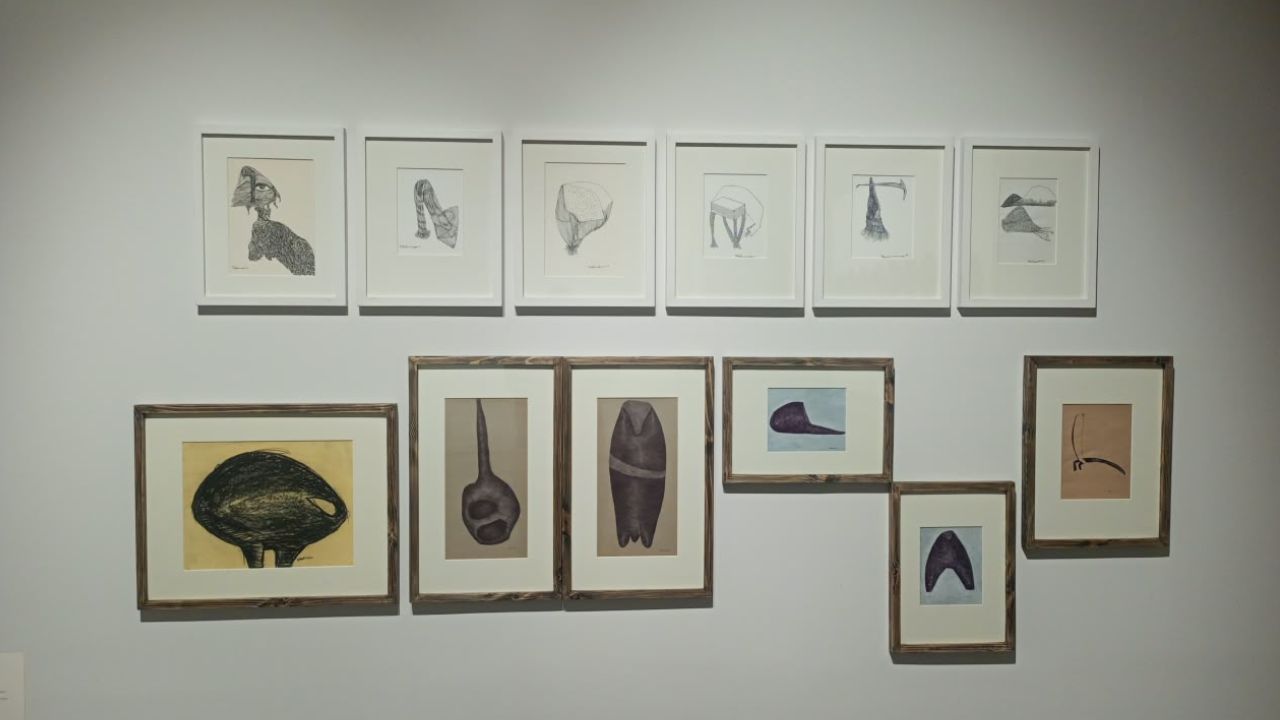
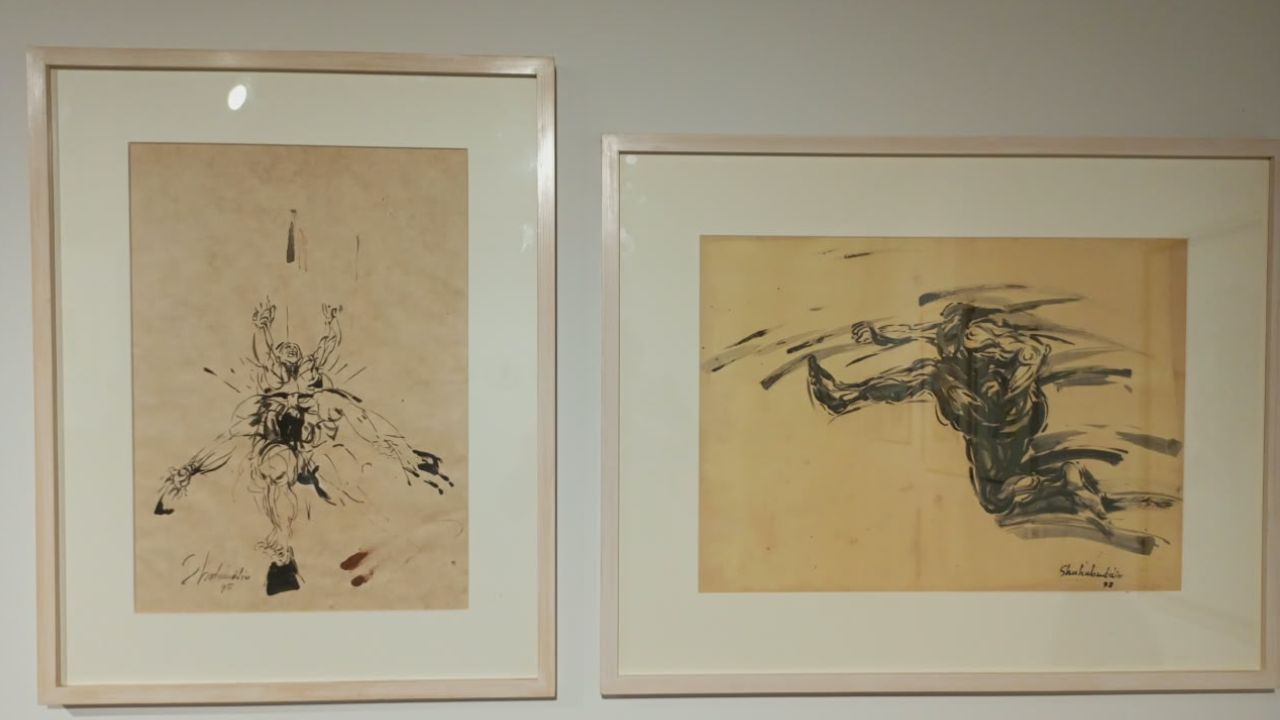
The works challenge any single definition of drawing. Graphite and pencil studies, ink and pen drawings, expressive line work, abstract compositions, geometric forms and mixed-media pieces share the gallery walls. Embroidery and other material-based approaches further expand the possibilities of drawing.




Several works explore abstract ideas, while others retain fragments of the human figure or the familiar world. This allows viewers to move between representation and interpretation. The variety gives the exhibition a distinctly contemporary sensibility, with many works inviting multiple readings rather than presenting immediately recognisable images or narratives.
One particularly striking work depicts a woman dressed in black, with a red scarf, restrained by handcuffs as a rifle is pointed at her head. The composition evokes the disappearance of Kalpana Chakma, the Indigenous rights activist who went missing in 1996.
The contrast between black and red, together with the threatening weapon, compresses a history of fear and political violence into a disturbing visual statement.
Political consciousness takes a different form in a series of six oval embroidered works. At first glance, their intricate surfaces resemble decorative textile designs. A closer look reveals maps of Venezuela, Ukraine, Iraq and Sudan among the pieces. Blood-like red markings interrupt the mapped outlines, transforming what appears ornamental into a commentary on conflict and human suffering.
Visitors can be seen taking in the gallery’s aesthetic atmosphere. Many appear to be seeking a social backdrop or a moment of relaxation rather than engaging in deep critical analysis. A passing remark from a viewer staring at an abstract composition — “What is this? Is that a cigarette?” — points to a persistent gap in visual literacy among local audiences.
Bangladeshi contemporary art has evolved rapidly towards postmodern conceptualism, yet public engagement with symbolic abstraction remains limited. The exhibition highlights the distance between the complexity of contemporary artistic expression and the experience many viewers bring to it.
Unbroken Line offers a historical survey of drawing in Bangladesh across generations, tracing a shift from familiar representation towards conceptual ambiguity. It shows how a line can preserve a moment or challenge a dominant narrative without relying on literal illustration.
Although these complex, postmodern works demand patience from an audience still developing its visual literacy, they ultimately ask viewers to confront uncomfortable realities.