In the high-stakes theater of South Asian politics, a new protagonist has emerged: the female head of the household. From the bustling villages of West Bengal to the plains of Bihar, the “silent voter” is no longer silent – she is being heard through direct bank transfers. Now, as Bangladesh moves toward its own political crossroads, the Bangladesh Nationalist Party (BNP) has placed a bold bet on this regional trend with its proposed ‘Family Card.’
The inspiration for the Family Card is no secret. Across the border, the West Bengal government’s Lakshmir Bhandar scheme has transformed from a populist promise into a socioeconomic juggernaut. Providing ₹1,000 to ₹1,200 monthly to over 21 million women, the scheme has been credited with more than just poverty alleviation. Independent studies, including those by the Pratichi Trust, suggest it has provided women with a newfound sense of ‘bargaining power’ within the family.
Politically, the results were undeniable. In the 2021 and 2024 elections, women voters turned out in record numbers to shield the incumbent government, viewing the allowance not as a handout, but as a recognition of their invisible labour.
The wave didn’t stop at the Bengal border. In Bihar’s 2025 elections, the National Democratic Alliance (NDA) secured a resounding victory by tapping into the same vein. The ‘Dus Hazari’ (₹10,000) grant under the Mukhyamantri Mahila Rozgar Yojana became a focal point of the campaign. Data from the Election Commission showed that women in Bihar outvoted men by a staggering 8.8%, effectively overriding traditional caste arithmetic in favour of ‘welfare credibility.’

The lesson for the region is clear: when you empower the woman of the house, you secure a loyal, independent constituency that votes beyond the instructions of the male patriarch.
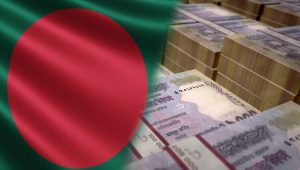
The BNP’s proposal to provide Tk2,000–2,500 monthly to 40 million families through the female head is an ambitious attempt to replicate this success. Critics often label such schemes as ‘drainage of the exchequer,’ but the independent economic perspective offers a different view.



Unlike industrial subsidies that often vanish into corporate pockets, direct cash in the hands of poor women has a high ‘velocity of money.’ Every Taka is immediately spent on local groceries, medicines, and school fees, stimulating the rural economy from the bottom up. Furthermore, if the state of West Bengal – operating within the fiscal constraints of a provincial budget – can sustain 2.2 crore beneficiaries, the sovereign nation of Bangladesh, with its significantly larger GDP and direct control over monetary policy, certainly possesses the fiscal space to do the same.
Interestingly, the most vocal skepticism often comes from conservative quarters, including groups like Jamaat-e-Islami. From an analytical standpoint, their “fear” of the Family Card is rooted in a shift of power dynamics.
Breaking traditional dependency: Conservative ideologies often rely on a structure where the woman is financially dependent on the male head or local religious institutions for support. A state-guaranteed monthly income bypasses these intermediaries, giving women the autonomy to make independent choices.
The new ‘Vote Bank’: These schemes create a direct contract between the state and the woman. This ‘Women’s Vote Bank’ is difficult for radical or conservative movements to manipulate because it prioritises tangible economic survival over abstract ideological goals.
The Family Card is more than just a campaign promise; it is a recognition that the ‘economic engine’ of Bangladesh resides in its households. By following the successful models of West Bengal and Bihar, the proposal suggests a shift toward a modern welfare state. While the political road ahead remains contested, one fact is certain: the era where women were treated as a passive demographic is over. In the new South Asian reality, the hand that holds the Family Card is the hand that will hold the future of the nation.
The views expressed in the article are solely those of the author
The writer is a PhD student in San Diego, California