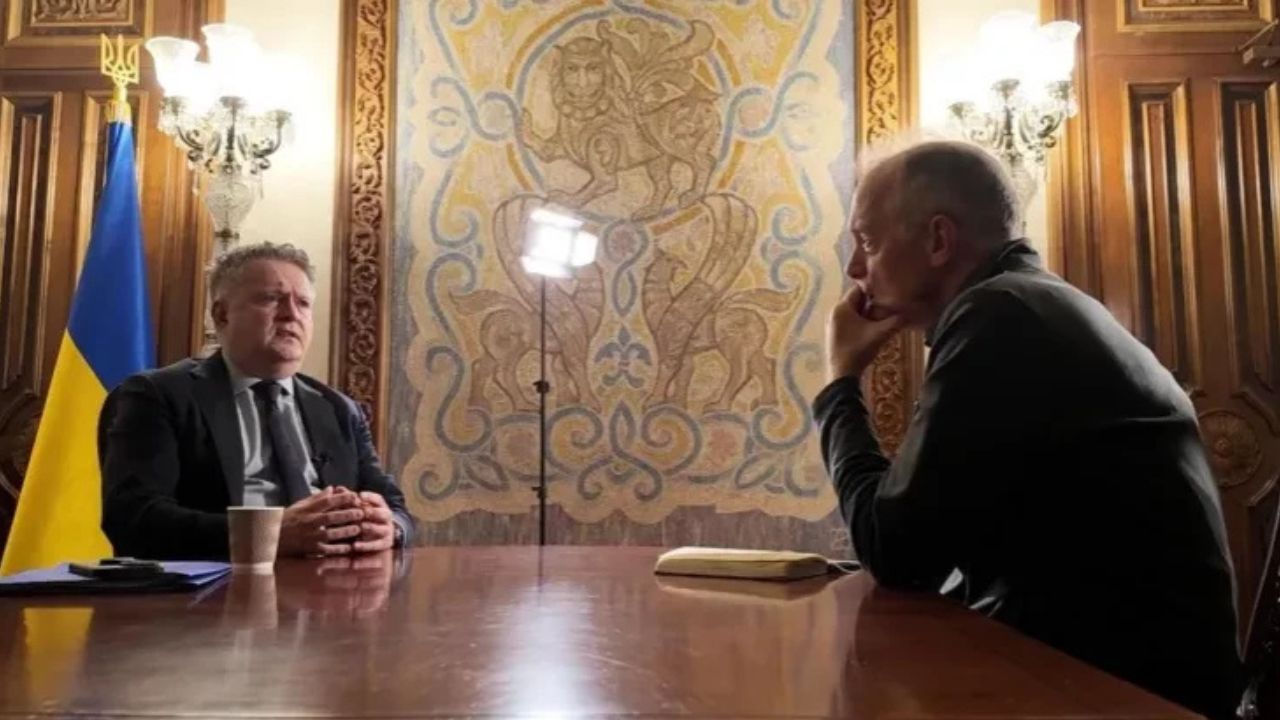



A senior Ukrainian negotiator has offered a rare glimpse into direct talks with Russian counterparts, stressing that while military-level discussions remain pragmatic, ending the war ultimately depends on political decisions in Moscow.
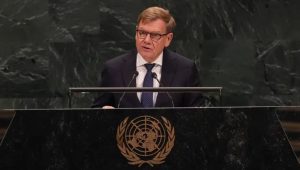
Sergiy Kyslytsya, a member of President Volodymyr Zelenskyy’s delegation, told the BBC that recent military-to-military exchanges were business-like and stripped of the ideological rhetoric often heard from the Kremlin in public.
“The military has a better understanding of what is happening on the battlefield,” Kyslytsya said during an interview at the presidential palace. He cautioned, however, that it is unclear whether Russian officers relay battlefield realities truthfully to their political leadership.

His remarks come ahead of a possible new round of US-mediated talks in Geneva later this week, following several failed attempts to secure progress nearly four years after Russia’s full-scale invasion.
Kyslytsya noted that disengagement is complicated by conditions in eastern Ukraine, where thousands of drones operate across a vast grey zone and some 200,000 civilians remain in fortified Donbas cities. Any ceasefire, he stressed, would require strict rules, clear protocols, and robust verification mechanisms.




Much of the technical groundwork has already been laid with significant US input. He praised Washington’s role, highlighting that American representatives actively engage in discussions rather than simply observing. He also welcomed the involvement of US figures such as Jared Kushner and Steve Witkoff, describing them as constructive participants.
According to Kyslytsya, the United States is expected to play a central role in monitoring any future ceasefire, deploying satellite imagery and advanced technologies to adjudicate violations. He contrasted this with the Organization for Security and Co-operation in Europe, which he said lacked the resources and enforcement power to prevent escalation before the 2022 invasion.
A former Ukrainian ambassador to the UN, Kyslytsya recalled the tense Security Council meeting on 23 February 2022, when he learned Ukraine was under attack. He said Russian ambassador Vassily Nebenzia refused to contact Foreign Minister Sergei Lavrov for assurances as the invasion loomed—a moment he described as a turning point.
Looking ahead to Geneva, Kyslytsya said talks remain focused on ceasefire mechanics but insisted the war could end swiftly if Russia’s leadership chose to act.
“The war could be stopped by just one call,” he said, adding that President Vladimir Putin has shown no willingness to make that decision.