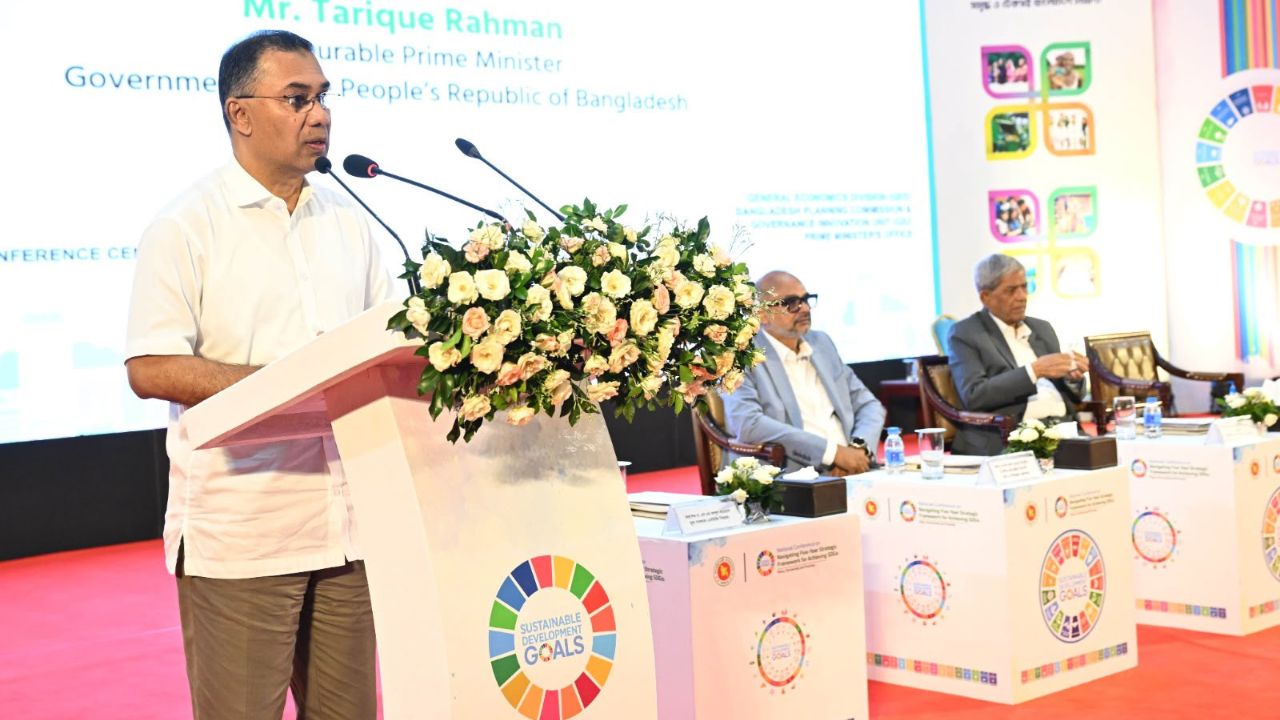



Prime Minister Tarique Rahman has called upon all stakeholders to work unitedly to achieve the Sustainable Development Goals (SDGs) by 2030.
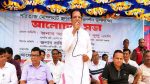
He made this call on Monday afternoon while addressing a three-day national conference titled “National Conference on Setting a Five-Year Strategic Framework for Achieving Sustainable Development Goals (SDGs): Policy, Partnership and Priorities” held at the Bangladesh-China Friendship Conference Centre.
“Let us all work with firm determination to achieve the goals of sustainable development by 2030,” the Prime Minister said.
Speaking at the conference, Local Government Minister Mirza Fakhrul Islam Alamgir expressed hope that the “SDG Village” initiative would become an exemplary platform for presenting the current government’s electoral commitments as an internationally recognised “development model.”
He emphasised that implementing the SDGs is not possible through a single ministry or department; rather, it requires the collective cooperation of the government, private sector, development partners, NGOs, civil society, media, and every citizen.

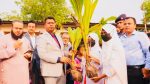
As part of the “SDG Village” initiative, the prime minister inaugurated a pilot model programme for SDG localisation in three villages: Mitingachhari in Kaptai, Rangamati; Pankhali in Dacope, Khulna; and Nafanagar in Bochaganj, Dinajpur.
During the event, he spoke online with residents and professionals from these villages, who shared their views on the benefits of the programme.
Referring to the three-day national workshop, the Prime Minister urged coordinating ministries and departments to adopt realistic and timely action plans by discussing goal-based progress, challenges, and future steps.
Prime Minister Tarique Rahman outlined the government’s vision for the future, highlighting a democratic state characterised by free elections, the rule of law, and institutional accountability. He envisioned a “humane state” where health, education, and civic rights are universal, and a “welfare state” ensuring economic opportunities and intergenerational equity for every citizen.
He extended his gratitude to the SDG Principal Coordinator of the Prime Minister’s Office, the Governance Innovation Unit, and the General Economics Division of the Bangladesh Planning Commission for organising the event.
Regarding the pilot projects, the Prime Minister explained that the selected villages would simultaneously implement and monitor various programmes, including family cards, health cards, farmer cards, SME loans, school uniforms, Madrasa-based education, renewable energy, village tourism, blue empowerment, “one village-one product,” tree plantation, canal excavation, and ecotourism. Based on the success of these initiatives, the model will be expanded nationwide.
He noted that just as Bangladesh demonstrated success in achieving the Millennium Development Goals (MDGs), it is now taking appropriate steps to implement the SDGs. He remarked that the SDG theme ‘No one left behind’ aligns with the government’s public policy of “Bangladesh for Everyone.”
He further stated that the BNP’s public policies and plans have always been people-friendly, citing the 19-point programme of the Proclaimer of Independence, Shaheed President Ziaur Rahman, former Prime Minister Khaleda Zia’s “Vision 2030,” and the current 31-point state reform plan.
Reflecting on the state of the nation, the Prime Minister said that for over fifteen years, ‘fascist exploitation and rule’ had turned Bangladesh into a fragile, debt-dependent, and import-reliant state. He emphasised that it is now time to rebuild the state in sectors such as education, health, and the environment, where the SDGs will play a vital role.
To ensure prosperity, the government has adopted a five-year strategic economic framework that integrates national development plans with the UN-declared SDGs.
The government’s five pillars of reform—poverty alleviation, universal social protection, quality education and healthcare, gender equality, and climate resilience and good governance—reflect these SDG priorities.
To consolidate the progress made in graduating from the Least Developed Countries (LDC) list and implementing the SDGs, the government has adopted the “3R” strategy: Recovery, Rehabilitation, and Reconstruction. This strategy provides a coordinated roadmap for everything from temporary stability to long-term structural transformation.
The Prime Minister highlighted that the government, formed on 17 February following the 12 February elections, is extending its support network to people from all walks of life. He shared a plan to progressively bring every eligible citizen under the social safety net and financial assistance framework within the current term.
The conference, chaired by Finance Minister Amir Khosru Mahmud Chowdhury, was also addressed by Local Government Minister Mirza Fakhrul Islam Alamgir, Advisor to the Prime Minister on Finance and Planning Rashed Al Mahmud Titumir, Minister of State for Finance and Planning Zonayed Saki, Planning Division Secretary SM Shakil Akhtar, and UN Resident Representative Carol Flore-Smereczniak.