
Bangladesh has made some progress in birth and death registration in recent years, but it still significantly lags behind global and regional averages.
Currently, the birth registration rate in Bangladesh stands at 50 per cent, and the death registration rate is at 47 per cent, compared to the global averages of 77 per cent and 74 per cent, respectively.
The Bangladesh government has committed to achieving universal birth and death registration by 2030, but experts emphasise that strengthening the legal framework is essential to accelerate this goal.
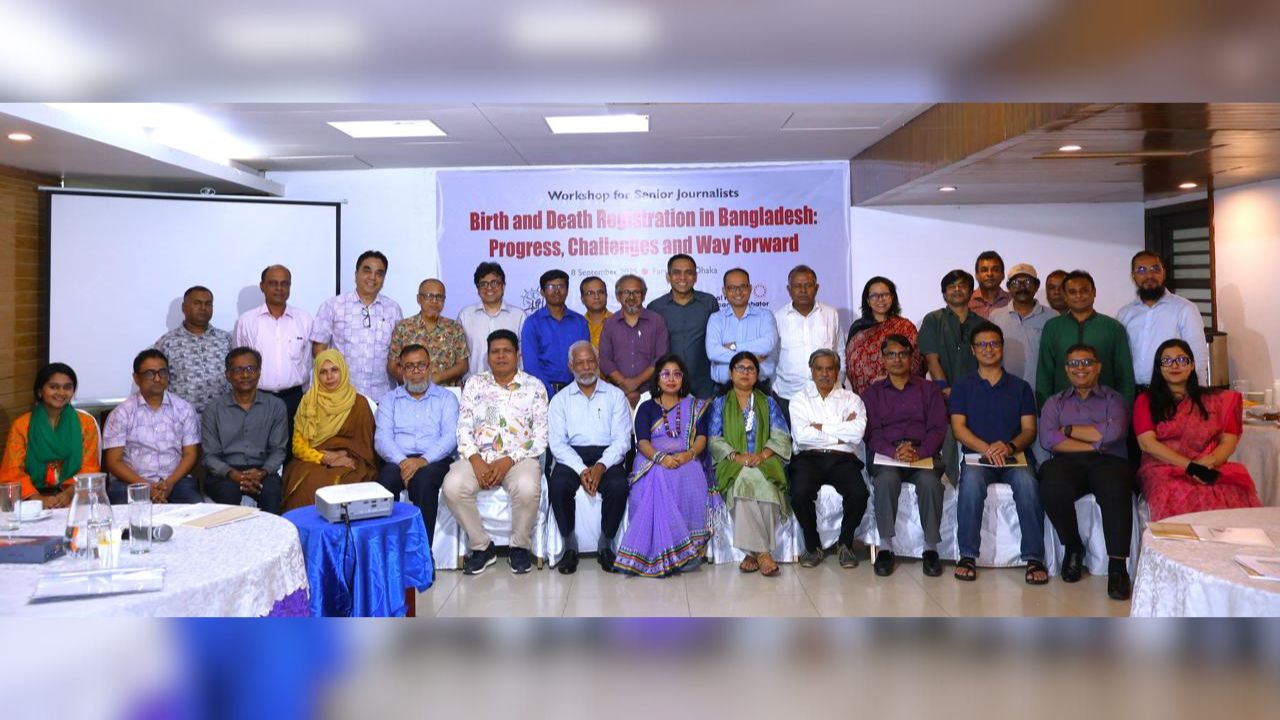
During a workshop for senior journalists on “Birth and Death Registration in Bangladesh: Progress, Challenges, and the Way Forward,” held at FARS Hotel and Resorts in Dhaka on Monday, experts called for amendments to the Birth and Death Registration Act, 2004, to legally assign hospitals the responsibility for registration.

The workshop was organised by PROGGA (Knowledge for Progress) with support from GHAI, and it was attended by 26 senior journalists from print, television, and online media outlets.
This proposed change is seen as a key measure to meet Sustainable Development Goal (SDG) target 16.9, which aims for legal identity for all, including birth registration.




Under the current law, families are responsible for reporting births and deaths to registrars, while the role of the health sector remains optional.
Experts argued that by legally mandating hospitals to report births, nearly 67 per cent of children born within the health system would automatically be included in the registration process. Countries in Asia and the Pacific have achieved near-universal registration by adopting hospital-based registration systems.
Muhammad Ruhul Quddus, Bangladesh Country Lead of Global Health Advocacy Incubator (GHAI), said, “It is imperative to amend the law urgently and legally assign the responsibility of registration to health facilities in order to achieve universal birth and death registration by 2030.”
The speakers also discussed the need for improved implementation of existing laws and highlighted obstacles such as low public awareness, manpower shortages, technological limitations, complicated procedures, and weak coordination with the health sector.
They emphasized that birth and death registration is vital for ensuring fundamental rights such as citizenship, access to education, healthcare, inheritance, and voting. Additionally, at the national level, it plays a crucial role in development planning, budget allocation, public health, and strengthening good governance.
Other discussants included Md Nazrul Islam, country coordinator of Vital Strategies; Liton Haider, convener of Anti-Tobacco Media Alliance (ATMA); Nadira Kiran, co-convenor of ATMA; and ABM Zubair, executive director of PROGGA.
The open discussion session was moderated by Mir Masroor Zaman, chief news editor at Channel I, with thematic presentations delivered by Hasan Shahriar, head of programmes at PROGGA, and Mashiat Abedin, coordinator at PROGGA.