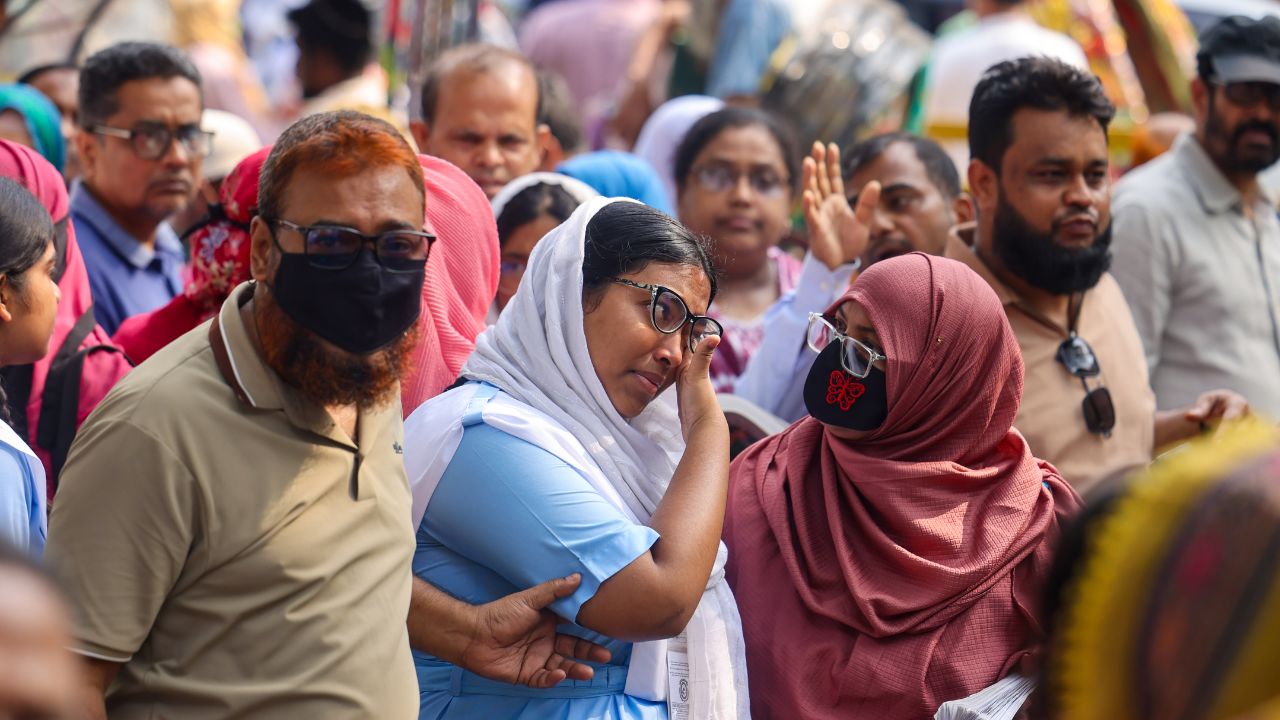



This year’s SSC and equivalent examination results have deteriorated across several indicators, with fewer schools recording a 100% pass rate and a sharp rise in institutions where no student passed.
The number of educational institutions where all examinees passed fell by nearly one-third from last year, while those where no student passed more than doubled.
All students passed in 669 institutions this year, compared with 984 in 2025 – a decline of 315, or about 32%.
Meanwhile, the number of institutions where no student passed rose to 312 from 134 last year. The number of zero-pass institutions therefore increased by 178, or more than 133%.
Sawrakathi Nab Adarsha Girls’ Secondary School in Jhalakathi district was among the institutions where no student passed this year.
Acting Assistant Headteacher Golap Krishna Barua told TIMES of Bangladesh that 18 students had enrolled in the batch when they entered Class VI. Most, however, gradually dropped out for various reasons, including child marriage.

Eventually, seven students filled out forms to sit for the SSC examination, but one of them got married and did not take the exam.
Most of the students who sat the examination failed in geography and English, he said. The school has a geography teacher but no English teacher.



The average pass rate across the country’s 11 education boards fell to 62.25% this year from 68.45% last year, a decline of 6.20 percentage points.
The number of GPA-5 achievers also dropped. A total of 116,676 students secured the highest grade across the 11 boards this year, compared with 139,032 last year – a decrease of 22,356.
The decline is part of a three-year downward trend in SSC and equivalent examination results. The overall pass rate across the 11 boards stood at 83.04% in 2024 before falling to 68.45% in 2025 and 62.25% this year.
Despite the decline, the education minister described this year’s results as “not bad, but good”. Prof Mohammad Mujibur Rahman of the Institute of Education and Research (IER) at the University of Dhaka said the assessment system and question patterns had been changed without major changes to the curriculum.
“The students may not have been able to adapt properly to those changes, which could have contributed to the significant decline in results,” he said.
Madrasa Board fares worst
Among the 11 education boards, the Bangladesh Madrasah Education Board recorded the lowest pass rate this year, at 55.49%.
As many as 226 madrasas had no students passing the Dakhil examination this year, compared with 86 last year. The number of zero-pass madrasas increased by 140 in a year.
Delawar Hossain Azizee, president of the Bangladesh Madrasa Teachers-Employees Forum, attributed the poor results partly to stricter marking of answer scripts this year.
He said examiners had previously been somewhat lenient in awarding marks, but that was not the case this year.
“Students were awarded the marks they actually earned,” he said.