


Bangladesh’s education sector has been plagued by several issues over the last few years, from the erosion of classroom authority and the decline of teacher-student relationships to the financial struggles of private school teachers and the growing incidents of attacks on educators.
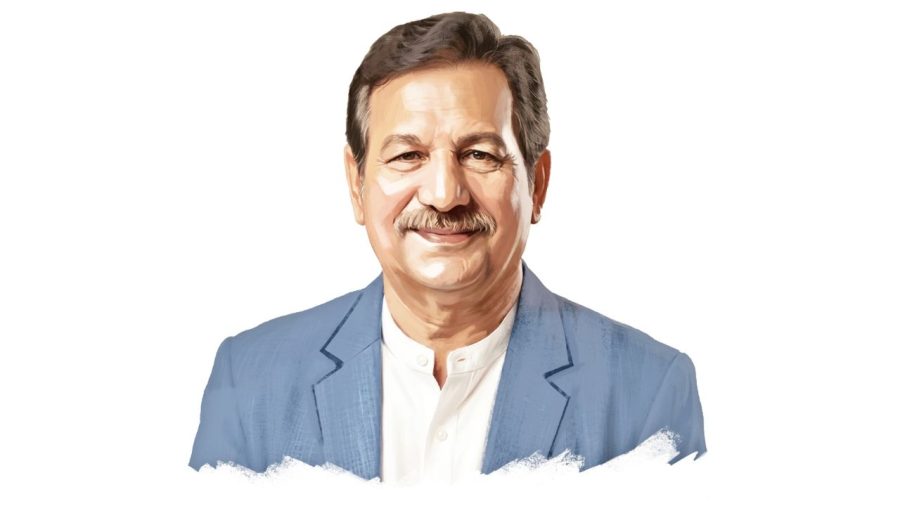
In an exclusive interview with Aleem Haider of TIMES, Shanto-Mariam Board of Trustees Chairman Professor Mostafizul Haque discusses the challenges facing the teaching profession in Bangladesh today. Drawing on decades of experience as a professor at Dhaka University and now as head of a private university, he offers candid reflections on what it takes to be a true teacher, the need for proper training and ethical conduct, and why teachers must remain above partisan politics.
The biggest allegation heard against teachers now is that they cannot teach in the classroom. How can this problem be addressed?
The style of studying, the curriculum, these are constantly being updated. To adapt to these, training for teachers is very important. Good students from various good institutions may be graduating with good results, and they are coming into teaching as good students.
But they do not have in-depth knowledge about teaching. They may have proven themselves to be good students through studying, but to become a good teacher, they need training in the teaching process. Being a good student and being a good teacher are not the same thing.
A teacher also needs training in ethics, honesty, behavioural matters, dress code, and even mannerisms of walking, talking, and speaking as students are influenced by these small details of their daily lives as well.
Many teachers often misbehave with students as soon as they enter the classroom. This is not right. Upon entering the classroom, the first thing a teacher needs to understand is the students’ mental state.

Without understanding what mental stage the students are at, a teacher cannot properly establish communication with them. It is a teacher’s responsibility to consider the students’ mental state and reach out to them accordingly.
If this is not understood, no matter what the teacher teaches or whatever lecture they deliver in class, it does not reach the students properly. This is why much of what many teachers say passes over the students’ heads.
Over the past few years, the teacher-student relationship has hit rock bottom. How will this relationship be restored?
The way students could once be disciplined no longer works. Over time, many rules of society have changed, and likewise the manner of disciplining students has changed. This is a natural process of social change. Now, to control students, one has to take a friendly approach. Otherwise, no one can be a good teacher now. But taking a friendly approach with students does not mean becoming their friend.



Teachers must motivate, and a teacher must have the ability to make students understand. After the July Uprising, a section of students felt that they could do whatever they wished. In many cases, we have seen incidents of students crossing acceptable limits.
Many students’ mental states were unstable, or perhaps still are. Teachers have much to do here. It is the teachers who need to fulfil the responsibility of motivating students and bringing them back to the classroom.
Half of the country’s primary students are in private institutions, and 90 per cent of secondary students are in private institutions. Most of these private teachers have no fixed salary or allowances. What should their salary structure be?
Among neighbouring countries, compared to India, Sri Lanka, or any other country, teachers’ salaries and allowances in our country are very low. We should look at the salary structures of neighbouring countries. Because teachers’ salaries and allowances are low, they lean toward coaching and private tutoring.
As a result, teachers are sometimes seen to be inattentive in the classroom. As such, the blame falls only on the teachers.
But in reality, they are living a subhuman life. Due to financial weaknesses, they are also subjected to social indignity. Teachers’ salaries and allowances should be respectable, so that they can live with honour in society with their families.
Across the country, there have been several incidents of students, and even guardians, attacking teachers. What is the reason behind this, and what can be done to solve this issue?
All teachers cannot be thought of collectively. Just as teachers must be given respect, teachers must also distribute affection equally toward students, and teachers should not act with bias. The teacher-student relationship is complementary to each other.
Alongside teaching properly in the classroom, all students must be viewed equally, regardless of group or opinion. At the same time, one must maintain one’s own personality. Without being able to do these, one cannot become a true teacher. Teachers bear responsibility for the hooliganism that has begun on campuses.
At one time, there was not so much bad political culture in the education sector. We still salute our teachers’ feet when we see them. Our respect for our teachers comes from the depths of our hearts. This is not for show.
Even in our time, guardians respected their children’s teachers greatly. Teachers received distinct status in society. But now, teacher-student relationships outside the classroom are almost non-existent. The teacher-student relationship has become confined to mere formality.
Moreover, teachers are engaging in politics on campus, making political identity primary and behaving unjustly. Due to these reasons, their image in society has been damaged. As a result, they are losing respect. A teacher will vote for the party of their choice, but they must not engage in political flattery. A teacher must rise above politics.
You taught at Dhaka University for a long time. Now you run a private university. From your extensive experience in teaching, what would you say to teachers?
Students must be taught to become good human beings. Teachers must cultivate values like ethics, honesty, and humanity within themselves and teach them to students. Teachers are like mirrors of society. Therefore, they must live honestly in their personal lives. They must uphold ethics. Then they can live with honour and dignity in society.
Also, guardians are also their children’s teachers. In fact, they are the first teachers for their children. Children receive the education of the initial stages of life from their guardians. For this reason, guardians must also be conscious. Just as primary to secondary students learn by going to school for some time, they also spend most of the day at home with their parents.
Therefore, education at home is important. If there is a learning gap at this stage too, there may not be an opportunity to make it up when they reach university. For this reason, teachers need to monitor students at every level.
There are many kinds of limitations in many places, which is why the learning process for all students is not equal. These matters must be viewed by teachers with humanity. Just as students must be taught to acquire skills through academic education, teachers must also give full attention to teaching human qualities.