


India’s trade deficit with China has surged to a record $112 billion this year, underscoring the country’s growing economic dependence on Beijing despite diplomatic strains, app bans and anti-dumping measures introduced since 2020.
The deficit has risen from $44 billion in 2020, as Indian exports to China remain below pre-pandemic levels while imports from its northern neighbour have doubled over the same period.
Diplomatic ties between the two Asian giants deteriorated sharply after the Galwan Valley border clashes in 2020. New Delhi subsequently imposed a series of anti-dumping duties and banned popular Chinese mobile applications, including TikTok, reports BBC.
“India’s economic dependence on China continued to deepen while political, security, and investment ties were at their lowest point,” noted Kevin Zongzhe Li, a Washington-based Fellow at the Asia Society Policy Institute’s Centre for China Analysis.
Rising industrial reliance
China currently supplies more than 30 per cent of India’s industrial imports, with India relying on Beijing for more than 100 critical products, according to Ajay Srivastava of the Delhi-based Global Trade and Research Initiative (GTRI).
Srivastava warned that if the current pace of imports continues unchecked, India’s bilateral trade deficit with China could reach $134 billion, giving Beijing greater leverage over Indian manufacturing.
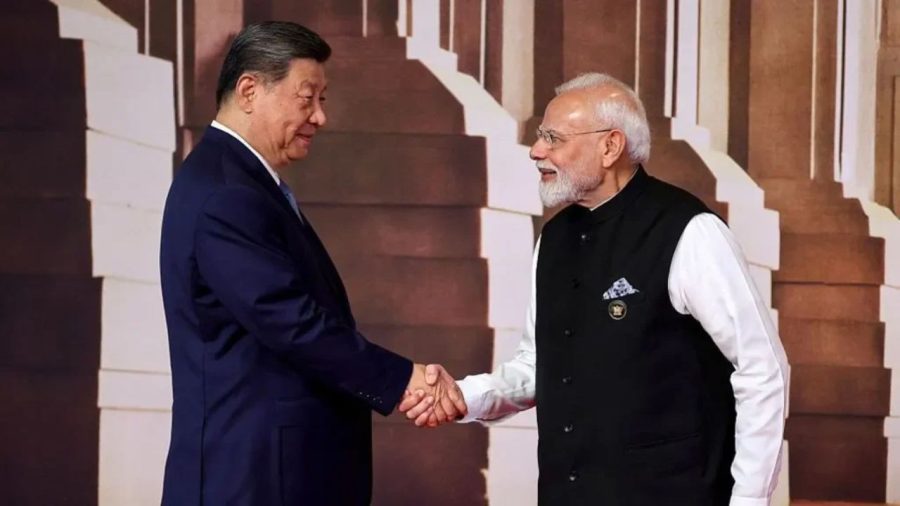
On the sidelines of the BRICS summit in Delhi in September, Prime Minister Narendra Modi and Chinese President Xi Jinping pledged to address “structural trade imbalances and supply chain issues” amid a gradual thaw in diplomatic relations.

However, analysts view the challenge as formidable because Chinese inputs are deeply integrated into India’s industrial economy.
India’s dependence on China extends beyond finished goods. The country also relies heavily on Chinese inputs to produce industrial products.
While New Delhi has reduced direct imports of finished consumer electronics and solar equipment, India now assembles more than a quarter of the world’s iPhones. However, much of its manufacturing remains assembly-based and dependent on imported Chinese components.
Data from the Observer Research Foundation (ORF) shows that electrical machinery and electronics account for 36 per cent of Indian imports from China. Machinery and mechanical appliances make up another 21.7 per cent, while organic chemicals and plastics also account for substantial shares.




Soumya Bhowmik, a Fellow at ORF’s Centre for New Economic Diplomacy, said any disruption to these supply lines “would not merely affect consumption; it would disrupt production itself”, highlighting India’s continued difficulty in replacing Chinese inputs through domestic manufacturing.
Global capacity shifts and market access
The rise in Chinese shipments to India is also being driven by broader global economic trends.
China is facing massive industrial overcapacity in sectors including steel, solar panels and electric vehicles, which its slowing domestic market cannot absorb. As a result, Chinese manufacturers are selling goods cheaply overseas, pushing China’s global trade surplus above $1 trillion for a second consecutive year.
Srivastava said these goods are increasingly entering Indian markets as India rapidly expands its manufacturing infrastructure and Western countries impose higher tariffs and other trade restrictions on Chinese exports.
At the same time, Indian businesses face significant tariff and non-tariff barriers when seeking access to Chinese markets, restricting export growth.
Li warned that if diplomatic ties normalise without a firm push for reciprocal market access, “India risks a situation where the political relationship improves but the economic dependency stays the same”.
Toy sector offers an exception
India’s toy industry is a rare example of tariff policy and quality standards successfully reducing Chinese dominance.
Six years ago, India raised import tariffs on toys from 20 per cent to 60 per cent, eventually increasing them to 70 per cent while introducing strict quality control standards.
Despite initial resistance from retailers, who argued that domestic manufacturers could not match foreign quality, toy imports subsequently fell by a third, from nearly $300 million in 2020 to $100 million this year.
Meanwhile, Indian toy exports increased from $129 million to $200 million, sharply reducing the country’s reliance on China, which previously held a 70 per cent share of India’s domestic toy market.
Policy roadmap for rebalancing
Experts say replicating the toy sector’s success across broader industrial segments will require comprehensive policy reforms.
Srivastava said long-term import reduction depends on strengthening the fundamentals of domestic manufacturing, including affordable electricity and credit, efficient logistics and stable regulatory frameworks.
Commenting on India’s recent easing of Foreign Direct Investment (FDI) regulations, which could allow greater investment by Chinese firms, Srivastava called for strict vetting processes.
He recommended prioritising proposals that provide technology transfer, local value addition, domestic component manufacturing and export capabilities, rather than investments that merely expand distribution or product assembly.
Li suggested that India could also target higher exports to China in specialised sectors such as pharmaceuticals, where China’s ageing population and rising healthcare demands offer natural opportunities.
However, he cautioned that “narrowing a $112 billion deficit won’t come from finding niche export sectors alone”, adding that Beijing must either offer genuine concessions on market access or New Delhi must use its position to push for meaningful negotiations.