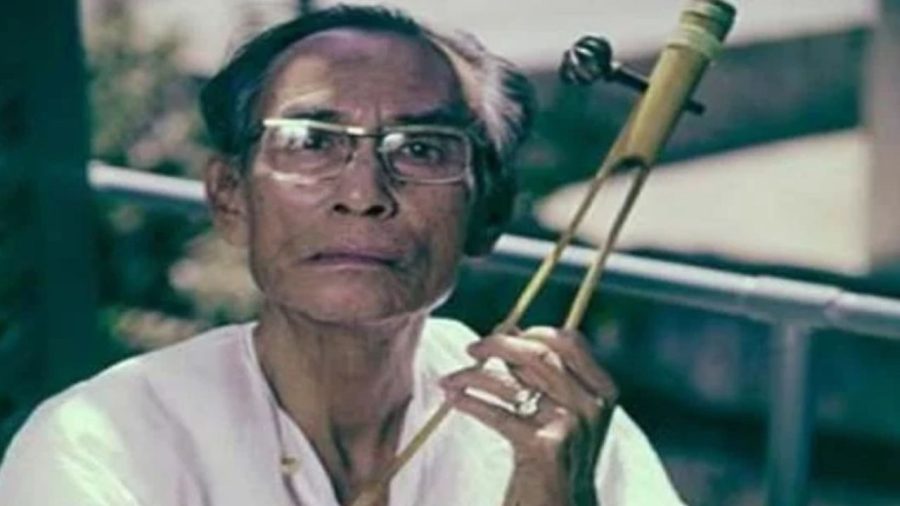



The melodies behind timeless songs such as ‘Shono Go Dakhino Hawa’, ‘Tumi Eshechhile Poroshu’ and ‘Barne Gondhe Chhonde’ continue to resonate with listeners across Bengal. Their creator, legendary composer and singer Sachin Dev Burman, was born on 1 October 1906 in Comilla, Bangladesh.
Known across the music world as SD Burman and affectionately as ‘Shachin Karta’, Burman came from the famous Manikya royal family of Tripura. His father, Nabadwipchandra Deb Burman, was a sitar player and classical musician, while his mother, Nirupama Devi, came from the Manipur royal family.
Burman grew up surrounded by music. After graduating from Comilla’s Victoria College, he continued his studies at Calcutta University, where he began gaining recognition as a singer. In 1934, he impressed leading classical musicians, including Ustad Faiyaz Khan, after performing at the All India Music Conference.

His rendition of ‘Nishithe Jaiyo Phulobone’, given a new form with poet Jasimuddin’s contribution, remains popular among Bengali listeners.




In the 1940s, Burman moved to Bombay, where he established himself as one of Indian cinema’s influential music directors. He composed music for numerous films, including Mati Ghar, Tere Ghar Ke Samne, Miss India and Prem Pujari.
Legendary singers including Lata Mangeshkar, Mohammed Rafi, Asha Bhosle, Manna Dey, Geeta Dutt and Talat Mahmood lent their voices to his compositions.
For his contribution to music, Burman received several prestigious honours, including the Padma Shri, Sangeet Natak Akademi Award and Filmfare Award for Best Music Director.
Sachin Dev Burman died on 31 October 1975, leaving behind a musical legacy that continues to influence generations of listeners and musicians.